Graphic Design

Your constantly-updated definition of Graphic Design and collection of videos and articles.
Be a conversation starter: Share this page and inspire others!

1,870 Shares

What is Graphic Design?

Graphic design is a craft where professionals create visual content to communicate messages. By applying visual hierarchy and page layout techniques, designers use typography and pictures to meet users’ specific needs and focus on the logic of displaying elements in interactive designs to optimize the user experience.

Transcript

See an example of what Graphic Design is.

Graphic Design is about Molding the User Experience Visually

Graphic design is an ancient craft, dating back past Egyptian hieroglyphs to at least 17,000-year-old cave paintings. It’s a term that originated in the 1920s’ print industry. It continues to cover a range of activities including logo creation. Graphic design in this sense concerns aesthetic appeal and marketing. Graphic designers attract viewers using images, color and typography. However, graphic designers working in user experience (UX) design must justify stylistic choices regarding, say, image locations and font with a human-centered approach. That means you need to focus on—and seek to empathize the most with—your specific users while you create good-looking designs that maximize usability. Aesthetics must serve a purpose—in UX design we don’t create art for art’s sake. So, graphic designers must branch into visual design. When designing for UX, you should:

  1. Consider the information architecture of your interactive designs to ensure accessibility for users.

  2. Leverage graphic design skills to create work that considers the entire user experience, including users’ visual processing abilities.

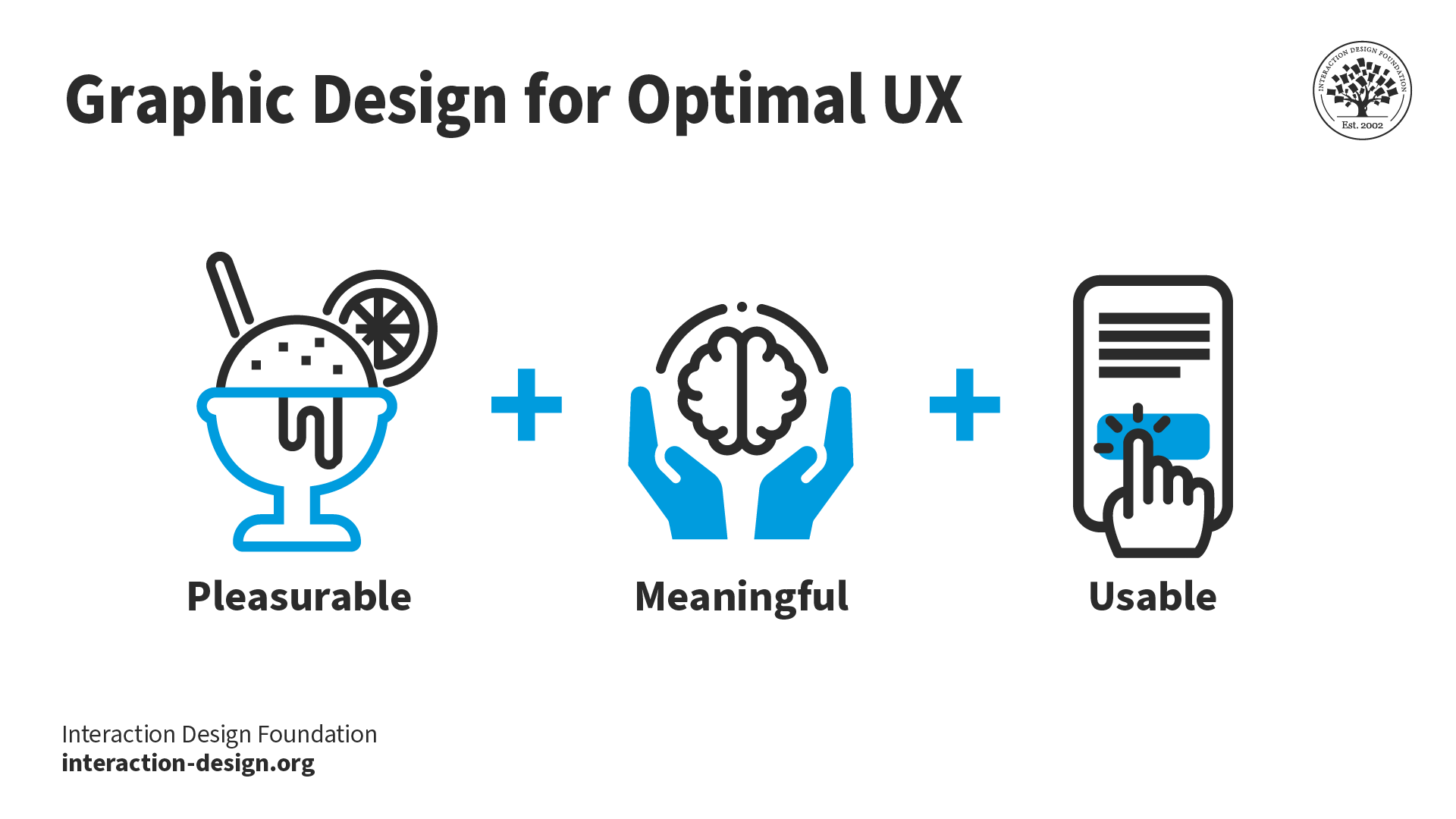
For instance, if an otherwise pleasing mobile app can’t offer users what they need in several taps, its designer will have failed to marry graphic design to user experience. The scope of graphic design in UX covers creating beautiful designs that users find highly pleasurable, meaningful and usable.

“Design is a solution to a problem. Art is a question to a problem.”

— John Maeda, President of Rhode Island School of Design

Graphic Design for Optimal UX

Interaction Design Foundation, CC BY-SA 4.0

Graphic Design is Emotional Design

Although to work in the digital age means you must design with interactive software, graphic design still revolves around age-old principles. It’s crucial that you strike the right chord with users from their first glance—hence, graphic design’s correspondence with emotional design. As a graphic designer, you should have a firm understanding of color theory and how vital the right choice of color scheme is. Color choices must reflect not only the organization (e.g., blue suits banking) but also users’ expectations (e.g., red for alerts; green for notifications to proceed). You should design with an eye for how elements match the tone (e.g., sans-serif fonts for excitement or happiness). You also need to design for the overall effect, and note how you shape users’ emotions as you guide them from, for instance, a landing page to a call to action. Often, graphic designers are involved in motion design for smaller screens. They will carefully monitor how their works’ aesthetics match their users’ expectations. They can enhance their designs’ usability in a flowing, seamless experience by anticipating the users’ needs and mindsets. With user psychology in mind, it’s important to stay focused on some especially weighty graphic design considerations, namely these:

  • Symmetry and Balance (including symmetry types)

  • Flow

  • Repetition

  • Pattern

  • The Golden Ratio (i.e., proportions of 1:1.618)

  • The Rule of Thirds (i.e., how users’ eyes recognize good layout)

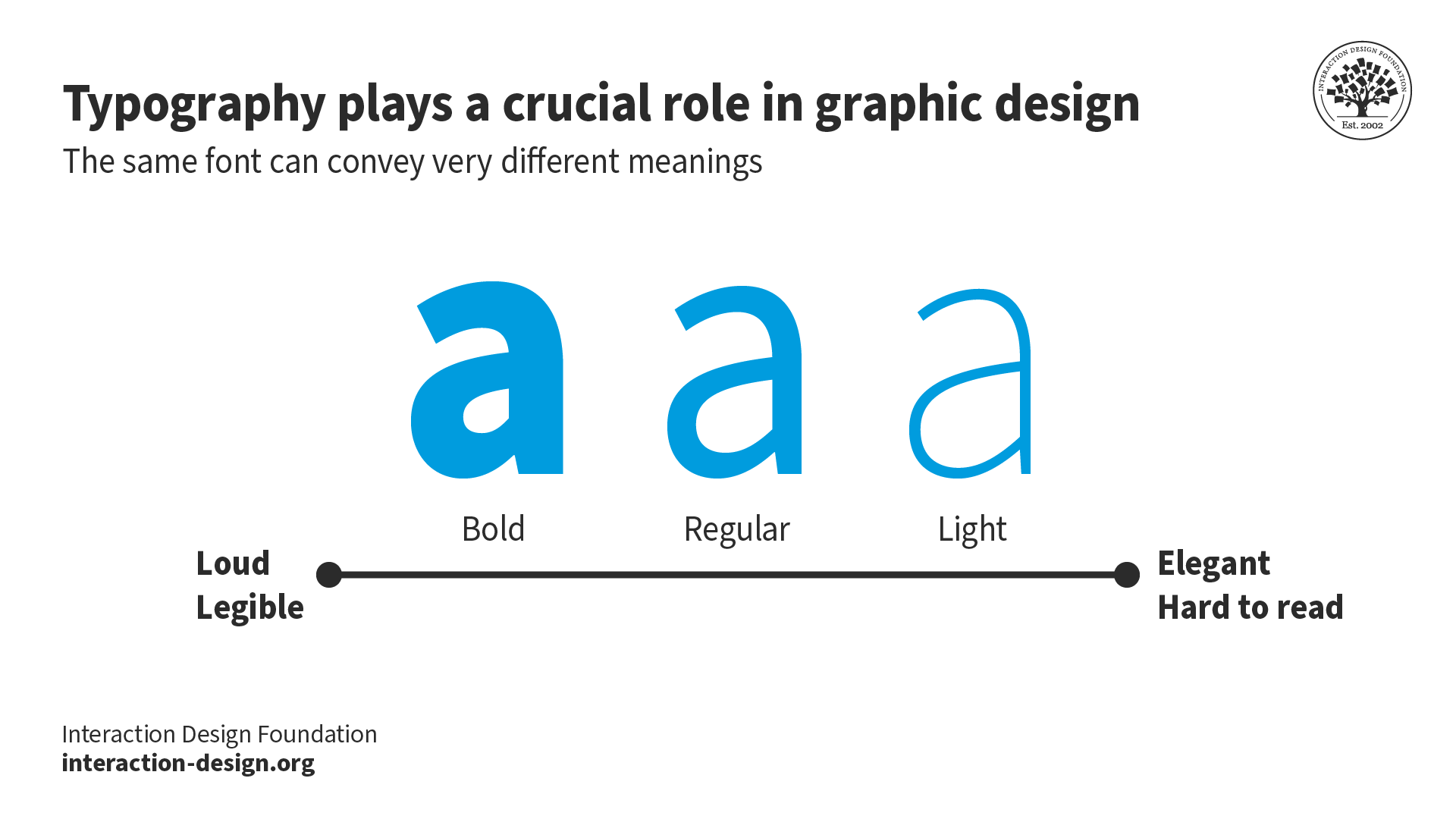
  • Typography (encompassing everything from font choice to heading weight)

  • Audience Culture (regarding color use—e.g., red as an alert or, in some Eastern cultures, a signal of good fortune—and reading pattern: e.g., left to right in Western cultures)

Typography Play a Crucial Role in Graphic Design

Interaction Design Foundation, CC BY-SA 4.0

Overall, your mission—as far as graphic design goes in UX and UI design—is to display information harmoniously. You should ensure that beauty and usability go hand in hand, and therefore your design can discreetly carry your organization’s ideals to your users. When you establish a trustworthy visual presence, you hint to users that you know what they want to do – not just because you’ve arranged aesthetically pleasing elements that are where your users expect to find them, or help them intuit their way around, but because the values which your designs display mirror theirs, too. Your visual content will quickly decide your design’s fate, so be sure not to overlook the slightest trigger that may put users off.

Questions About Graphic Design?
We've Got Answers!

How much do graphic designers make?

The salary of a graphic designer can vary widely based on several factors, including experience, geographical location, and expertise level. On average, the annual salary for graphic designers ranges between $43,000 and $66,000. This range reflects the earnings of many professionals in the graphic design field, a profession that remains essential and valued across various industries.

While graphic design offers a respectable salary, professionals seeking higher earning potential might transition to UX design. UX designers responsible for crafting user-friendly and functional digital interfaces are in high demand, leading to attractive compensation packages. For graphic designers considering a career change, transitioning to UX design can be strategic. Learn more about the benefits of this transition and how to navigate it in this detailed guide on changing your career from Graphic Design to UX Design.

What do graphic designers do?

Graphic designers are creative professionals who use their artistic skills to create visual content for various mediums. They work on projects such as designing logos, brochures, websites, and advertisements. Using various tools and software, they aim to communicate a message through their visual designs and help businesses and organizations achieve their goals.

What is the difference between graphic and visual design?

Graphic design and visual design are often used interchangeably, but there is a subtle difference between the two. Both graphic and visual designers rely on design principles and knowledge of color theory, typography and layout to create effective and engaging designs. Graphic designers primarily focus on communication (for example, logos and advertisements) while visual designers focus on product experience (for example, the user interfaces of websites and applications). Visual designers may incorporate graphic design elements to create a consistent user experience across all touchpoints.

Graphic design is a much older profession and has a strong association with print media. With the advance of technology, graphic designers’ deliverables also became digital. Visual designers have a broader skill set, combining skills of graphic designers along with an understanding of interface designer.

If you're interested in learning more about these important design principles, check our visual design course. Develop the skills you need to create stunning designs that are both functional and visually appealing.

How to become a graphic designer?

In addition to possessing a degree in graphic design or a related field, there are excellent online courses available that can provide you with all the essential visual skills you need. Platforms like Skillshare, Udemy, and Coursera offer a variety of courses focused on developing practical skills and building portfolios. These flexible and affordable courses provide a fantastic opportunity to learn graphic design and grow your skills.

If you're interested in pivoting to interaction design, there are fantastic courses available that can help you change your career to UX or a related field. There are even tailored learning paths available to guide you in your journey. Best of luck on your chosen career path!

Is graphic design a good career?

Yes, graphic design can be a great career choice for those with a passion for creativity and design. With the rise of digital media, the demand for skilled graphic designers has grown. However, it's important to note that the field is competitive and requires continuous learning and development of skills.

Graphic designers can work in a variety of industries, from advertising to web design, and can have a range of job titles, such as art director or multimedia designer. Overall, graphic design can be a fulfilling and rewarding career path for those willing to put in the work.

How do you learn graphic design?

Learning graphic design involves understanding design principles, mastering software, and developing a strong portfolio. Start with online courses or a design school to learn the fundamentals. Practice by creating designs and seeking feedback. Most importantly, build a strong portfolio.

Visual design and graphic design are closely entangled. If you're interested in becoming a visual designer, consider this Visual Designer Learning Path for comprehensive courses and resources.

How to make a graphic design portfolio?

Creating a graphic design portfolio involves selecting your best work, showcasing a variety of skills, and presenting them professionally. Include high-quality images of your work, a brief description of each piece, and the process involved.

In this video, Morgane Peng, Head of Product Design & AI Transformation at Societe Generale, explains how to define your portfolio’s visual identity through clear typography, balanced colors, and accessible layout choices.

Transcript

Is graphic design hard?

Graphic design can be challenging, requiring creativity, attention to detail, and technical knowledge. However, like any skill, it becomes easier with practice and proper training. Don Norman explains in his video that designers, including graphic designers, need to understand the business, politics, and socio-technical systems to make meaningful changes. 

Transcript

This broad understanding and the ability to speak the language of business are essential for a successful career in graphic design. 

If you'd like to learn more, take this course on Design for a Better World with Don Norman.

What is graphic design in art?

Artistic graphic design encompasses the creation of visual elements using typography, images, and colors to effectively convey a message or provide a solution to a problem. It encompasses various disciplines like layout design, logo design, and branding. 

While graphic artists create original artwork, graphic designers use these artworks and other visual elements to create designs that convey a specific message. Learn more about the differences between graphic artists and graphic designers in this article: Graphic Artist vs Graphic Designer: What's the Difference?

What does a creative designer do?

A creative designer is responsible for creating visuals across various mediums to communicate messages effectively. They conceptualize and design graphics, layouts, and visual effects to engage target audiences. Their work includes creating logos, marketing materials, website designs, and other visual content. 

They also collaborate with other team members and clients to ensure the design aligns with the overall goals and brand identity. Read more about the role of a creative designer in this article: What Does a Creative Designer Do?

Earn a Gift Earn a Gift, Answer a Short Quiz!

1
2
3
4
1
2
3
4
Question 1
Question 2
Question 3
Get Your Gift
Interaction Design Foundation logo

Question 1

What is the primary focus of graphic design?

1 point towards your gift

  • To create aesthetic-only visuals that may not necessarily communicate a message.
  • To develop visual content that effectively communicates specific messages.
  • To focus solely on the digital aspects of design without involving traditional media.
Interaction Design Foundation logo

Question 2

How do aesthetics in graphic design improve user experience?

1 point towards your gift

  • They make the design more appealing, which helps improve usability and user satisfaction.
  • They only focus on the product's appearance and disregard its functionality.
  • They use less color and forms to enhance the visual design of the product.
Interaction Design Foundation logo

Question 3

Why is an understanding of graphic design important for UX designers?

1 point towards your gift

  • Because it allows them to ignore user research and focus solely on visual elements.
  • Because it enables them to apply visual principles to the usability of a product.
  • Because it requires them to implement only traditional media and techniques.

Learn More About Graphic Design

Make learning as easy as watching Netflix: Learn more about Graphic Design by taking the online IxDF Course Visual Design: The Ultimate Guide.

Why? Because design skills make you valuable. In any job. Any industry.

In This Course, You'll

  • Get excited when you use visual design principles to create impressive visuals people love! Great visual design makes the message clear, memorable, and persuasive—whether it's an app, a logo, or a presentation slide. You'll learn what makes a design excellent and how science and culture influence what works and what doesn't. You'll create designs that truly connect with people. Visual design isn't just about beauty—it's about shaping ideas that inspire action, build trust, and give meaning to your work. As AI makes visual production faster and cheaper, you stay in demand when you can turn rough or AI-generated visuals into successful designs that get approved, adopted, and used. If you want to stand out with timeless human-centered design skills, this course is for you.

  • Make yourself invaluable with practical design skills that amplify your impact in any industry! Did you know that you only have 50 milliseconds to make a good first impression? Great visual design ensures you pass the test every time. You'll learn to use visual elements to guide emotions, influence purchasing decisions, and optimize User Experience (UX) and User Interface (UI) design. You'll master color theory, typography, and grid systems to improve usability, build credibility, and create designs that stop the scroll.

  • Gain confidence and credibility as you fast-track results with step-by-step exercises and downloadable templates! Complete optional tasks to walk away with portfolio-ready case studies that will help you land your dream job and advance your career. You'll get hands-on and design a low-fidelity wireframe, apply a monochromatic, complementary, or triadic color scheme, choose typefaces, and select a grid system. It's easier than you think! No matter your background, you can master Visual Design. With clear guidance and real-world examples, you'll apply your skills right away. This course will give you the visual design skills you need to solve design challenges, collaborate smarter, and make it easy for decision-makers to say yes to your vision.

It's Easy to Fast-Track Your Career with the World's Best Experts

Master complex skills effortlessly with proven best practices and toolkits directly from the world's top design experts. Meet your experts for this course:

  • Mia Cinelli: Associate Professor of Art Studio and Digital Design at the University of Kentucky.

  • Joann Eckstut: Color Consultant, Founder of The Roomworks, and one of the 12 designers chosen by the Color Association of the USA to create the yearly forecast used by industries to keep up with color trends.

  • Arielle Eckstut: Author, Agent-at-large at the Levine Greenberg Rostan Literary Agency, and Co-Founder of The Book Doctors and LittleMissMatched.

Get an Industry-Recognized IxDF Course Certificate

Increase your credibility, salary potential and job opportunities by showing credible evidence of your skills.

IxDF Course Certificates set the industry gold standard. Add them to your LinkedIn profile, resumé, and job applications.

Course Certificate Example

Be in distinguished company, alongside industry leaders who train their teams with the IxDF and trust IxDF Course Certificates.

Our clients: IBM, HP, Adobe, GE, Accenture, Allianz, Phillips, Deezer, Capgemin, Mcafee, SAP, Telenor, Cigna, British Parliament, State of New York

All Free IxDF Articles on Graphic Design

Read full article
10 Great Sites for UI Design Patterns - Article hero image
Interaction Design Foundation logo

10 Great Sites for UI Design Patterns

You don’t want to spend your whole life redesigning the wheel, do you? No, neither do we. If you are looking for a design that solves a problem that has been solved with a different application before, then the template for your wheel is probably already out there. This lets you save time and make a

Social shares
1.4k
Published
Read Article
Read full article
5 Steps to Creating Your Freelance Design Brand - Article hero image
Interaction Design Foundation logo

5 Steps to Creating Your Freelance Design Brand

This might sound like teaching your grandmother to suck eggs but in our experience a lot of incredibly talented designers don’t spend very much time building their personal brand. Instead they focus all their efforts on proactive marketing when they need new clients. The biggest advantage of buildin

Social shares
616
Published
Read Article
Read full article
10 Great Reasons to Go Freelance (Things You Might Not Have Considered) - Article hero image
Interaction Design Foundation logo

10 Great Reasons to Go Freelance (Things You Might Not Have Considered)

If you’re toying with the idea of going freelance; you’ll already know some of the benefits. Getting rid of the commute and ditching your boss may play heavily in the decision making process but there are other benefits to leaving the rat race behind. We’ve come up with 10 great reasons to go freel

Social shares
677
Published
Read Article
Read full article
10 Simple Ideas to Get Your Creative Juices Flowing - Article hero image
Interaction Design Foundation logo

10 Simple Ideas to Get Your Creative Juices Flowing

Writers deal with writer’s block and designer’s often find that they get stuck for ideas too. There’s no shame in it but learning to smash through the block is a necessary professional skill. Time waits for no-one and when there’s a deadline looming… you’ve got to pull something out of the bag. The

Social shares
873
Published
Read Article
Read full article
Product Thinking is Problem Solving - Article hero image
Interaction Design Foundation logo

Product Thinking is Problem Solving

It can be easy to get bogged down in developing features when we get into user experience design. It’s not that features aren’t important but that they are often secondary to the reason a customer or user buys our product. That reason is simple; the user buys the product to solve a real world proble

Social shares
954
Published
Read Article
Read full article
Recalling Color Theory Keywords: a way to refresh your memories! - Article hero image
Interaction Design Foundation logo

Recalling Color Theory Keywords: a way to refresh your memories!

Choosing the best combination of colors for an interactive design layout is not, as it may appear, a guessing game. Knowing which ones to use will save you time (and headaches). Getting it right will also keep your users connected.Since the early days of art and design, the use of color has followed

Social shares
1.1k
Published
Read Article

How to Change Your Career from Graphic Design to UX Design

How to Change Your Career from Graphic Design to UX Design

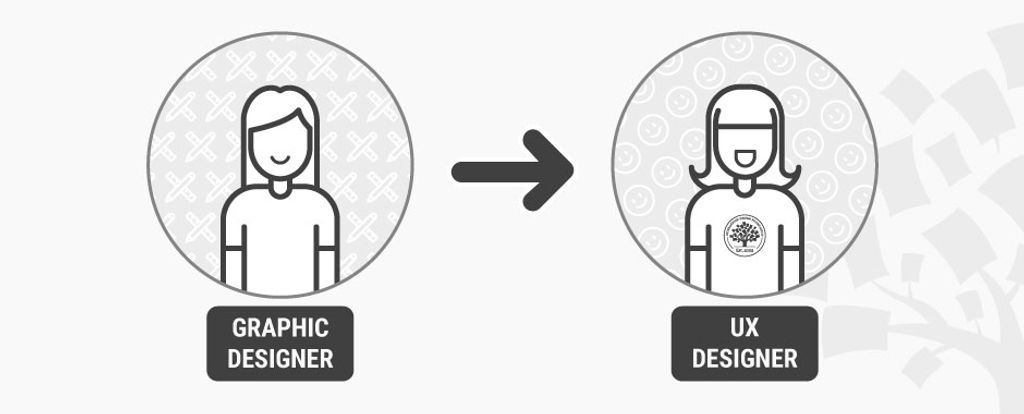
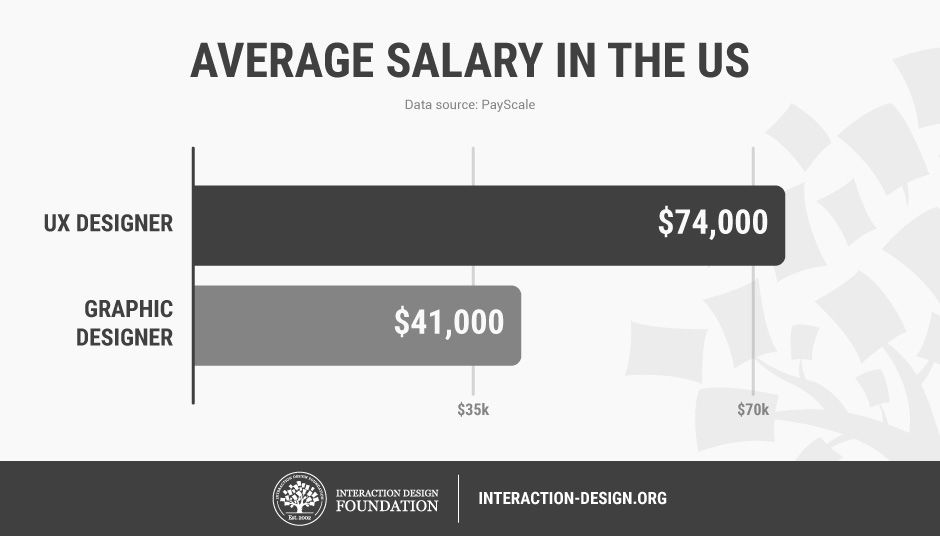
If there’s an occupation that is 100% linked with the public’s idea of what design is all about, it’s graphic design. From the familiar golden arches of the McDonald’s brand to the typography and colors of movie posters, graphic designers create some of the most iconic and ubiquitous designs around us. So why would a graphic designer like you want to change your career to UX design? Well, for one, much can be said about the sense of satisfaction and fulfillment derived from getting “under the hood” of the products you work on rather than working on the exterior. Furthermore, according to PayScale, the average salary for a graphic designer in the United States is $41,000(1), but the same for a UX designer is a whopping $74,000(2).Whatever the reason for the move, it’s clear that it can be a very rewarding one. But how do you go about switching from graphic design to UX design? Let’s find out.
What is User Experience and User Experience Design?

The user experience (UX) is what a user of a particular product experiences when using that product. A UX designer’s job is thus to create a product that provides the best possible user experience. How does that happen?

Well, it starts with a lot of research. You can’t create anything of value to a user unless you understand what kind of problems they want to solve and how you can solve those problems, so that the user will want—or better still, need—your solution. You can only get that understanding by interacting with users.

UX designers tend to be concerned with, as you can see from the image below, 3 primary factors: the look of a product, the feel of that product and the usability of that product.
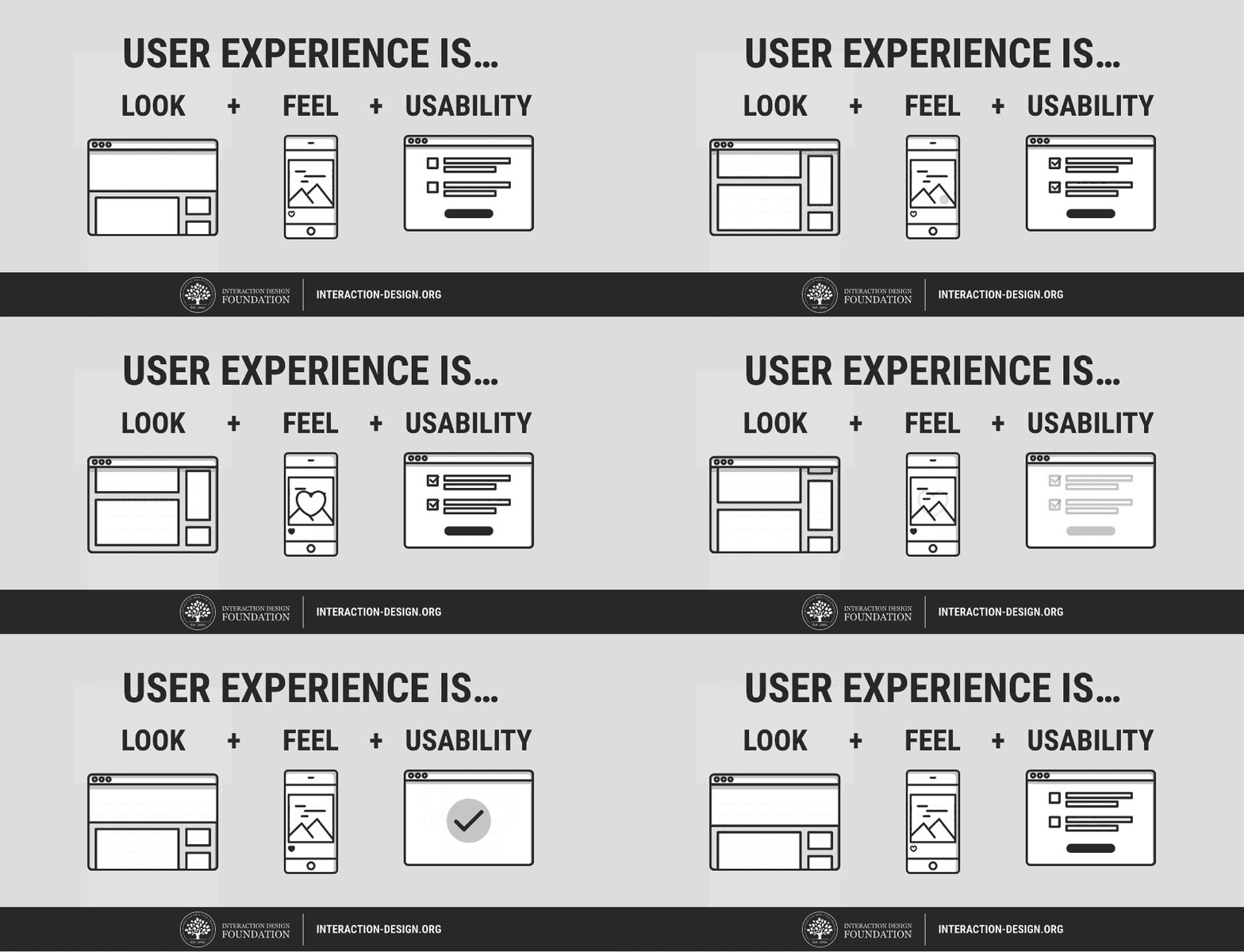
The look of a product is all about creating a product that has visual appeal and which, in particular, harmonizes with a user’s values and captures the spirit of what they expect in that product. In other words, it has to not only look nice, but look right too. In doing so, it establishes a bond of trust and credibility between the product and the user.

Next is the feel, which is really about developing products that are “a joy to use”. That is, whether you’re interacting with them or reacting to them, products should provide a pleasurable experience and not just a functional one.

Lastly, usability is the cornerstone of user experience. If a product isn’t usable, the experience of using it can never be good. UX designers want to create products which can, ideally, be tailored to meet a user’s specific needs, but which provides functionality that is predictable.

If you’re still unsure of what UX design is all about, don’t worry! We’ve got a series of articles which may help you make up your mind—they examine some of the high-level key concepts of UX design in a bit more detail than we can here:

An Introduction to Usability

Usability vs Desirability

What is Interaction Design?

What Do Graphic Design and UX Design Have in Common?
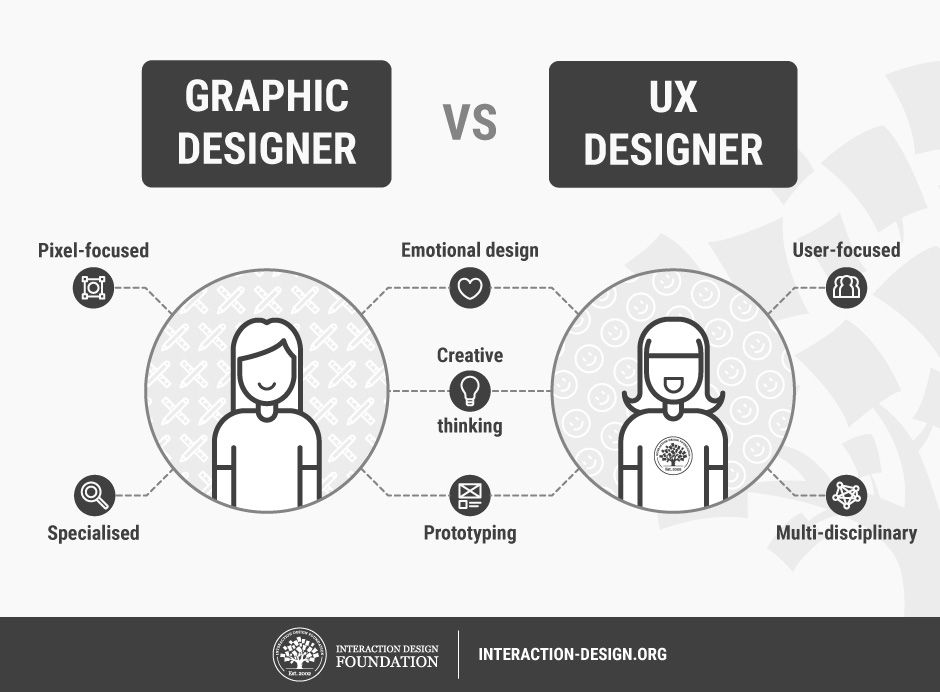
Emotional Design

Graphic design is about emotional communication through typography, color and images; serif fonts and dark, duller colors evoke seriousness, while san-serif fonts and bright colors tend to bring out a sense of joy or excitement. Graphic designers are hence very often emotional designers who elicit specific reactions in a user. UX design is also concerned with shaping the emotions of the user, although it tends to take a broader, big picture view of the entire user’s experience with the product. On top of focusing on the right typography and colors, UX designers are also concerned with motion design, the tone of the content, and information architecture, among others.

Creative thinking

Graphic designers and UX designers are both equally skilled at creative thinking. For graphic designers, creating visuals that adhere to conventions (and thus communicate effectively) while retaining a sense of originality (to stand out among the competition) requires some serious creative and critical thinking. In the same way, UX designers have to create products that solve users’ problems—and sometimes, conventional solutions aren’t always the best or most appropriate ones.

Prototyping

Graphic designers often create mockups and wireframes of their designs prior to delivering a finished design. It gives a chance for clients to offer feedback on their designs and for them to improve them without having to start from scratch. UX designers create mockups and prototypes too, but these tend to be less focused on the “look” of the product and more on the “feel” of it. Is the prototype useful? Is it usable? Is it desirable? These are the questions a UX designer wants answers to.

The Differences between Graphic Design and UX Design

User-focused vs pixel-focused

Graphic designers tend to pursue pixel perfection in their designs. Ensuring that texts have perfect kerning and colors conform to brand guidelines often take up a significant portion of graphic designers’ jobs—and for good reason, too. UX designers, however, are primarily focused on users. They study the interface between users and the product, finding ways to ensure that the product answers to the user’s key needs. And they do so by conducting a lot of research—by talking to and observing users, creating user personas and stories, doing usability testing on the products, and many more. Graphic designers looking to switch career tracks will need to do a substantial amount of work finding out how to conduct user research (more about this a bit later on in the article).

Iterative problem solving

UX design is very much an iterative problem solving process, and it can be very different from what you’re used to doing as a graphic designer. It begins with the identification of a problem; this is often found through user research, and if it’s not, it will then be confirmed through user research. There is no point in solving problems that users don’t care about; they won’t pay to solve those problems, and that means your company won’t make money.
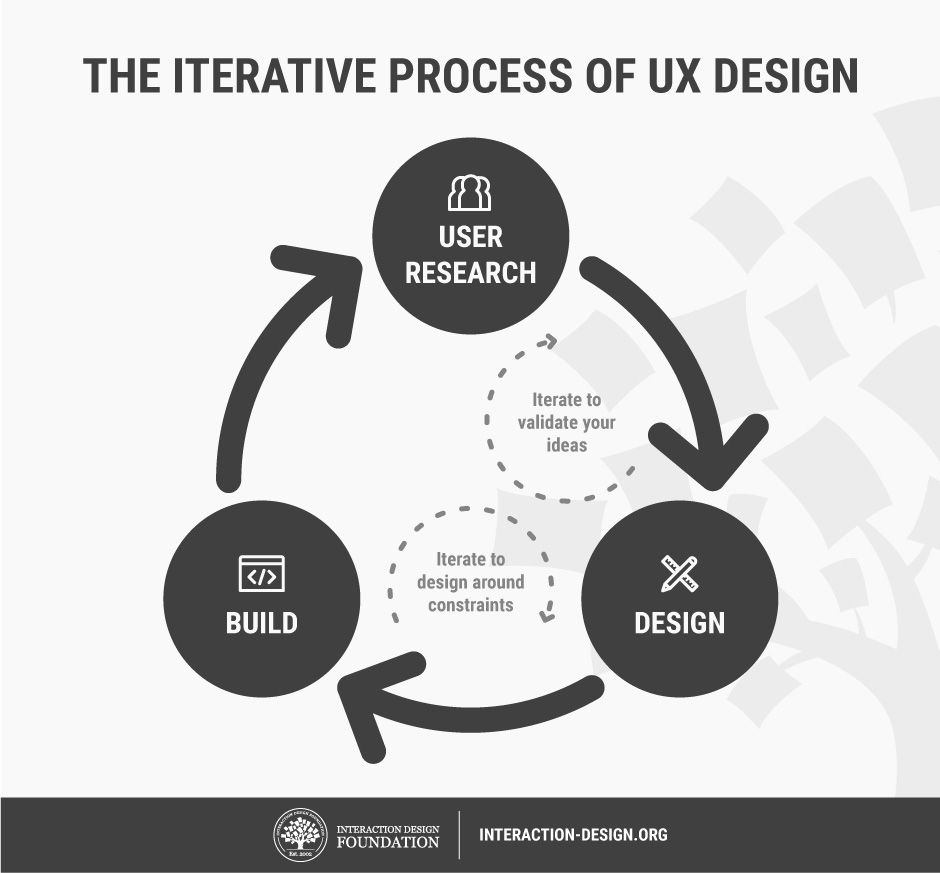

From the problem identification stage, more research is conducted into how best to solve the problem in a way that the user will be happy with—usually via observations, surveys, ethnographic studies, etc.

This research then informs the product’s design. Designs are then tested with users to see if the research led to the right solutions. The designs are constantly iterated until research confirms that they are good enough.

Once this happens the product is launched, but the design process is not over. The design will be continually tested and user feedback will be taken, thus beginning a new round of user research. Future improvements to the design will be made based on this feedback.

Multi-disciplinary vs specialized

Graphic design is a specialized discipline, and there is a certain level of craftsmanship and set of specialized skills (such as typography and color theory) required to produce great visuals. UX design, on the other hand, is much more multi-disciplinary and involves many schools of knowledge. UX designers have to constantly learn about human psychology, interaction design, information architecture and user research techniques, just to name a few, in order to create the right solutions to a user’s problems. Don Norman, the man who coined the term “User Experience”, explains that user experience covers “all aspects of the person's experience with the system including industrial design graphics, the interface, the physical interaction and the manual.”

The Big Benefit of Graphic Design Experience when Moving to UX Design

Aesthetics

The biggest benefit for graphic designers moving to UX design is that they can make things attractive. A very common misconception about UX design is that good usability trumps aesthetics. On the contrary, good aesthetics have been found to improve the overall user experience of product—by making users more relaxed, creating a positive first impression, and generally just showing that you care(3).
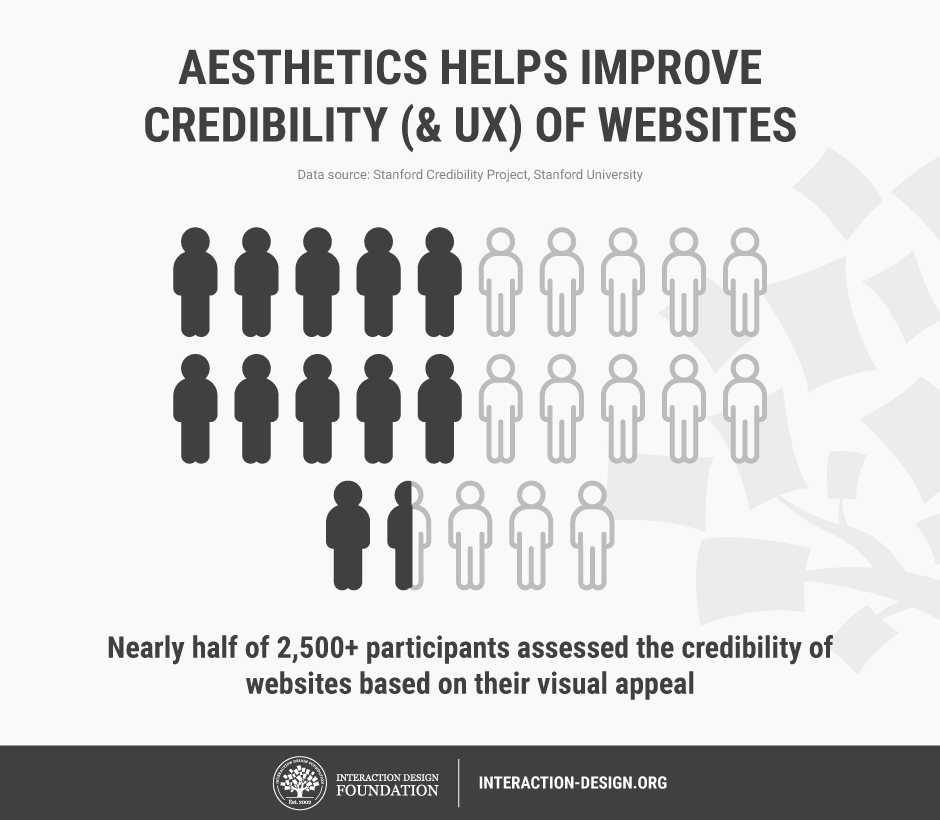
Aesthetics also help designers communicate with the internal stakeholders in their companies. Ex-graphic designers can present research results in a way that makes stakeholders sit up and really take notice. Graphic design skills are often thought of as optional in UX research, but it would be hard to deny the impact of well-presented beautiful findings. If you do make the change, you’ll need to balance your tendency to make things gorgeous with the need for moving your design projects forward. There are times in UX design when a few scribbles on the back of a napkin are more than enough to get things going; don’t spend 3 days producing a poster when this is the case.

Conventions and trends

Coming from a design background not only means having a good grip on design terminology, but also that you’re likely to be familiar with the conventions and trends in web or app designs. Most times, UX designers make use of standardized conventions (like a toggle switch for on/off states, dropdown list for multiple options, etc.) because users have come to expect these interactions on a website. Graphic designers—especially if you’ve created prototypes in the past—are also familiar with such conventions. That means you’ll adapt more quickly to a UX design role than someone who comes from a non-design background. This might not sound like much, but communication is the core of any UX design project and being able to talk-the-talk is a big benefit.

How to Enhance Your Skills to Make the Jump from Graphic Design to UX Design

Is there a gap between graphic design skills and UX design skills? Yes, but it’s not an insurmountable one. Graphic designers already speak the language of design; they just need to brush up their skills to include those that are unique to UX design.

Once you have those skills, you can start to work them into your graphic design work (because user experience design can inform graphic design just as much as it can inform product design) and start to tailor your CV to highlight your UX skills as well as your graphic design skills.

As we mentioned above, the real key for graphic designers is to understand user research in all its forms. All the courses we’ve highlighted below should address this need to a greater extent.

Online Courses

Interaction Design Foundation

We’d like to modestly present our own course offerings for this, as the Interaction Design Foundation is the world’s largest specialist design education community. Don Norman, the same man who coined the term “User Experience” and who is one of the world’s best known designers, says that we’re “a goldmine of information on interaction design”; Forbes magazine says we supply an Ivy League level of UX design education!

There are three courses that we have put together specifically with a career change or first job in UX design in mind. In User Experience: The Beginner’s Guide, you’ll be introduced to all areas of UX work, learn basic practical skills to conduct UX work, and gain the confidence to work with UX clients as a consultant. In Get Your First Job as a UX (or Interaction) Designer, you’ll find out how to get the experience in UX that prospective employers are looking for, learn to develop a winning cover letter, CV and portfolio to get a UX interview, and negotiate a job offer. And in User Research – Methods and Best Practices, you’ll learn the various methods of conducting user research, and then putting the research results into action.

We also offer a bunch of other courses (32, and constantly growing!) to help you further develop your skills in UX design. The good news is that with a low annual fee, you get access to all of our courses for a year with no additional charges, and you get access to our community too.

You can find out about our other courses here.

Coursera

You might also want to try the folks at Coursera.org, which is a low-cost but high-quality education provider which delivers courses on a wide range of subjects including UX. It does partner with universities and companies to offer courses, Professional Certificates, and degrees, and courses are generally very good. All content on the platform, with the exception of degrees, is available on demand. It’s also worth noting that their degree programs are only available for new applications during set windows. They also recently launched a Google UX Design Professional Certificate to help learners build job-ready skills in under six months.

Udemy

Udemy is the world’s biggest broker of training. They don’t design their own training; rather, they enable course creators to sell their courses on their platform. They offer literally thousands of courses in almost any conceivable subject. The trouble is that Udemy provides no quality control, and while you can find some great courses there, there are a lot of not so great courses too.

Classroom Courses

Nielsen Norman Group

If you have deeper pockets and would prefer to learn in a classroom than learn online, then you might want to check out the classroom courses offered by the Nielsen Norman Group. The group has an excellent reputation and is one of the world’s most respected UX consultancies. They offer their courses in a range of locations, but we can’t guarantee that you’ll find one on your doorstep and you may have to travel some distance to take part in them.

General Assembly

We also think that General Assembly has a great reputation for providing immersive classroom training for UX design. Once again, it’s not cheap but that is always going to be true of professional classroom training. You can choose between part-time or full-time courses. As they’re short, they repeat every few months. They are, however, available only at select locations, and you’ll need to factor travel and living expenses into the total cost, in case you don’t live nearby.

University Courses

We’re not sure that university is the best option for those seeking a change of career direction; it’s not just the money required, but also the time taken. You could be earning and learning using a different method rather than spending 3 or 4 years on a bachelor’s degree or 2 years on a Master’s program. However, if you do decide to go the university route, you’ll want to spend a lot of time researching exactly the right program for you. We’ve got a couple of examples for you here but there are literally hundreds of programs globally and we couldn’t hope to cover them all.

Carnegie Mellon – HCI Programs

York University – MSc in HCI Technologies

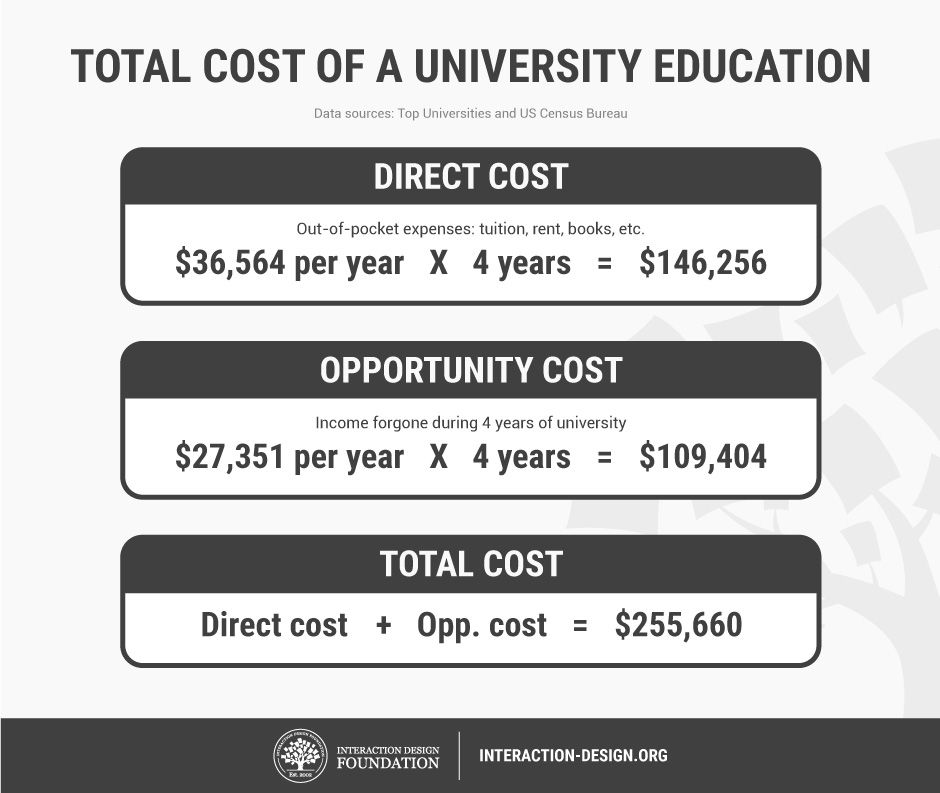
We’d urge that you sit down with a calculator and think about the costs associated with going to university before booking a place. HSBC, as reported by Top Universities, found that the average US university course will cost you $36,564 a year (including rent, tuition, books, etc.). (4) Over a 4-year degree, that means shelling out a cool $146,256—and that’s without the costs of a loan to cover those expenses.

But that’s not all—you’ll also have to give up full-time work. According to the US Census Bureau, a non-graduate earns an average of $27,351 per year.(5) This gives us a 4-year opportunity cost (that is, the income that you’ve forgone while in university) of $109,404. That means 4 years at university will set you back a huge $255,660!
If you don’t know which kind of learning to invest in, that’s OK. We know it can be confusing trying to work out what will add the most value to your career. With that in mind, we’ve put together a piece that walks you through calculating the Return on Investment in learning here; hopefully that will help you decide what’s right for you.

Networking

Once you’ve brushed up your skillset and you feel you’re ready for that first UX role, you might find handy to do some networking. The best opportunities are almost always found when someone already in the field recommends you for a position. One of the best places to start with your networking is LinkedIn. Join some UX groups, start contributing, and build that all important network with your peers. But take it slow; don’t just show up and start asking for a job. You need relationships with people before they will help.

We also offer some awesome networking opportunities to both our members and non-members too. Members can join our global community of UX professionals in the many discussion groups and forums that we provide; we have the largest specialist design community on earth so there are plenty of opportunities to be uncovered there. For members and non-members, we also have local group meetings in many places around the planet. These meetings are completely free to attend and are a great way to meet people doing UX in your home town or city. Find out more at our Community page.

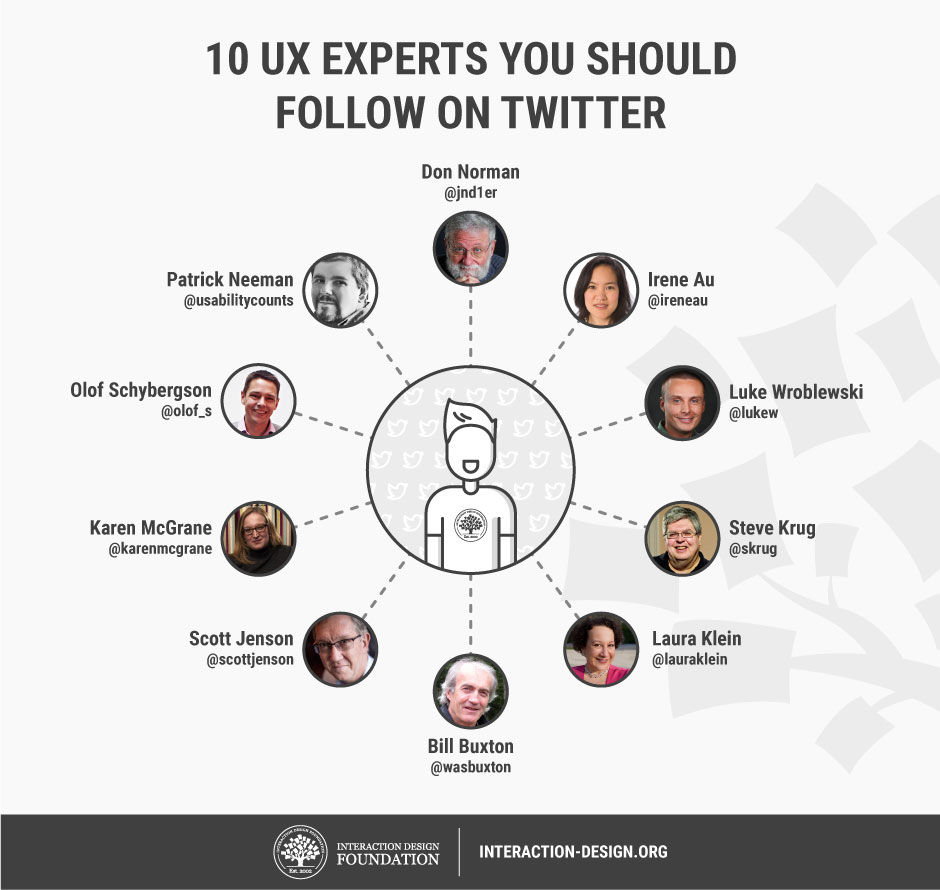
One other useful way to start networking is to follow famous members of the UX design community on Twitter. Not only will you learn a lot from them, you can also interact with their followers (who are likely to be designers like you too). We’ve put together a list of twenty people you should follow on Twitter in the UX sphere here to get your started.
Mentoring and Feedback

Another great way to develop your career is to work with a mentor in the UX field who has “been there, done it and bought the t-shirt”, at least so to speak. You may find a mentor through your own network nd that’s an awesome way to connect with a mentor, but if you can’t then our IxDF Design League members can access our network of design mentors as part of their annual membership fee.

The Take Away

If you want to change from graphic design to UX design as a career, that’s awesome. It’s not going to be as difficult as you might think either. You just need to get a little training under your belt so that you’re familiar with what it is a UX designer does, and then you can put some of those techniques to work in your current role. Then when you think the time is right, you can start networking and lining up some interviews for your new job!

References & Where to Learn More

  1. Payscale’s research on Graphic Design salaries

  2. Payscale’s research on UX Design salaries

  3. UX Myths: Aesthetics are not important if you have good usability

  4. How much does it cost to study in the US?

  5. Earnings by education: US Bureau Of Labor Statistics
Feel Stuck?
Want Better Job Options?

AI is replacing jobs everywhere, yet design jobs are booming with a projected 45% job growth. With design skills, you can create products and services people love. More love means more impact and greater salary potential.

At IxDF, we help you from your first course to your next job, all in one place.

See How Design Skills Turn Into Job Options
Privacy Settings
By using this site, you accept our Cookie Policy and Terms of Use.
Customize
Accept all

Be the One Who Inspires

People remember who shares great ideas.

Share on:

Academic Credibility — On Autopilot

Don't waste time googling citation formats. Just copy, paste and look legit in seconds.