You've seen it countless times: Agile teams racing through sprints while personas gather dust in forgotten folders (or never get created at all). The promise of user-centered design crashes into the reality of two-week deadlines. But what if you could harness both? Build at startup speed while truly understanding your users. Transform "as a user, I want..." into "Sarah needs this because..." and watch engagement soar, revenue climb, and churn vanish. Your products will become indispensable to users' lives while you become the go-to person who made it happen.
For some, it may seem like Agile and user-centered design (and therefore, personas) don't fit together. However, Alan Cooper, the Father of Visual Basic, who pioneered user personas, highlights the numerous benefits you get when you integrate user-centered design with Agile:
You'll translate user needs into actionable requirements. Raw feedback turns into precise narratives that you and your development team can actually use. No more guessing what users meant—you'll have clear direction.
You'll eliminate wasted work before it starts. When you know users actually need, you won't build features they'll reject. This saves you from costly revisions and prevents you from spending weeks on solutions nobody wants.
You'll bridge communication gaps across your team. With a shared understanding between yourself, developers, managers, and stakeholders, everyone speaks the same language and works toward the same purpose.
You'll free up time to focus on what matters most. UX designers handle the user research and feature negotiations, so developers can focus on the technical challenges they love solving. Less time in meetings arguing about requirements means more time creating.
You'll maintain laser focus on user needs. Throughout development, you'll evaluate new ideas against actual user needs rather than assumptions. This keeps you building solutions that truly matter to the people who'll use your product.
In this video, Laura Klein, Product Management Expert, Principal at Users Know, Author of Build Better Products and UX for Lean Startups, explains how Agile is, at its core, an iterative process.
Show
Hide
video transcript
- Transcript loading…
Convinced? First, let's explore where the Agile-personas rift comes from, and then dive into how to fix it.
Why Agile and Personas Don't Always Mix (And How to Fix It)
Agile promises speed. Personas promise empathy. Many teams fail to get both.
You can make personas work in Agile by treating them as living documents that evolve with your sprints. The problem isn't with either method—it's how teams treat personas as one-time research projects instead of ongoing tools. Here's how to make them work together.
Efficiency Fears Sideline User-Centered Design
When two-week sprints clash with months-long user research, one has to go—and it's usually the latter.
Many project managers conclude that they must skip personas or create shallow ones based on guesses. Traditional persona research follows a time-intensive path:
Qualitative research with dozens of user interviews.
Behavior pattern analysis.
Persona creation.
Quantitative validation through surveys.
They worry that in-depth research will create scope creep and missed deadlines. But this leaves developers building on assumptions, support tickets piling up, and users abandoning your product for competitors who understand them better.
William Hudson explains what happens when you skip this crucial step:
Show
Hide
video transcript
- Transcript loading…
Why Personas Transform Agile Teams
Personas turn abstract users into real people, preventing expensive mistakes and shipping products users actually want.
Early-Stage Benefits
User stories gain power when they become persona stories. "Sarah, the busy working mom, wants to quickly save dinner recipes while commuting" creates more empathy than "I want to save recipes quickly." Designers and developers understand why features matter, not just what to build.
Feature requests get filtered through user needs. When executives push for AI chatbots, you show how your "overwhelmed freelancer" persona needs simpler task organization instead. Real user research beats executive assumptions every time.
Sprint decisions speed up dramatically. Instead of endless debates about user preferences, teams check their persona documentation. This clarity removes the guesswork and accelerates development.
Long-Term Benefits
You build the right product from day one. When you sort out that confusing mute button for your "tech-anxious grandparent" persona before development, it saves thousands in support costs and prevents user frustration.
Teams align around shared understanding. Developers and executives discuss "Maya the commuter's" needs when evaluating audio compression, not just technical specifications. Everyone speaks the language of user impact.
Development waste disappears. Every sprint delivers features users actually requested. Conversion rates improve while support costs drop, creating measurable business value.
How to Implement Personas in Agile, Step by Step
Use this approach to Agile personas to balance deep user insight with speed.
1. Start Before Day Zero
Long before Day Zero, when features and interface are on the table, bigger questions need to be answered about who, exactly, is the user, and what, exactly, will make him happy.
—Alan Cooper, AGILE 2008 Keynote
Alan Cooper's insight remains crucial: understand users before your first sprint begins. Build foundational insights when deadlines aren't looming and give your team clear direction from day one.
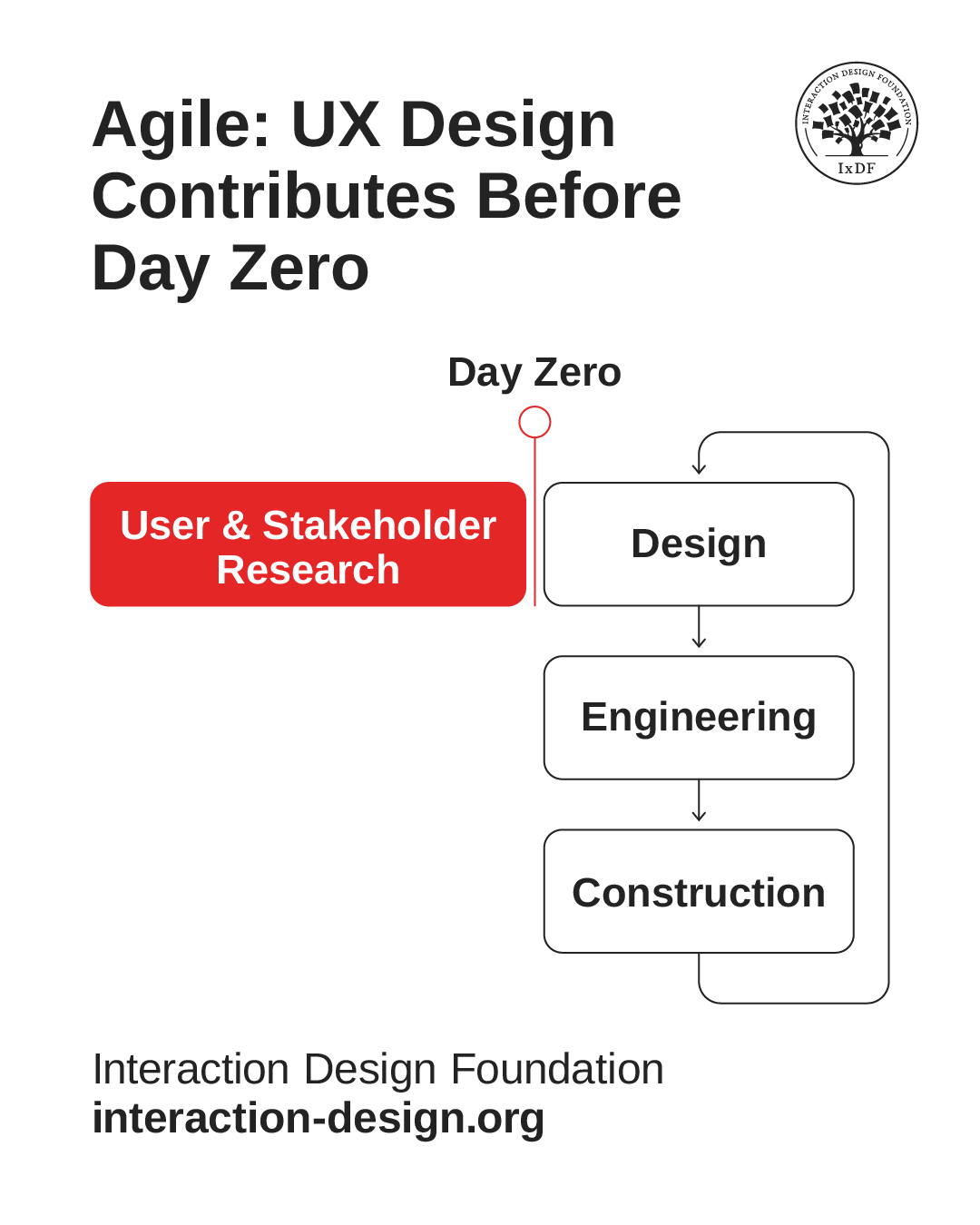
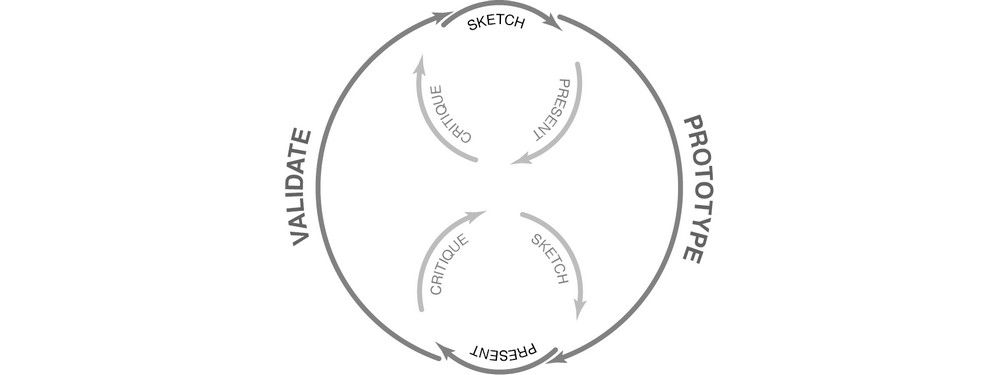
Alan Cooper, who introduced personas to interaction design, introduces a new stage to the typical Agile format of design, engineering, and construction. In-depth user research and persona creation should come before the Agile process truly begins. However, research doesn't stop when sprints start.
© Interaction Design Foundation, CC BY-SA 4.0
Front-loading research creates a knowledge foundation that accelerates every following sprint. Teams start from the beginning with clarity instead of assumptions.
2. Involve Engineers and Stakeholders in User Research
Your personas gain power when your entire team helps create and owns them. Engineers who understand real users stop building features and start solving human problems, and executives who see user struggles stop pushing features no one wants.
Include your team in research activities like interviews and observations in a non-intrusive way. This collaborative approach creates three powerful outcomes:
First, deep empathy replaces assumptions. Your backend developer now codes for "Maria, who loses sales when the app crashes," not anonymous users.
Second, adoption happens naturally. Teams defend personas they helped create.
Third, insights multiply. Engineers spot technical constraints that researchers might miss.
In this video, Laura Klein explains the benefits of including engineers in user research:
Show
Hide
video transcript
- Transcript loading…
When your whole team understands users, personas become shared, not something only designers understand.
3. Create Minimal Viable Personas
Focus on user needs, not demographics. "Jared is a busy parent ordering dinner in 30 seconds while walking to the car" provides more design direction than any age or income bracket.
Include only the essential information:
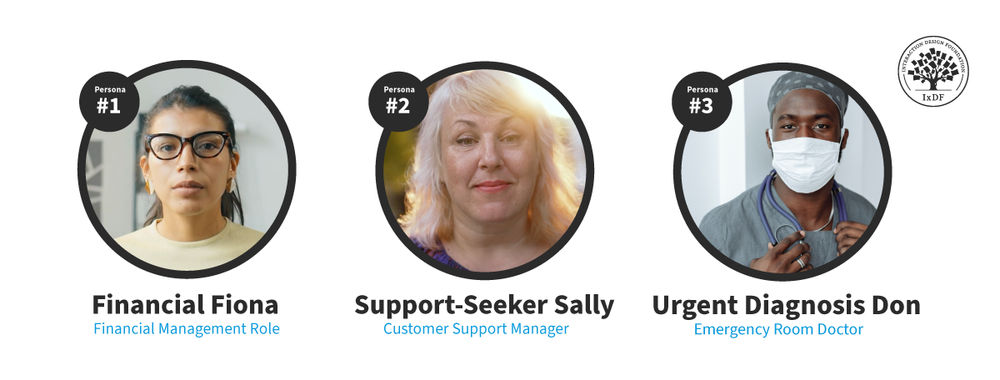
Name, age, and other relevant demographic details.
Roles (if the persona can take on multiple roles in the problem domain, for example, customer and passenger).
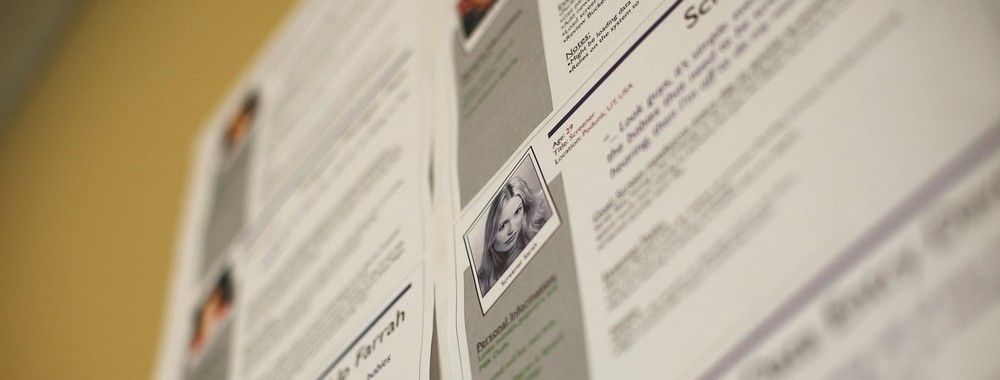
Photo (a real photo, or an AI-generated image of the persona in the problem domain).
Primary goals, motivations, and behaviors.
Brief stories of use, context, pain points, and other directly relevant details.
Minimal viable personas (MVPs) deliver maximum insight with minimum overhead. They provide clarity without bogging teams down in unnecessary details.
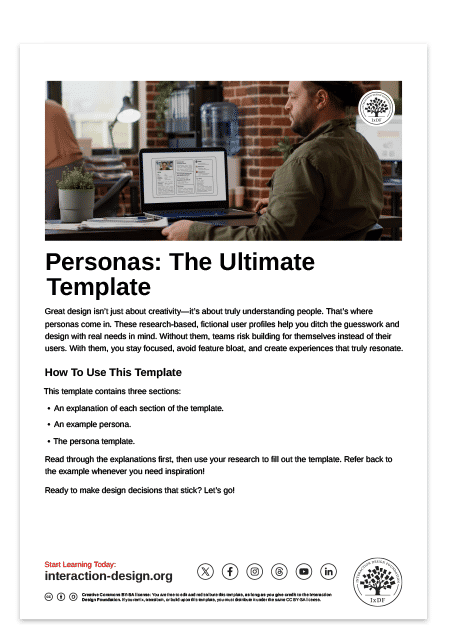
Want to get started now with MVPs? Download our free persona template to speed up your persona creation process. It includes guidance on what to include in each section, an example for inspiration, and is already formatted for use as an MVP.
4. Build Living Documents
Living personas evolve with your product, unlike set-it-and-forget-it PDFs that quickly become irrelevant. Version control them alongside your code and track how insights change over time.
Link your personas to your analytics dashboards to compare and validate them with real data. Check if Sarah's documented behaviors appear in actual usage patterns. This process of validation is called methodological triangulation. It keeps personas grounded in reality. William Hudson explains more in this video.
Show
Hide
video transcript
- Transcript loading…
Review your personas after every sprint. Discuss with your team what you learned, what proved wrong, and what needs changing. Incorporate insights from support tickets, usability tests, and user interviews.
How to Keep Personas Alive in a Fast-Paced Environment
Your team will forget about your personas if they don't use them daily. Keep them front of mind with these proven tactics, which embed them in your workflow.
Make Personas Visible Everywhere
Digital integration puts personas where developers work. Add persona cards to every ticket, include quick-reference links in your wiki, and display them on project dashboards. One click connects any task to user context.
Combine this with physical presence to reinforce digital visibility. Print posters for team spaces, create mugs, and place reminders, or even cardboard cutouts in meeting rooms. Make ignoring personas impossible.
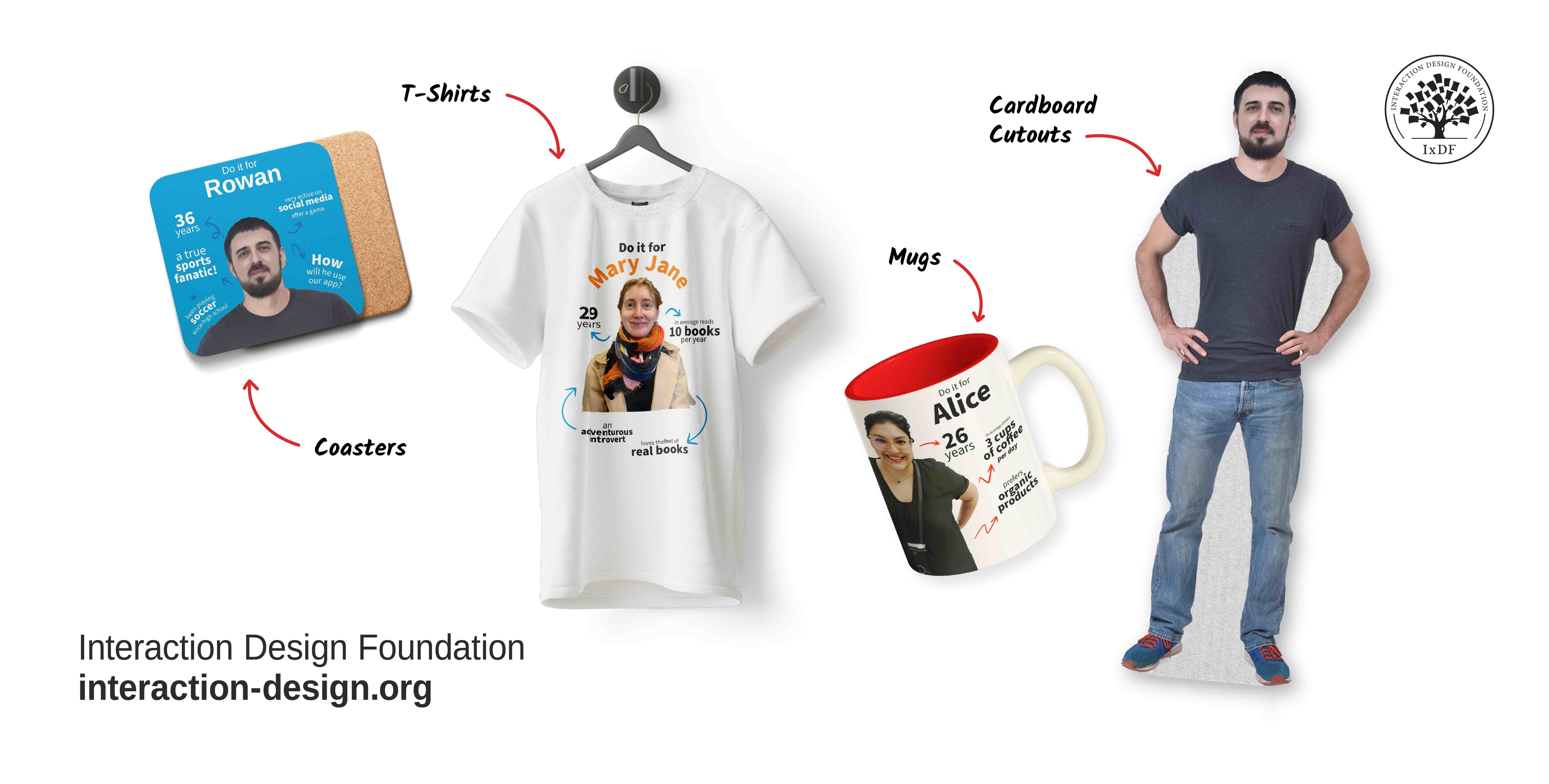
Don’t be afraid to turn your personas into merchandise. Mugs, coasters, mouse mats, t-shirts and other daily items make your users unforgettable. Cardboard cutouts in meetings even give your users a seat at the table.
© Interaction Design Foundation, CC BY-SA 4.0
And don't forget—daily conversation brings personas to life. Start meetings by asking, "How does this help Marcus?" Include persona names in technical discussions. When personas become everyday language, they stay relevant.
Create Sustainable Persona Habits
Integrate personas into existing workflows and habits instead of keeping them separate. Frame standup updates around persona impact: "This helps Sarah save recipes faster,” and make persona consideration part of your definition of “work finished.”
Code reviews should evaluate persona impact alongside functionality. For each merge request, answer questions like “Which persona does this change affect?” and “How does it support their goals?”
Measure Persona Effectiveness
Track persona mentions in messages and documentation to gauge actual usage and survey teams quarterly about persona helpfulness. Monitor which personas appear most in user stories to identify if certain personas are neglected.
Personas that appear in daily conversation stay alive and valuable, while those forgotten become a symbol of wasted time. Measurement reveals how much personas drive decisions and when they need attention.
Master Personas in Sprint Planning and Organization
You can transform abstract sprint planning into meaningful work that changes real lives. Here's how to make your personas the beating heart of every sprint.
Pre-Sprint Planning
Filter your backlog through one question: "Does this help Marcus succeed?" If it doesn't, it's probably best to press delete. Your persona should decide what gets built and what doesn't. Resist working on features that only solve edge case problems.
Consider dedicating entire sprints to specific persona pain points, as this will create a focus in your team that leads to breakthrough solutions.
During Sprint Planning
Story points become accurate when you estimate through Marcus's experience. That "simple" dropdown menu? Marcus fumbles with it one-handed on crowded subways. Add complexity points. The "quick" form requires his business license number, which he never remembers. More points. Write acceptance criteria as scenarios: "Marcus creates invoices during his 7-minute commute." Real context drives impactful results.
Build a simple value matrix plotting user value against business value. Watch the right priorities reveal themselves, and you'll ensure you hit user and business goals.
Sprint Organization Tactics
Structure your board as Marcus's journey map. Each card will remind you and your team how you're improving his life.
Appoint a persona champion who brings Marcus's voice to every decision.
Pair developers with the designers and researchers who interviewed real users. Their holistic insight will allow stories to emerge that deepen empathy, and, in turn, lead to better solutions.
Sprint Review Integration
Demo complete workflows, not feature lists. Show how Marcus will use the solution, rushing between meetings and creating invoices in seconds.
Explain technical choices through his reality: "Offline-first because Marcus works in dead zones."
Track what matters, such as time-to-invoice, error rates, and support tickets that measure stress. Real success means Marcus wins more business.
How UK GDS Made Personas Work in Agile: A Service Data Case Study
The UK Government Digital Service's Service Performance team is a compelling example of how to integrate user personas into Agile development successfully. Their approach demonstrates practical techniques for keeping personas alive and actionable throughout the development process.
Research Approach and Persona Development
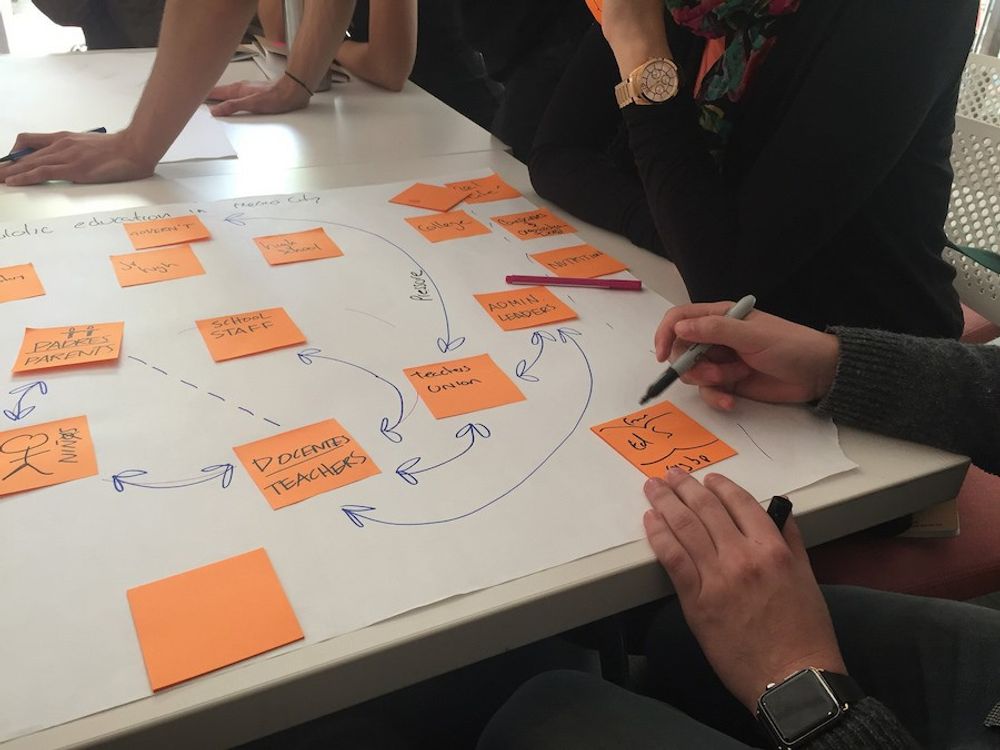
The team employed a collaborative research methodology that included team workshops, user interviews during discovery and alpha stages, and collaborative analysis sessions using post-it notes. Rather than creating traditional persona documents, they developed a primary persona called "The Conductor," representing individuals who need high-level oversight of government service performance across multiple services.
Their key innovation was formatting user needs following a standardized structure: "As a Conductor (our primary persona), I need an overview of services across government in order to know where the focus should be." They also categorized the Conductor's needs into three types: explicit (clearly articulated), implicit (observable but not expressed), and created (required by the service).
User Needs in Agile
The team created a three-level hierarchy for organizing user needs:
High-level needs: "I need to understand the data so that I don't use it incorrectly."
Needs: "I need to trust the data so I can defend my decision."
Detailed needs: "I need to know how reliable the data is, so that I can provide caveat if needed."
This hierarchical structure made it "easier to see if and how the needs related to each other" and provided a framework for prioritizing work in sprints.
Direct Sprint Integration Without Wasting Time
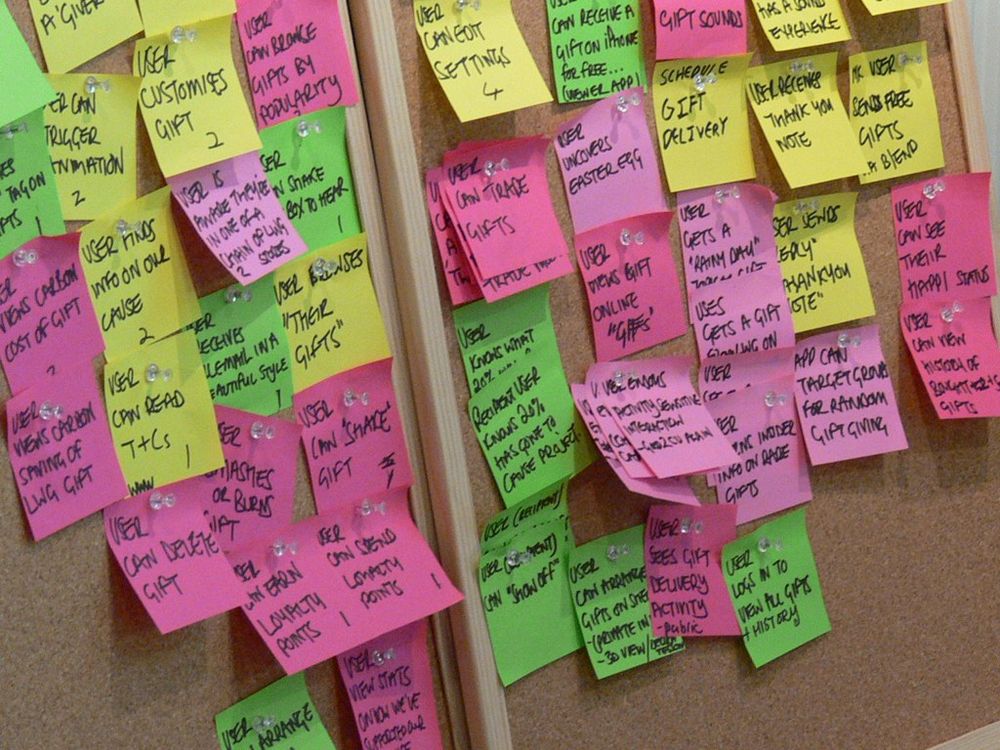
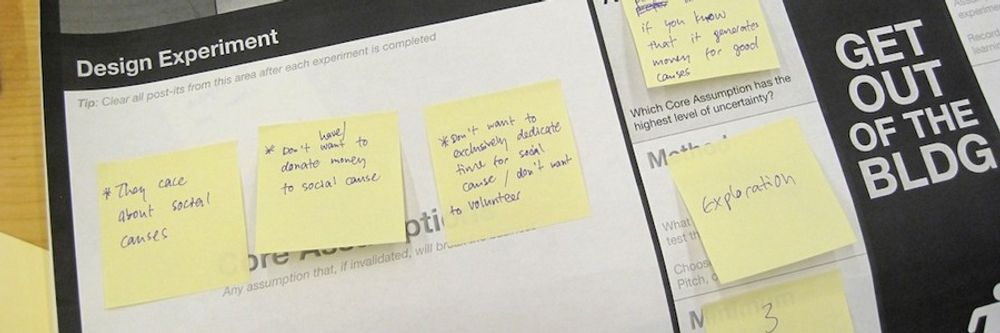
A crucial success factor was how GDS streamlines its approach to incorporating research findings. As the they explain: "We don't do PowerPoint presentations or detailed reports and we use the time we've saved from that to work more closely with the team." Instead, they use collaborative post-it note sessions where personas and research findings (pink notes) generate actions (orange notes) that "go into the project backlog, into sprint plans and therefore into the product design."
A similar method for collaboratively sorting and making sense of research findings is affinity diagramming. An affinity diagram groups together related user observations and quotes to give teams a big picture of user needs, behaviors, and motivations. You can then use insights from the diagram to build a persona collectively with your team. William Hudson explains more in this video.
Show
Hide
video transcript
- Transcript loading…
Researchers Embedded as Team Members
Rather than having researchers work across multiple projects, GDS embeds researchers within cross-functional teams. This allows researchers to:
Become a part of the team shaping the design.
Build depth of expertise in a particular product or its audience.
Champion personas in individual Agile teams.
This integration ensures user needs remain relevant and actively influence development decisions.
Continuous Refinement Process
The team established a systematic process for continually refining personas based on ongoing learning. They maintained visibility through structured spreadsheets listing all needs in their consistent format. Regular team workshops and collaborative analysis sessions ensured shared understanding evolved with the project. As they stated: "We will continue to use it as we move into public beta and as our understanding of our users evolves further, to ensure that we always meet their needs."
The Outcome
The approach delivered several concrete benefits:
Improved team alignment through workshops that reached a common understanding of user needs.
Faster insight delivery by embedding researchers who could provide insight to teams quickly and advocate for personas.
Actionable outputs with research findings directly translating into sprint tasks.
Systematic organization that made relationships between needs clear and prioritization easier.
Collaborative decision-making with personas that ensured the team agreed on research interpretations and implications.
The GDS case study demonstrates that personas can thrive in Agile environments when they're treated as living artifacts integrated into daily practices rather than static documents.
The Take Away
Agile and personas work brilliantly together when you research personas before sprints start, and treat them as living documents. Speed and empathy don't need to be opposites—they can work together in harmony to create user-centered solutions in less time.
Your new Agile persona toolkit:
Start lean: Create minimal viable personas with names, goals, and behaviors—skip the detailed demographics.
Make them visible: Add persona cards to every ticket, print posters, and use their names in standups.
Update constantly: Review personas in every retrospective with fresh insights from support tickets and user tests.
Filter decisions: Ask "Does this help Sarah?" before building anything.
Measure impact: Track persona mentions, feature usage, and support costs.
To transform your sprints:
Write stories as "Marcus needs X because..." instead of generic user stories.
Structure sprint boards around persona journeys, not feature lists.
Demo complete workflows showing how personas accomplish real goals.
With personas, your products will solve real problems for real people. Every line of code will improve someone's actual life. With Agile personas you can turn abstract features into human impact.
References and Where to Learn More
Want to know more about personas and how to use them effectively? Personas and User Research: Design Products and Services People Need and Want will show you how to gather meaningful user insights, avoid bias, and build research-backed personas that help you design intuitive, relevant products. You'll walk away with practical skills and a certificate that demonstrates your expertise in user research and persona creation.
Explore Alan Cooper's full keynote from Agile08 in Toronto in his retrospective, How Far Have We Come?
Read the UK Government Digital Service's full case study, Understanding the needs of service data users, and dive deeper into How they do user research in agile teams.
Start creating persona stories in our Master Class with William Hudson, User Stories Don't Help Users: Introducing Persona Stories.
Find out one of the reasons why personas are so effective in our article, How Personas Shape Stronger Design Decisions.
Get Nielsen Norman Group's Top 10 Tips for UX Success From Agile Practitioners.