Your constantly-updated definition of Interactive Design Portfolios and
collection of videos and articles. Be a conversation starter: Share this page and inspire others!
390shares
What are Interactive Design Portfolios?
Interactivity brings your design portfolio to life!
Design portfolios are crucial in successfully landing a variety of roles, but what form should they take? Interactive portfolios are a great way to show off your design skills while engaging with your audience in ways that just aren’t possible with static media. And for interaction design, they allow you to showcase the same skills you’ll be using on the job.
In this clip, Morgane Peng, Design Director at Societe Generale CIB, explains the important role of a portfolio.
ShowHide
video transcript
Transcript loading…
What a Design Portfolio Should Include
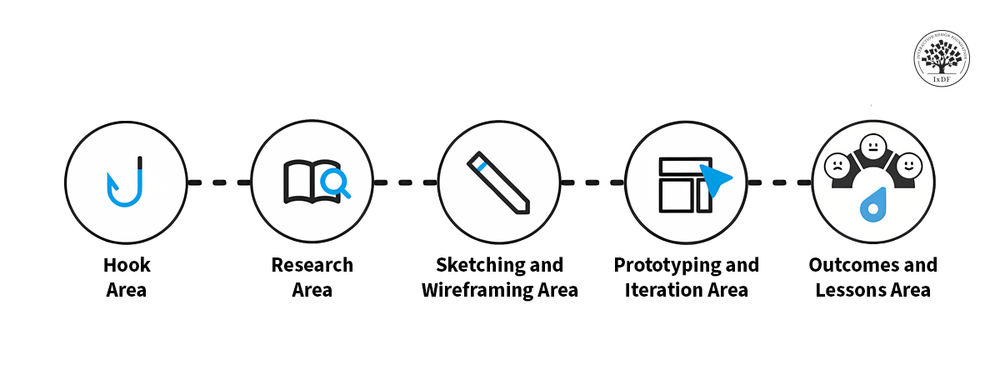
It’s important not to focus solely on finished designs. Your portfolio will be more persuasive and informative if it tells the stories of design from problems to solutions. If you also do user research, be sure to include examples of that too, showing how research results affected design decisions. For a user experience portfolio, consider including
The complete list sounds daunting, but bear in mind that you are only giving highlights at each step of the story.
You should focus on three to four projects that showcase the range of your work.
Multiple Mediums for Flexible Presentation
Websites offer the greatest scope for demonstrating design skills, but it is often necessary to have a backup. This is especially true if a mobile rendering of a site does not show it in the best light.
Some website platforms support the ability to export your CV as a PDF. Alternatively, sites such as behance.net allow users to create interactive PDFs. These mostly rely on simple scrolling for navigation, but other interactive elements are present, such as drop-down lists and popups.
Where to Start
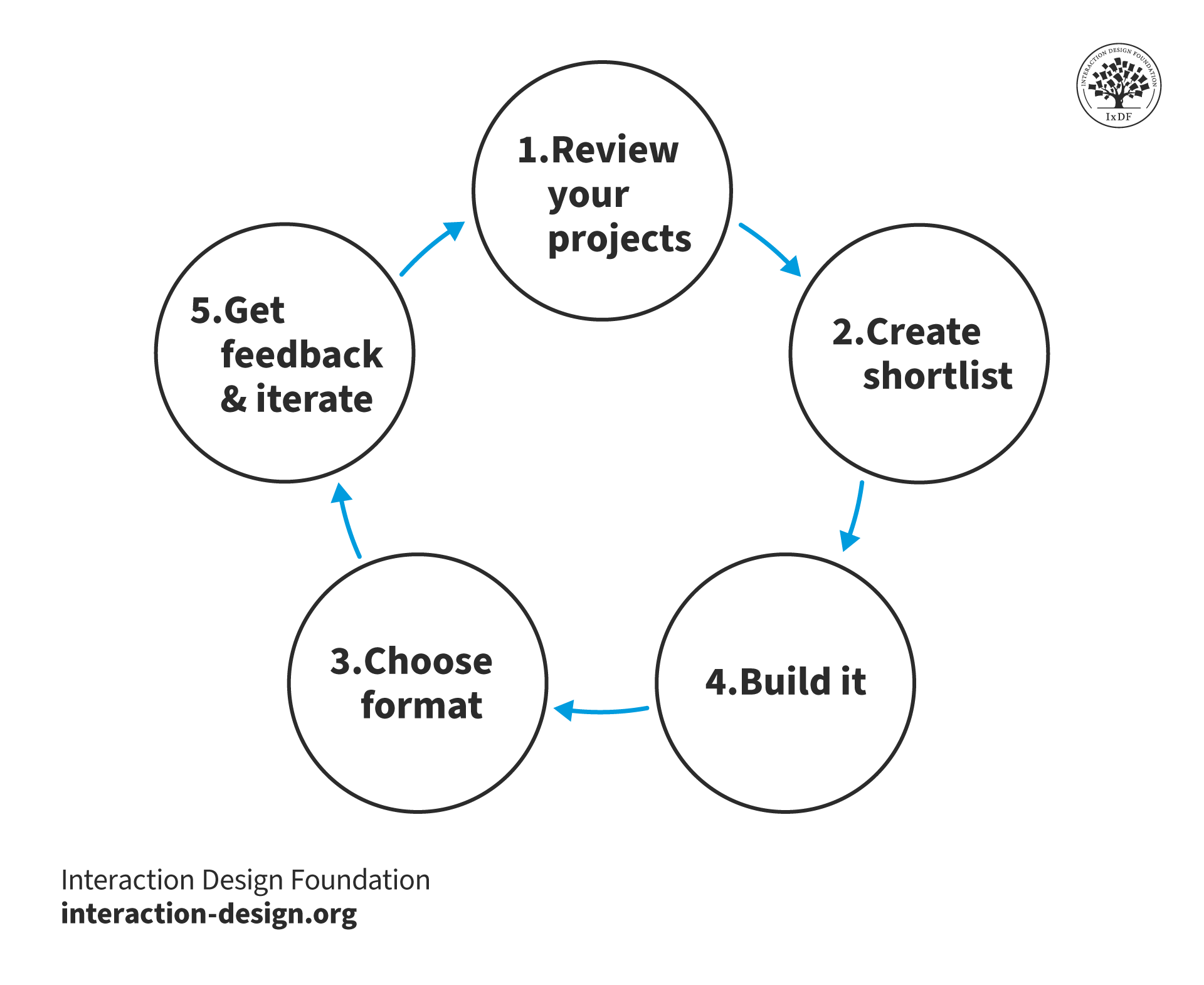
Building a UX design portfolio, as described below.
In a step-by-step article on how to build a UX design portfolio, Rachel Krause at NNG (see Where to Learn More) suggests:
Review your projects. What makes them good, bad or different from others? What is likely to attract the attention of hiring managers?
Whittle your list down to a handful and consider the story behind each. If you have many to choose from, consider those that might make an interesting conversation when someone asks what you do for a living. Talk about the problems you were solving, how you worked with others and how successful the solutions were.
Choose the format of presentation. As discussed above, websites are great for interactivity. However, they may not always be the easiest to present. Interactive PDFs are a little more linear.
Build it. If you are a confident website designer, starting from scratch can wow your prospective employers or customers. If you would rather focus on telling the stories behind your projects, consider template-rich environments like Wix, Squarespace, Behance and WordPress.
Share your portfolio and get feedback. You can start with online communities but focus on those you already contribute to. Crashing into a community just to ask for feedback may be counterproductive. As you talk to hiring managers and recruiters, take note of what works for them and what doesn’t.
Sample Portfolios
Be sure to have a look at what others are doing. The great thing about interactive portfolios is that they can often be open to view. Naturally, sensitive or detailed information may be stashed behind a password-protected link, but your main goal is to generate enough interest to carry your portfolio past the initial filtering stages.
Here are some collections of good portfolio examples:
What tools can I use to create an interactive design portfolio?
Popular tools include Adobe XD, Figma, Webflow, and Behance. These platforms offer flexibility for designing and prototyping interactive elements, allowing designers to craft customized, engaging portfolios.
How often should I update my interactive design portfolio?
Updating your portfolio every 3-6 months or after completing significant projects is ideal. Regular updates show growth, new skills, and current interests, helping you stay relevant in the fast-evolving design industry.
What are some best practices for creating an interactive design portfolio?
Some best practices include keeping navigation intuitive, ensuring responsiveness on different devices, focusing on readability, and avoiding overly complex animations that can distract from the content. It’s also important to regularly update the portfolio with recent projects to reflect current skills and styles.
How can interactive elements enhance a design portfolio?
Interactive elements like animations, transitions, clickable prototypes, and hover effects can help to guide viewers’ attention and make the portfolio experience memorable. When used thoughtfully, these elements reflect the designer’s skill in creating engaging and functional user experiences.
What should an interactive design portfolio include?
When possible, an interactive portfolio should include case studies, project descriptions, images, prototypes, and links to live projects. Key sections typically cover the designer's process, challenges faced, solutions provided, and measurable results. It's also useful to include a brief introduction and contact information.
Why is an interactive design portfolio important for UX/UI designers?
An interactive portfolio helps UX/UI designers demonstrate their design thinking, technical abilities, and creativity more effectively. It gives potential employers and clients a hands-on experience of the designer's style and approach, making it easier to stand out in a competitive field.
What is an interactive design portfolio?
An interactive design portfolio is a digital collection showcasing a designer’s work and skills, often presented in a dynamic and engaging format. It typically includes interactive elements, animations, and responsive layouts to highlight a designer’s approach to user experience (UX) and user interface (UI) design.
Earn a Gift, Answer a Short Quiz!
Question 1
Question 2
Question 3
Get Your Gift
Try Again! IxDF Cheers For You!
0 out of 3 questions answered correctly
Remember, the more you learn about design, the more you make yourself valuable.
It's Easy to Fast-Track Your Career with the World's Best Experts
Master complex skills effortlessly with proven best practices and toolkits directly from the world's top design experts. Meet your expert for this course:
Morgane Peng: Designer, speaker, mentor, and writer who serves as Director and Head of Design at Societe Generale CIB.
All open-source articles on Interactive Design Portfolios
Stop the Generic Portfolio Trap! Design a Stand-Out Portfolio for Your UX/UI Niche: User Research
User research is indispensable—and without it, well... UX design is guesswork. When you’re a user researcher, you know t
371 shares
11 mths ago
Open Access—Link to us!
We believe in Open Access and the democratization of knowledge. Unfortunately, world-class educational materials such as this page are normally hidden behind paywalls or in expensive textbooks.