Personas drive both the products users love and the campaigns buyers trust. But mix them up—using a customer persona to solve a UX challenge—and you'll build solutions that miss the mark. Both personas have names, photos, and stories; both seem to represent your audience. Yet, confusing them leads to weak products and ineffective campaigns. With persona clarity, you position yourself to lead, delivering solutions users embrace and marketing that authentically persuades.
In this video, William Hudson explains how biases such as the person positivity bias and stronger reactions to individual victims reveal why focusing on clearly defined personas leads to more effective product decisions and marketing outcomes.
Show
Hide
video transcript
- Transcript loading…
When you understand which persona to use when, decisions become clearer, projects move faster, and results improve dramatically. Here’s a quick comparison:
User Personas | Customer Personas (Buyer Personas, Marketing Personas) |
Focus on behavior during product use | Focus on purchasing decisions |
Based on direct observation and interview | Based on market research |
Guide design decisions | Guide marketing strategy |
Answer: "How do people interact with this?" | Answer: "Who buys this and why?" |
You Design for Users, You Market to Customers
User personas reveal how people struggle with tasks, while customer personas show why they click buy. Each type serves a specific purpose in your business strategy.
If you know when to apply each persona type, you’ll prevent costly mistakes. Product teams can waste months building features based on buyer demographics when what they really need is user behavior. Marketing departments can get lost advertising usability features when buyers are actually motivated by business outcomes.
Use user personas to:
Design interfaces: User personas show you exactly where people get stuck. You'll see why Giorgio abandons his grocery cart at checkout and design a solution that keeps him engaged.
Build new features: User personas prevent feature bloat by keeping your team focused on actual needs. Instead of guessing what users want, you'll know exactly which features solve real problems.
Create user journeys: Map how your user personas move through your product. You'll spot friction points before users do and smooth the path to success.
Write error messages: User personas communicate users' mental models. This helps you write messages that actually help instead of frustrating confused users further.
Plan navigation: Understand how your target users think about information. You'll organize content the way they expect to find it, not how your company structures it.
In this video, William Hudson, User Experience Strategist and Founder of Syntagm Ltd, explains why design without personas falls short.
Show
Hide
video transcript
- Transcript loading…
Use customer personas to:
Plan ad campaigns: Customer personas help you write messages that resonate. You'll know whether to emphasize time savings or cost reduction based on what buyers actually value.
Set prices: If you understand your buyers' budget authority and spending patterns, you'll price products at levels that feel reasonable to them.
Choose marketing channels: Your persona will have preferred places where they consume content. This allows you to invest in channels that reach real customers, not empty audiences.
Train sales teams: Equip salespeople with buyer insights. They'll have meaningful conversations instead of pitching features to disinterested prospects.
Combine User and Customer Personas for Maximum Effect
A clear persona strategy prevents confusion and maximizes both types' value. Too many teams grab whatever persona exists without understanding its purpose. Success requires intentional planning and clear communication across your organization.
Step 1: Define Your Goal
Every project starts with a fundamental question: "Am I trying to sell or build?" Your answer determines which persona type you need. This clarity prevents you from wandering down expensive wrong paths.
Building a new feature? You need user personas. To understand task flows and pain points you need to observe real usage, not analyze purchase data.
Planning a product launch? Customer personas show you which messages convert interest into sales. Some projects need both, but never blend them into one confused document.
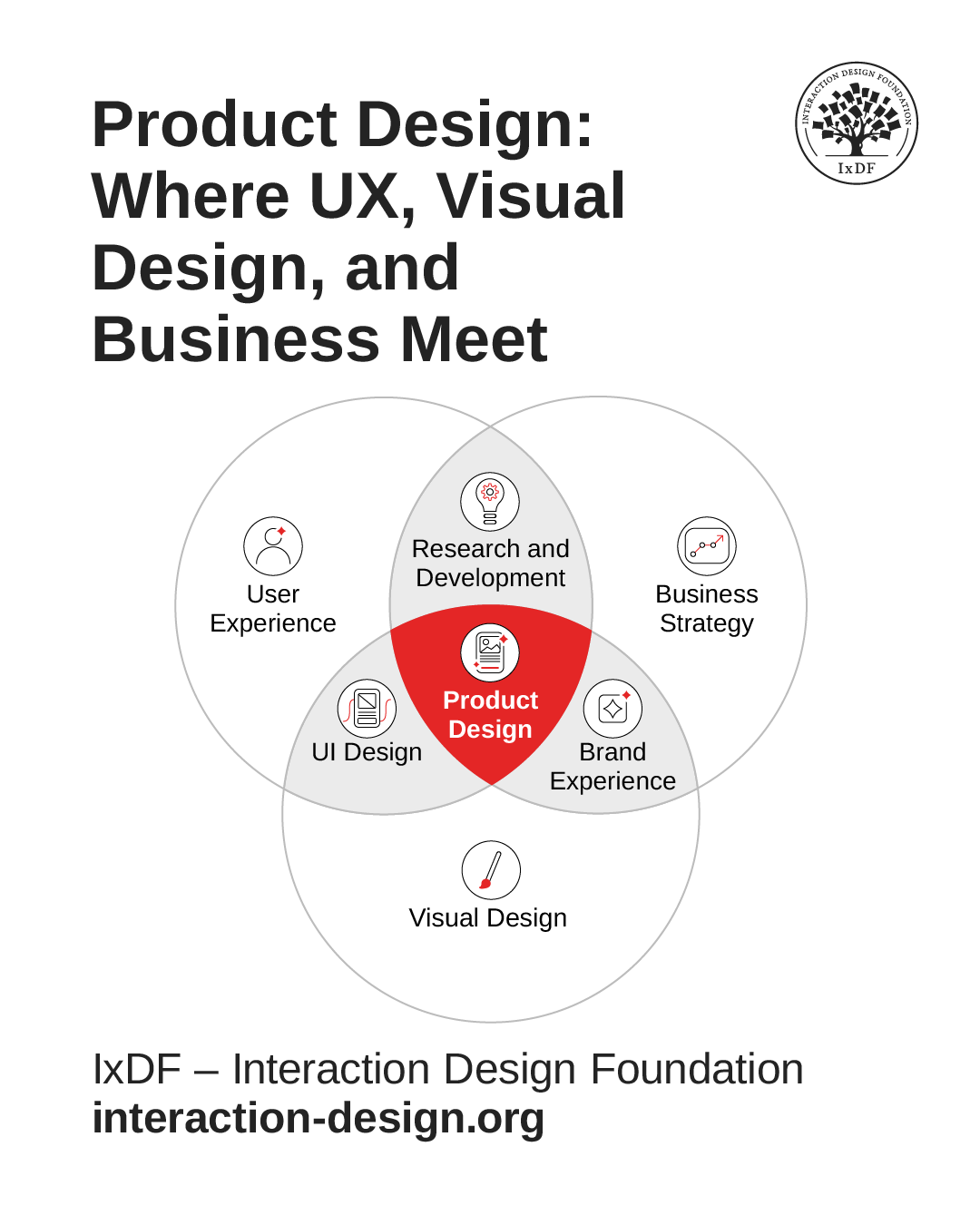
Product designers go beyond the UX design role to also manage and contribute to business strategy. This is a role where both user and customer personas come into play, as product designers work closely with marketing and sales teams.
© Interaction Design Foundation, CC BY-SA 4.0
Step 2: Choose Your Research
Different personas demand different research approaches:
User research happens in the field where work gets done.
Customer research happens through data analysis and structured interviews.
For user personas, consider yourself a temporary shadow. Document every click, pause, and sigh as users get jobs done. Ask "why" when users create workarounds. Note environmental factors—like that noisy open office that makes voice commands useless. Keep the focus on behavior, not opinion.
For customer personas, you must become a detective and piece together purchase patterns. Analyze quarterly sales data to spot trends. Interview buyers about the real reasons behind vendor choices. Study competitor strategies that successfully convert similar customers. Keep the focus on motivation, not usage.
Step 3: Label Clearly
Confusion starts when personas lack clear labels. That "Sarah" persona floating around your organization—is she a buyer or user? Without clear labels, your colleagues might ignore your persona when it’s not useful to them. Or worse, make expensive, wrong decisions based on unsuitable information.
You can prevent this confusion from the start. Mark every persona with its type and store user personas in the UX team's folders and customer personas in marketing's space. You can even use completely different templates that make mix-ups impossible.
Step 4: Collaborate
Designers focus on users while marketers focus on customers, but switching perspectives helps both. When designers learn that Rachel from IT procurement needs a specific feature to approve purchases, they make smarter business decisions—even if end users never touch it. When marketers discover that Louisa scrolls before ordering groceries on her phone at 10 PM while her toddler sleeps, they know exactly when to reach her.
Break down these walls with regular cross-team presentations. Marketing shows product teams why buyers choose competitors. Design reveals which features actually delight users. Sales shares the messages that close deals. Everyone wins when insights flow freely.
Step 5: Review Regularly
Markets shift. Products grow. User needs and customer preferences change. Personas need to keep up.
Schedule quarterly persona reviews to compare current behavior against documented patterns. When Louisa starts using voice commands instead of typing, update her persona. When Rachel's company requires cloud-only vendors, adjust her criteria. Fresh personas ensure your team is working with the most relevant insights.
Customers Won’t Buy If You Treat Them Like Users
When you apply the wrong persona for the wrong job, you risk both wasting resources and missed profits. But deeper than this, your talent, your creativity, and your intuition are lost on a solution that doesn’t actually help anyone.
Imagine a project management tool that adds AI-powered reporting features. Customer research shows executives buy the software, so the team assumes users want predictive analytics and trend forecasting. Six months later, those features sit unused.
Why? The actual users are project coordinators who need quick task updates and simple team calendars. They're drowning in daily details, not strategizing quarterly trends. The tool was incorrectly built for the executive who signs the check instead of the coordinator who uses it daily.
When you use customer personas for design, you’re no longer building for the real person who will use the product, service, or experience. Features reflect purchasing power instead of actual needs. The interface speaks to decision makers who never touch the product. Users struggle, support costs go up, and adoption rates go down.
The opposite mistake hurts just as badly. Consider that same project management company marketing to "busy project coordinators" instead of "IT directors." Their campaigns emphasize easy task entry and simple interfaces.
But saving five minutes per task isn’t the buyer’s main concern. They need security compliance, integration capabilities, and scalability. If the marketing speaks to users who don't control budgets, it will ignore the buyers who do.
This results in sales teams wasting time with enthusiastic users who can't approve purchases. And while marketing campaigns might generate interest with a product that will delight users, it never reaches them because buyers never sign off.
Understand User Behavior to Make Users Happy
User personas represent real people with real problems in real situations. They are built on qualitative research, like interviews and observations, where you explore how people navigate their daily challenges. This isn't market research asking people what they want. You're documenting what they actually do.
From this research, you identify your target user group and create a persona that distills their behavior, needs, and motivations. Imagine Louisa, a persona for an online grocery delivery service:
She starts her list on Tuesday but doesn't shop until Thursday night.
She types with one thumb while holding her sleeping toddler.
She abandons her cart twice when her preferred 6 AM delivery slot fills up.
These behaviors reveal more than any marketing survey could. Louisa will show your team which features your users truly need: they need to reserve delivery slots in advance—they don't need a fancy meal planning tool.
To build user personas, you must start with a genuine curiosity about people's lives. For example, field observations put you in users' natural environments where real behavior happens. Or, in contextual interviews, you sit beside them, asking "why" as they work through familiar tasks.
Great user personas strike a balance: enough detail to build empathy, but not so much that they overwhelm your team. Aim to include the following in your user persona:
Name, age, and only demographics that are relevant to user behavior.
Their roles within the problem domain (e.g., an online booking user might also be a flight passenger).
A realistic photo of your persona in action—ideally one of your user research participants.
Their primary goals and motivations.
Their behaviors relevant to your solution
Brief stories of use and context. How do they/will they use your product?
Specific pain points
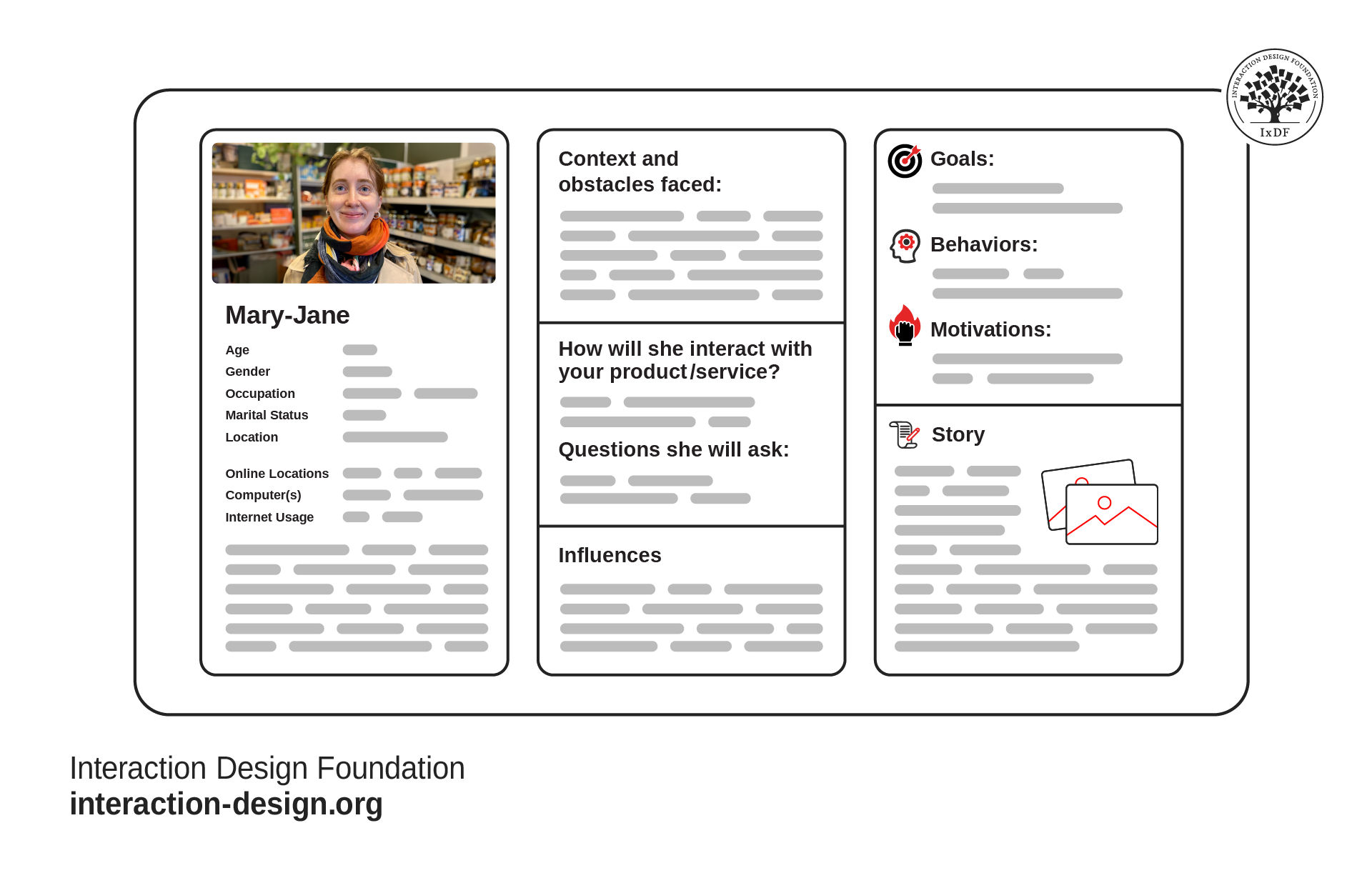
When you use personas backed by real user research, your team stops arguing and starts solving. Designers know why Mary-Jane abandons carts. Developers understand which features matter. Everyone designs for the same real person, not their assumptions. They turn abstract "users" into humans teams can actually help.
© Interaction Design Foundation, CC BY-SA 4.0
Understand Customer Behavior to Make More Sales
Customer personas reveal the business side of purchasing decisions. Marketing teams study who controls budgets, what triggers buying processes, and which factors seal deals. This research uncovers organizational dynamics and personal motivations that drive purchases.
As with user personas, your customer persona is an amalgamation of your research into your target customers.
Imagine Rachel, a persona who manages IT procurement for a mid-size healthcare company. Market research shows she's 28-35, earns $75,000+, and values vendor stability. Deeper research reveals Rachel starts vendor research six months before her budget year. She builds comparison spreadsheets and discovers options through LinkedIn, which she then validates through peer forums. She needs three quotes for purchases over $10,000, but prefers vendors who bundle services to simplify approval.
When you market your project management tool to Rachel, you won't emphasize the easy interface. You'll provide ROI calculators, security certifications, and case studies from other healthcare companies. You'll publish thought leadership on LinkedIn and nurture leads for months, not days.
Building customer personas requires different detective work than user personas. Purchase data reveals spending patterns and seasonal trends. Social listening shows how customers research options before your sales team even knows they exist. Competitive analysis reveals which messages convert browsers into buyers. Each research method builds your understanding of the buyer's journey.
A typical customer persona includes:
Demographic profiles with income ranges
Geographic distribution
Budget authority and approval process
Preferred research and shopping channels
Price sensitivity and payment preferences
Decision criteria and deal breakers
Customer personas reveal what makes buyers act. They stop sales teams from pitching to the wrong people. They make marketing messages hit emotional triggers that open budgets. They go beyond "target markets" and enable you to appeal to real buyers with real budgets.
The Take Away
The difference between user and customer personas seems subtle at first, but they are two different beasts. Mix them up, and you'll build features nobody uses while marketing to people who’ll never buy. Master the distinction, and you'll create products that delight users while your campaigns convert browsers into buyers.
Use user personas to guide your design decisions through observed behaviors. They’ll show you and your team exactly how people interact with your products. With user personas, you’ll build features that solve real problems, design with purpose, and see support tickets decrease because interfaces make sense.
Use customer personas to drive marketing strategy through purchase motivations. You’ll discover why people buy and from whom. When you apply customer personas, your marketing finds the right audience with the right message. Sales teams connect with decision-makers. Campaigns convert because they address actual buying concerns.
The magic happens when both types work together. Your product team builds what users need while your marketing team reaches buyers who care. Design and marketing align around different but complementary goals. Start by auditing your existing personas. Label them clearly as "user" or "customer." Train your teams on when to use each type but also share insights across departments. Review and update your personas quarterly as behaviors and markets shift.
Master this distinction, and you'll create products people love to use and messages that help them discover them. That's how you improve lives, your career, and do fulfilling, rewarding work.
References and Where to Learn More
Want to know more about personas and how to use them effectively? Personas and User Research: Design Products and Services People Need and Want will show you how to gather meaningful user insights, avoid bias, and build research-backed personas that help you design intuitive, relevant products. You’ll walk away with practical skills and a certificate that demonstrates your expertise in user research and persona creation.
Discover why your personas might not be working for you in our article, Persona Health Check: What’s Wrong with Yours—and How to Treat It.
Find out why personas should not represent every user, and why that will make them an indispensable asset for your product in our article, Why Personas Don’t Represent Every User.