Feedback: the word alone can inspire apprehension. Yet, it’s the lifeblood of great design. Whether it’s subtle critique or blunt rejection, how you respond to feedback matters more than you think. You can defend your design—or you can use that moment to learn, improve, and show you're the kind of professional who grows from every challenge.
Let's be honest, we all dread feedback, especially when it is negative. Yet, we need feedback to inform our design, iterate, and make our work better. Let's examine the different types of feedback you can receive on a presentation or design project.
In the next video, Morgane Peng, Head of Product Design & AI Transformation at Societe Generale, shares practical strategies for handling feedback—especially when it’s tough to hear.
Show
Hide
video transcript
- Transcript loading…
Types of Feedback
You’ll hear a range of feedback throughout your career. The trick isn’t just to recognize what type it is—but to know what to do with it.
Positive feedback: tells you what’s working. But if it’s vague—like “Nice job!”—ask for specifics so you can actually build on it.
Constructive feedback: Offers specific suggestions for improvement, sometimes with guidance. These are gold—especially when they come with context or suggestions.
Negative feedback: Points out what’s not working. It can be useful, but tone matters. “The layout won’t work for long names” helps. “I really don’t like this proposal” does not.
Appreciation feedback: This isn’t about the work—it’s about you. It acknowledges your effort and shows you’re seen, even if it doesn’t change the direction of the project.
How to Reframe Negative Feedback
Imagine receiving bad negative feedback mid-presentation. Your reflex might be to defend. But how you respond to feedback—especially tough feedback—makes all the difference. This is a skill, and like any skill, you get better with practice.
Here’s a guide to reframe negative feedback for benefit:
Acknowledge your emotions: Accept feelings (hurt, upset) without immediate reaction, breathe and set them aside.
Separate yourself from your work: Your work is not you. Not all people deliver feedback effectively, remember that.
Understand the purpose: Ask why the feedback was given, its purpose usually aims to improve the solution. “What makes you say that?” or “Can you walk me through your thinking?” often reveals useful insights.
Be curious: Ask questions to understand better, e.g., "Why do you feel users will be lost?".
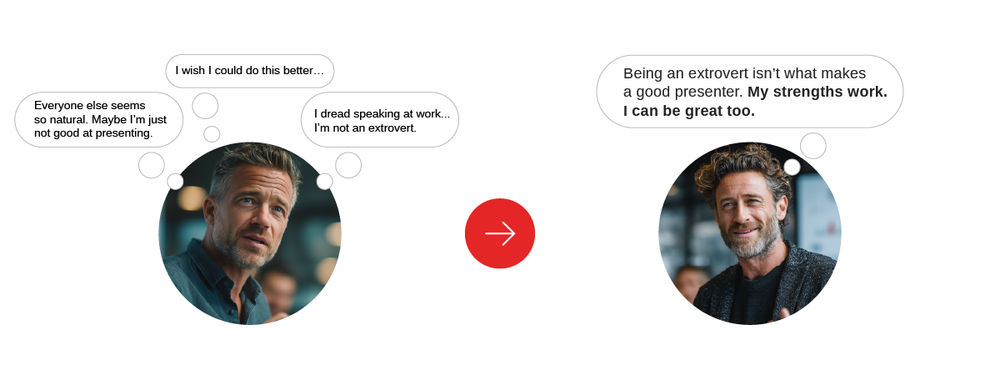
Rephrase for growth: Rephrase as a growth opportunity. You can often leverage negative feedback to advance your initial intentions. Instead of “They hate my idea,” try “They’re unsure how it works for users—maybe I need to clarify.”
Put It into Practice: Roleplays
Ready to see these strategies in action? These roleplays show you how feedback management principles play out in real-life. Watch to pick up practical tactics you can immediately use in common scenarios to boost your confidence in navigating any feedback situation. Here are two roleplays that demonstrate how to apply feedback management techniques:
See how to get everyone’s feedback in a meeting, not just the most vocal people. This roleplay demonstrates specific tactics to draw out quieter voices and ensure you gather a full spectrum of insights to prevent an echo chamber and make your decisions inclusive.
Show
Hide
video transcript
- Transcript loading…
See how to deal with difficult people in presentations. This roleplay offers practical strategies to handle challenging interactions—such as overly critical or dismissive audience members—to maintain control, preserve your credibility, and keep your presentation on track.
Show
Hide
video transcript
- Transcript loading…
Ready to put these feedback strategies into practice? Use the template below to turn any critique into clear steps for action and growth.

The Take Away
Feedback, though often dreaded, is vital for design iteration and for your professional growth. You’ll get all kinds—some helpful, some vague, some downright frustrating. But each one is a chance to learn. Positive feedback tells you what’s working. Constructive feedback helps you improve. Negative feedback, even when clumsy or harsh, can highlight real issues. And appreciation reminds you your effort matters, even if it doesn’t shift the project. The key is knowing what to take on, what to let go, and how to turn it all into something useful.
You don’t have to agree with every critique, but you do need to handle it well. That means noticing your emotional response without letting it get in the way. Separate your work from your worth. Ask better questions. Reframe vague or harsh comments into something actionable. When you do this consistently, people will respect your work and you. Because feedback is about growth. And when you know how to use feedback well, you’ll become a better designer, more confident presenter and trusted collaborator people want to work with.
References and Where to Learn More
Read our article How to Get Meaningful Design Feedback from Your Clients.
Check out Harvard Business Review’s article, How to Manage Feedback Like An Olympic Athlete.
Read the article Get Clearer, More Actionable Feedback.
Hero Image: © Interaction Design Foundation, CC BY-SA 4.0