At some point, someone with a big personality took the stage, spoke confidently, made jokes, and walked away with applause. You watched from your seat and thought, “I could never do that.” Long before that, back in school, the same people always volunteered to speak: The ones who seemed to enjoy the attention. You decided that because you don’t enjoy being watched, presenting wasn’t for you. That’s where your story took a wrong turn. And it’s the turn that might be holding you back from the career you dream of.
While those big personalities were learning to speak their minds, you were strengthening other key skills. Skills rooted in how you think, not how loudly you talk. If you believe presenting is only about talking, think again. The truth is that presenting is also about listening and creating meaning.
Let’s go past the surface and look at what actually makes a presentation powerful, in meetings, and in the rooms where decisions are made, and where your way of thinking already gives you an advantage.
In this video, Morgane Peng, Head of Product Design & AI Transformation at Societe Generale, reveals how mastering presentation skills helps you fast-track your career, and why it’s easier than you think.
Show
Hide
video transcript
- Transcript loading…
You’ve Been Taught the Wrong Idea of What a “Good Presenter” Looks Like
You’ve grown up surrounded by one version of what a “good presenter” is supposed to be: Energetic, loud, expressive, and eager to take the stage. Teachers praised that style. Workplaces often reward it. Movies and TV treat it as the default.
So, it makes sense that you’d compare yourself to that model and think you’re missing something. But here’s the truth: There isn’t one single correct way to present. There never has been.
The best presentations are conversations. They work when you’re aware of who you’re speaking to, what they need, and how to make meaning clear for them. That awareness is something you already have, even if standing in front of a group gives you that familiar knot in your stomach. And yes, you may prefer a quiet evening of Netflix and chill over being the center of attention. That doesn’t disqualify you. Some of the strongest presenters dislike the spotlight but excel because they focus on communication, not performance; think Barack Obama, Emma Watson, and many more.
Let's go back to some of the presentations you’ve sat through. The ones where someone talked non-stop, filled every second with their thoughts, and left you with nothing clear to take away. It might impress a few people in the moment, but it doesn’t build trust. It doesn’t help teams decide. It doesn’t move work forward. It might work on social media as entertainment, but that has nothing to do with building your career. Strong presentation skills aren’t about being “on.” They’re about making ideas easy for people to understand and act on.
That’s why Steve Jobs is remembered as a fabulous presenter. People often assume he succeeded because he was a natural entertainer. That’s not true. Jobs was effective because he delivered meaning with absolute clarity. When he introduced the iPod, he didn’t show the audience a piece of metal and list technical specifications. He gave them a clear picture: A thousand songs in your pocket.
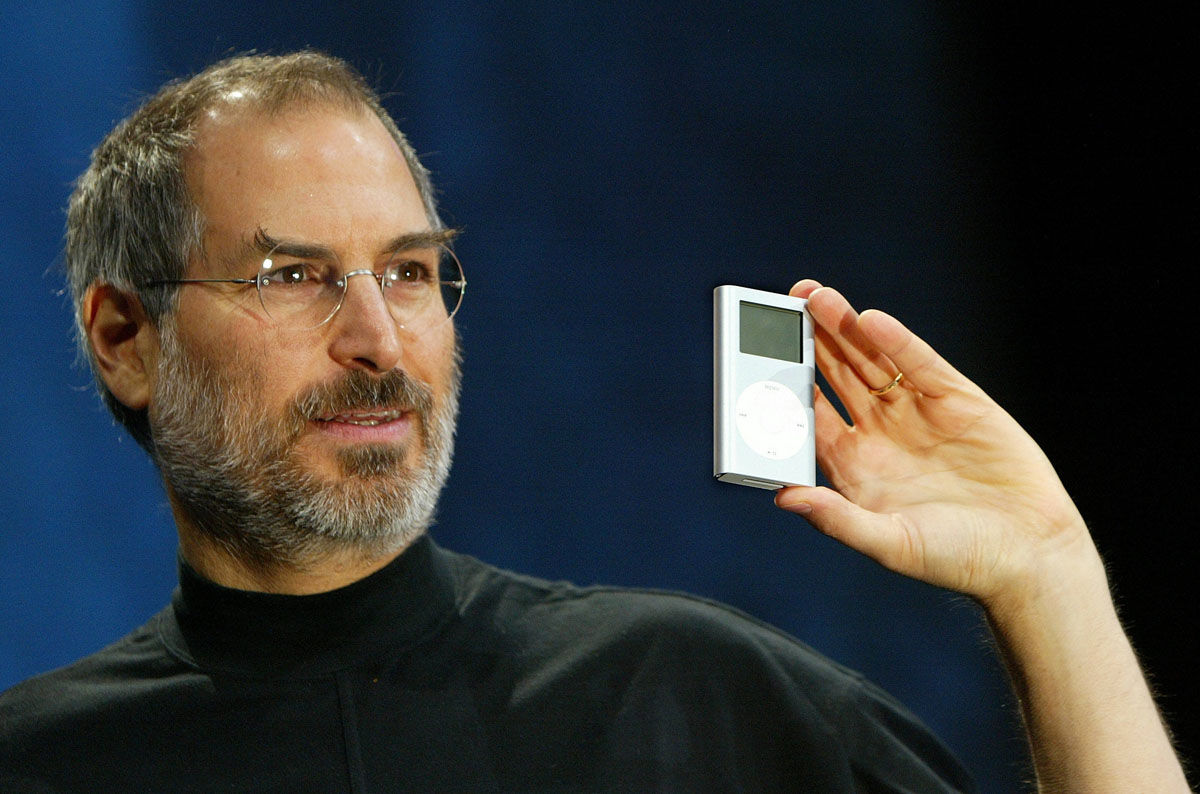
It was simple. It was concrete. Anyone could understand it instantly, even if the technology behind it was complex and brand new. And as an introvert, that kind of clarity is something you can do exceptionally well.
You think before you speak. You choose words carefully. You focus on the message instead of trying to fill space. These aren’t minor traits. They’re the backbone of communication that earns trust and creates alignment.
So, pause for a moment and ask yourself:
When have I helped someone understand a complex idea by simplifying it?
When have I chosen the one sentence that made everything click for a colleague?
When have I noticed what people needed before they said anything?
When have I guided a discussion by asking the question no one else thought of?
Those aren’t accidents. They’re signals of how you already communicate with clarity, intention, and care. You don’t need to match an extrovert’s style to be effective.
You need to recognize the value of the skills you already use and bring them into the room with confidence.
That’s the version of a “good presenter” that actually helps people, and it’s one you’re already much closer to than you think.
Here’s the Insight No One Has Told You, Until Now
When you present as your authentic self, you tap into a communication style that extroverts can’t replicate: You create cognitive ease for your audience.
This is one of the most overlooked forms of influence, and influence built on clarity lasts far longer than influence built on being the loudest voice in the room.
Why Your Communication Style Works in High-Stakes Moments
High-stakes rooms don’t need more loud voices (they have plenty of those). They need people like you who they can trust to translate complexity into meaning.
In this video, Morgane Peng, Head of Product Design & AI Transformation at Societe Generale, explains how to easily build trust when you present.
Show
Hide
video transcript
- Transcript loading…
As you advance in your career, the expectations change.
Leaders look for thinkers who speak with clarity. Decision-makers rely on the person who can explain the heart of an issue quickly, and that’s where you shine, and you shine bright. It’s time to use your strengths fully.
A Real Example That Happens in Companies Every Day
Picture this (a scene that plays out in organizations every single week).
A cross-functional team presents a major initiative to leadership. The room has 15 people. Three presenters rotate through 30 slides. They move quickly, stack metric on metric, and deliver the story with enthusiasm and energy. Something important is happening in the room, but the presenters can’t see it.
The executives aren’t confused because the information is complex. They’re confused because they can’t tell what decision they’re supposed to make.
Their brains can’t connect the flow of information to the action required. So they default to tactical questions that look productive but don’t deepen understanding:
“What is the timeline for Phase 2”
“Have we validated these assumptions”
“What is Marketing’s position on this”
These questions aren’t a sign of engagement. They’re a sign of mental overload.
This is when someone like you can shift the entire conversation with a single sentence.
This person doesn’t add more data. They don’t increase their volume or energy. They simply give the room a structure that lets everyone understand what’s actually at stake.
They might say something like:
“I believe the real choice is between two paths. One path gets us to market faster with higher iteration risk. The other slows the launch slightly but gives us stronger confidence in adoption. Everything we’ve discussed fits under one of those two options.”
In the next 10 seconds, executives sit up. People stop repeating metrics. The tactical questions fade. The room finally understands the decision in front of them.
New questions emerge, and they’re strategic:
“What do our customers need right now”
“What’s our operational capacity if we choose the second path”
“What’s our risk tolerance given the board’s expectations”
This is the moment the real conversation begins.
What Happens When You Stop Trying to Present Like an Extrovert
Something remarkable happens when you stop trying to present like an extrovert: Your brain stops being in fight or flight mode, and you stop having intrusive thoughts like “they’ll discover I dread public speaking and that I’m a fraud.”
You shift from survival mode to meaning-making mode, and that’s the moment your communication becomes powerful, and your career takes off.
This isn’t about extroverts being wrong. Their style fits how they think. The issue is that you were never taught that your thinking pattern is different, and incredibly valuable:
Extroverted presenters rely on output.
Introverted presenters rely on insight.
Here’s the part most people never realize:
Your strength isn’t in talking. Your strength is in sensing and creating meaning. You’re naturally capable of changing how a room understands an idea. Let’s make this concrete.
The Cognitive Load No One Warned You About
© Interaction Design Foundation, CC BY-SA 4.0
When you try to present in the extrovert’s way, your brain is forced into tasks it’s not designed to prioritize:
Think and talk at the same time.
Your mind prefers to shape ideas internally before you say them out loud. If you force yourself to generate ideas and speak at the same time, you drain your short-term memory almost immediately.
Sustain a high-energy performance.
Efforts to maintain a bright, fast, upbeat tone demand constant self-checks. You expend energy to manage your delivery instead of your message.
Track every signal in the room.
When you read faces, notice reactions, scan the environment, and speak at the same time, you slip into a mode with too many tasks at once. Your brain prefers a focused, sequential approach.
Block your natural pause-and-reflect rhythm.
Your pauses aren’t hesitation; they’re how your mind organizes meaning. If you suppress them, you add another layer of mental strain.
Manage the stress of pretense.
When you perform a version of yourself that doesn’t feel authentic, your nervous system picks up the mismatch. As your anxiety rises, your clarity drops.
In other words, when you force yourself to present like an extrovert, your cognitive load skyrockets. Not because you’re “not good at presenting,” but because you’re multitasking at an impossible level. You’re mistreating your brain.
The second you communicate in a way that matches your natural thinking, that load drops. Your mind reclaims bandwidth for the things you’re actually great at:
You’re able to distill complexity into meaning.
Instead of burning mental energy to appear “on,” you can use it to shape ideas clearly. Your strength has always been depth, and now you have the bandwidth to easily show it.
You see patterns and connections more easily.
When your mind isn’t juggling incompatible tasks, you notice relationships between ideas that others miss. This is often where your most valuable insights live.
You pick up subtle audience cues you used to miss.
Because you’re not overwhelmed by performance pressure, you can finally read the room in real time: Expressions, confusion, curiosity, hesitation. You’re able to respond with intention instead of guesswork.
You structure your message with real clarity.
You can anticipate where people might get lost and guide them before they drift. Your thinking becomes the map your audience follows.
You choose your words with precision.
You’re no longer grabbing the first phrase that surfaces just to keep talking. You have access to your full vocabulary; the one you use when you explain things well in one-on-one conversations.
And here’s the important nuance:
This isn’t about introverts having some hidden neurological edge. Extroverts perform at their best when they can think out loud and feed off the energy in the room. That’s their alignment. Your advantage comes from alignment too.
When your communication style matches your processing style, you operate with less friction, less self-monitoring, and far more clarity. You’re not fighting yourself, and you’re finally letting your strengths carry the message. You might even stop dreading presenting in front of people the way you used to.
That’s why forcing yourself into an incompatible style feels more than just uncomfortable, it reduces your actual cognitive performance.
Alignment, not personality, is what makes you be able to deliver career defining presentations you can be proud of.
The Luna Lovegood Principle (And Why It Matters for Your Career)
© Giphy, Fair Use.
Luna Lovegood is the perfect metaphor, not because she’s quiet, but because she is unapologetically aligned with her own cognitive style.
She listens first.
She observes.
She picks up patterns others miss.
She speaks when the idea is ready; not when the room pressures her to fill space.
That’s exactly why she stands out.
Now imagine Luna trying to present like Harry: Raising her voice, speeding up, rallying the crowd. She wouldn’t become more impactful. She would become less herself, which means less effective.
Extroverts succeed because they use their strengths. You succeed when you use yours.
The Moment You Realize You Can Do This, the Sky is the Limit
You already communicate this way in thoughtful one-on-one conversations, in emails, and in problem-solving discussions. You already know how to explain ideas with precision and depth.
© Giphy, Fair Use.
The opportunity is simple: bring those strengths into the rooms that matter. You don’t need to enjoy being the center of attention to move your career forward. You only need to help people understand. And that’s something you already know how to do.
The Career Shift No One Warns You About
Early in your career, you advance by being good at your work. Past a certain point, you advance by helping other people do their work better.
According to the National Association of Colleges and Employers (NACE), communication is ranked as one of the most important skills employers look for.
Individual contributors grow when they help their team think more clearly. Managers grow when they help other managers make better decisions. Directors grow when they help executives understand what truly matters.
The barrier is rarely technical skill. It’s the ability to transfer understanding to the people who need it. And you already do this. You simply aren’t aware of it.
Research from Coqual (formerly the Center for Talent Innovation) found that executive presence accounts for 26% of what it takes to get promoted, but here's what most people miss: executive presence isn't just charisma. 67% of senior executives say gravitas (credibility and substance) is the core factor when evaluating candidates for leadership positions.
While many people chase the “executive presence” and try to just look the part, you can take a different path. You can bring the strengths you already use in one-on-one conversations into larger rooms.
You don’t need to become more extroverted.
You don’t need to project a stage persona.
You don’t need to enjoy attention.
You only need to recognize and value that your ability to make complex ideas accessible is the exact capability organizations are missing and desperately need.
Multiple research studies confirm that there is no statistically significant difference in leadership effectiveness between introverted and extroverted leaders in terms of overall team and organizational performance. In fact, introverted leaders are particularly effective when leading proactive teams who take initiative, as their listening and thoughtful approach empowers team members rather than overwhelming them.
One you really understand and integrate this, presentations stop being moments where you hope you don’t look nervous and become moments where your goal is simple: Help people understand the part that actually matters.
This shift transforms everything:
You prepare differently, focusing on where confusion might arise.
You present differently, watching for comprehension instead of approval.
You feel different, useful rather than exposed.
And here’s the unexpected part:
Once you stop trying to impress people and start trying to help them, they end up more impressed anyway. Not because you performed well, but because you made their job easier.
The Career Path You Don’t See Coming
If you apply your natural strengths consistently, your reputation changes quietly and steadily.
Five years from now, you might even be known as “a great presenter.” You will be known as the person who helps teams easily think through complicated problems. When leadership faces a difficult decision or needs clarity fast, your name will come up.
Not because you’re the loudest voice in the room, but because you are the one who creates clarity when it matters.
That reputation builds from repeatedly helping smart people understand something they could not untangle alone. You don’t need to become someone else.
You need to see the value of what you already are.
The Take Away
The real advantage you bring to your career isn’t how confidently you perform, but how clearly you help others think. When you communicate in a way that matches how your mind naturally works, you create meaning, and that’s what every business needs. You make complex ideas feel manageable, and that’s exactly what leaders rely on in high-stakes moments.
You don’t need to enjoy attention to move your career forward. You only need to bring the strengths you already use in one-on-one conversations into bigger rooms. When you help people understand, you become someone they trust, value, and want to work with. That’s influence, and you already have everything you need to use it.
References and Where to Learn More
Storytelling is one of the core skills you’ll master in our course Present Like a Pro: Fast-Track Your Career.
Read about why You’re Not Bad at Presenting; You Just Haven’t Mastered the Right Way (Yet)
Discover How to Find Your Voice: Speak with Confidence and Clarity.
Hero image: © The Interaction Design Foundation, CC BY-NC-SA 4.0.