Your constantly-updated definition of Impostor Syndrome and
collection of videos and articles. Be a conversation starter: Share this page and inspire others!
97shares
What is Impostor Syndrome?
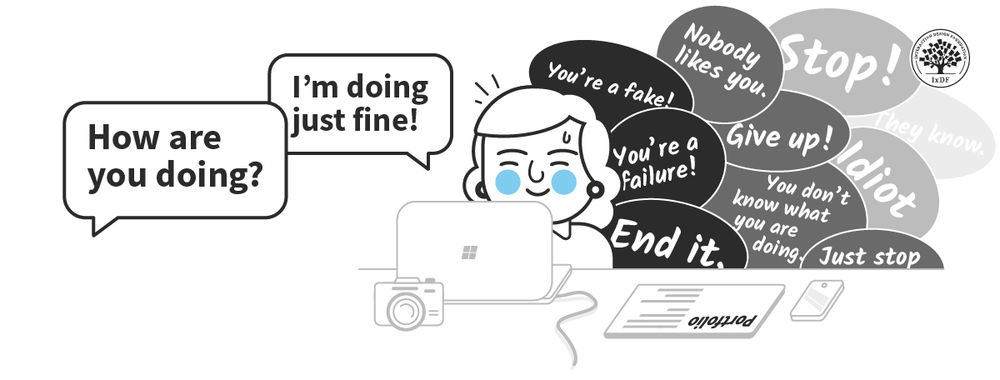
Impostor syndrome is the persistent belief people have that their success is due to luck, not ability. Many UX (user experience) designers, and professionals in every field, experience it, often gripped by the fear of being “exposed” as a fraud despite their clear achievements. With insight and practice, you can overcome impostor syndrome and thrive with confidence, feeling valued that you are an authentic professional.
Discover how to power your way through any niggling doubts about not being worthy or ready to deliver excellent work as an authentic professional, in this video with Morgane Peng, Managing Director, Global Head of Product Design and AI Transformation.
ShowHide
video transcript
Transcript loading…
Impostor Syndrome is Real, But so Are You
Have you ever felt that somehow you achieved a position without deserving it? Perhaps it was an interview years ago where you feel you may have exaggerated what you knew or could do, and you got the job? Or could it have been a sense that you weren’t quite ready to step into a position or job, so you stayed away from the role or turned down a promotion because someone might later accuse you of being a fake and challenge you to prove your worth? Or perhaps the career path you took seems a little disconnected from what you were studying for it at university? Maybe someone else, someone “more qualified” should be in that position, not you?
If any of the above sound familiar or if you’ve experienced something else where you had doubts about your skill set or felt that luck got you where you are more than anything you did or value you contributed, yourself, you’re not alone; it’s a common phenomenon. Impostor syndrome is a psychological pattern where people doubt their accomplishments and fear being exposed as “frauds,” even when the evidence proves the contrary:that they are, indeed, competent professionals. Psychologists Pauline Clance and Suzanne Imes first identified the term in the late 1970s, studying high-achieving women who struggled to internalize success.
Since then, research has shown that impostor feelings affect people of all genders, ages, backgrounds, cultures, and nationalities (hence why there’s also “imposter syndrome” as a spelling variant). Impostor syndrome is not a clinical disorder, but it has real effects and long-term consequences if you leave it “untreated”: it can undermine your confidence, block career progress, and increase stress levels.
Impostor syndrome often shows up; for example, when you compare yourself to other professionals with more experience, polished portfolios, or louder voices in meetings.
You Can Tap into The Positive Side of Impostor Syndrome
Here’s the bright side of impostor syndrome: it can carry “hidden” benefits when you manage it well. Once you look past the angst and sour overtones, you may notice how it:
Keeps you humble: When you recognize you don’t know everything, you’ll find yourself being more open to collaboration.
Encourages growth: Self-doubt can motivate you to improve skills and seek learning opportunities that can prove your worth all the more to yourself if you ever doubted it before.
Builds empathy: Your struggles can make you more understanding toward colleagues and users, one reason being that they might well be feeling symptoms of impostor syndrome, themselves, but are too embarrassed to talk about it.
Signals investment: Feeling impostor syndrome means you care about doing meaningful, high-quality work. That caring element, which also shows up in stage fright, is part of who you are, and your brand is lucky to have you. Speaking of “lucky,” maybe it’s time to stop feeling lucky to have “survived” in your role? You are a true professional when you’ve got the goods; it’s just that you may not have realized that you not only have what it takes but also know how to deliver exceptional ideas and design solutions.
So, because the upsides can pay dividends, aim to channel the impostor feelings into constructive energy instead of trying to erase them completely.
Discover how to leverage empathy as a designer to keep the spotlight on where it should be: making a great product for users who need, want, and will love it, in our video.
ShowHide
video transcript
Transcript loading…
How to Overcome Impostor Syndrome and Get What You Deserve
Indeed, you can’t “switch off” impostor syndrome overnight, but don’t worry; you can build strategies to quieten self-doubt and strengthen confidence.
1. Recognize It’s Normal
Impostor syndrome is common, even among leaders and experts, and, given its nature, is not something many people will advertise about themselves so openly. You only know your own feelings really well; so, that leaves billions of other people who may be feeling something similar but who may seem “strong” on the outside. When you know you’re not alone, it makes it less overwhelming.
2. Talk About It
Conversations with colleagues, mentors, or friends can normalize your feelings,and you may hear many similar stories coming from others. You’ll often hear “me too,” which reduces isolation, when you take the initiative to declare your feelings. If you trust those you tell, you might find the “risk” of announcing your impostor feelings can pay off and make you feel so much better as you come away with valuable insights, advice, and maybe even mentoring help.
3. Reframe Mistakes
View errors not as proof of inadequacy but as stepping-stones. UX design thrives on creativity, stepping into uncharted territories, and iteration; mistakes can fuel better design decisions, better designs, and, along the way, an even better version of yourself, too.
4. Keep a Success Log
Save praise, project wins, and positive feedback in a document or folder to look at, like an awards or trophies cabinet. Review it when doubts creep in, and remember you matter and what you do matters to many others, too.
5. Ask for Feedback
Instead of waiting for validation or tiptoeing in the shadows of hope, seek constructive feedback. It might take a little courage, but it will show you where you excel and where to grow, facts that will counter self-doubt.
Explore how to approach non-designers so you can get valuable feedback, in this video with Todd Zaki Warfel, Author, Speaker and Leadership Coach.
ShowHide
video transcript
Transcript loading…
6. Celebrate Progress
Shift focus from perfection to progress. Did you learn a new skill, or improve a design after testing? That’s success, and if your brand is too “modest” to notice things as important as little victories, celebrate your achievement regardless. Saying that, if your boss has an un-nurturing attitude of “Well, we expect that, anyway,” ignores the achievements of your team members, too, and maybe even exhibits narcissistic behaviors on top of that, then maybe it’s time to think about moving on to a place that will value what you are and what you offer. You deserve better than to be somewhere that may be contributing to your UX impostor’s syndrome from the outside.
7. Support Others
When you mentor or share tips with peers, you may notice how it highlights how much knowledge you already have. You may not even need to hear them say “Wow” to feel good about your knowledge base and skill set.
8. Practice Self-Compassion
Remember “you deserve better”? Well, treat yourself as kindly as you’d treat a teammate. It’s easy when you’re experiencing life from the first-person perspective to forget that you are a human being, too, not some entity that’s just witnessing other humans in the world and is immune to (or undeserving of) the same considerations. You wouldn’t call them a fraud for learning, would you? So, don’t do it to yourself.
9. Redefine Success
Quit the comparisons and stop measuring yourself against others; climb to a higher perspective and define success as creating value for users. That’s what truly matters in UX design, whatever anyone else may say. Your boss may have key performance indicators (KPIs) for you to “live up to,” and you can deliver in terms of output, indeed, but do so in the context of yourself, not comparing to others.
Feel better with some peace of mind about mistakes people make when it comes to measurement and focusing on the wrong things, in this video with the Godfather of UX design, Don Norman.
ShowHide
video transcript
Transcript loading…
10. Leverage Impostor Syndrome for Career Growth
Impostor syndrome can feel like it blocks career opportunities, but when you learn to manage it, it can actually boost your path forward, such as:
In job applications: Few candidates meet every requirement in the real, human world. Apply anyway; growth happens on the job. Bosses who wait around for job applicants who tick all the boxes and extras may be in for extremely long waits. Anyway, that’s their loss, and if you’ve been spared from having to deal with an especially neurotic perfectionist or even a manipulative narcissist every day, or someone who might try to dowse the passion you bring to your craft, then so much the better.
In interviews: Frame nerves as excitement and highlight your curiosity. Your hunger for making the role your own and building it out for the users’ and brand’s benefit might seal the deal. After all, good bosses often value adaptability more than knowing everything.
In promotions:If your team trusts you with greater responsibility, believe them. If you ever needed proof of your readiness, nothing beats external recognition in this context.
Become more aware of the people who listen to you, and listening to them can help you see past doubts you might be harboring about your own potential, too.
Exercise your right to advance yourself to better things more confidently through some simple practices that can strengthen your confidence daily:
Contribute one insight at the start of a meeting; it sets a confident tone: you’ll feel better for having spoken, too, and you can listen with a more positive mindset.
Take social media breaks to avoid unhealthy comparison. Seriously, why bother with the outside world so much if you end up making false assumptions and brooding on your own status, fear of failing, and even fear of succeeding? Focus, at least for a while, only on what’s important: yourself, what you know, what you have, what you can do, what you’ve already done, and all the great things you can envision yourself doing.
Journal one positive outcome from each day’s work. Writing helps reinforce the reality, and you’ll feel a glow from your words whenever you look back. The value of that inspiration can be immeasurable in combating self-doubt.
Revisit the purpose of UX design: improving lives through better experiences. That’s meaningful, regardless of comparison, and when you focus on doing good in the world like that, you might be amazed at how good it can feel.
Speaking of building confidence, discover how to feel more confidence and deliver better presentations when you speak in front of others, in this video with Morgane Peng, Managing Director, Global Head of Product Design and AI Transformation.
ShowHide
video transcript
Transcript loading…
12. Feel The Empowering Truth
Impostor syndrome may tell you that you don’t belong or that you don’t deserve success, but here’s the truth: if you weren’t capable, you wouldn’t be here, period. Your journey, your effort, and your growth are genuine; to deny that is to do yourself a gross disservice, and to call your hiring manager or boss a fool for having been “stupid” enough to hire you. Regardless of how you might feel about them now, their judgment helped you land your role then. That counts for something. Plus, the fact that you question yourself shows you’re reflective and committed to doing good work. That’s not fraud; that’s professionalism at its best; it’s just too bad it can be so painful when it’s left to fester unresolved.
Why Impostor Syndrome Happens
It might sound surreal that it’s so common, but the high number of causes, each a valid reason in its own right, validate why impostor syndrome is a reality. To strip it back to its barest roots, impostor syndrome doesn’t mean you lack ability; it just means your perception of yourself doesn’t align with reality. Several factors can account for this gap:
High Standards
Are you one of those people who won’t put your name on something you’ve created unless it’s 100% solid and correct? If so, congratulations for caring to do and be your best. The “price” of that, though, is that you hold yourself to near-impossible expectations and feel that anything less than perfection means failure. That can be a formula for a self-worth crisis in a world that is, by default, imperfect.
Comparison Traps
One unhappy byproduct of living in the modern age is how easy it is to see what others are up to and what they can do with such apparent ease,and it may seem like: “Everyone else has their act together! Why don’t I?” If you’ve ever watched a time-lapse video of, for example, someone fixing up battered old furniture into a masterpiece or turning a dull wasteland of a back lawn into a beautiful landscape worthy of a master gardener, you may have felt aspects of this phenomenon. This UX impostor syndrome symptom turns up when social media and design showcases amplify other people’s best work, while you only see your own flaws up close.
A Growing Field
Another reason to feel more cheerful in the face of symptoms of impostor syndrome is the nature of the trade or industry you’re in. UX design is evolving so quickly that it’s normal to feel like you’re always catching up. It’s like digging a hole in dry sand (where much sand falls back in as you do it); you put so much into it and yet it feels like the need for pushing further and making more progress is unending. That’s going to be natural in UX design, which deals with cool, cutting-edge technology and the associated expectations of target audiences of brilliant new apps and other digital solutions your brand might release.
Enjoy a fresh aspect on what UX design is all about, and explore how you can make a difference through it, in our video about the field of UX design itself.
ShowHide
video transcript
Transcript loading…
Workplace Culture
Speaking of “brands,” what’s yours like? Is it long-established and large, medium-sized, or a brand-new startup? How about its culture? Environments that reward confidence over competence can make self-doubt worse. It’s an annoying reality that can hijack the feelings of perfectly smart, competent contributors if the boss seems to lavish praise on colleagues who “sound good,” even if these “confident” ones aren’t as technically proficient.
Personality
As you might suspect, people who are introverted, self-critical, or perfectionist often feel impostor syndrome more deeply than those who “just get on with it” and don’t seem to care as much about delivering a perfect product. And if most of your colleagues are less like you in this way, you might feel the effects of so-called impostor syndrome more profoundly.
What Are Signs You May Have Impostor Syndrome?
You might recognize you have impostor syndrome if you find yourself:
Downplaying Success
You dismiss compliments or attribute achievements to luck, timing, or others’ help. That “Oh, it was nothing” attitude of what you might think is “courteous humility” can signal a sense of lower professional self-esteem than you deserve to have.
Fearing Exposure
Ridiculous as it might seem, you might worry someone will “discover” you’re not as capable as they think you should be. It’s not the crime of the century, not even close or even a “crime,” but your mind’s eye might present you with imaginary scenarios where someone has found you out as a non-UX designer, a fake, a fraud, a charlatan. That fear of exposure is as irrational as it is unwarranted, unwanted, and unfair.
Over-Preparing
You spend excessive time polishing work to avoid criticism and cover your tracks. As with the “crime” element above, you believe “they’ll get” you if you don’t, that someone might ring the alarm bells with the boss or Human Resources department that your work is “shoddy” and you shouldn’t have got through your job interview, let alone probationary period at work.
Avoiding Opportunities
You decline projects, speaking engagements, or promotions because you don’t feel “ready”or that you’ve truly got what it takes to do things that are so “professional.” You feel so much safer in your comfort zone. It’s like a womb, and at least you’ve still got a job inside that “womb.” Why, if you were to suddenly become “brave” and try to grow and emerge from that safe place, you might well fail and, worse, people will wonder what else you can’t do. It shares aspects with loss-aversion bias, too, in that you cling to what you already have, even at the cost of not advancing and saying no to what might be far better for you to grow into.
Chronic Self-Comparison
You end up fixating on colleagues’ strengths while ignoring your own growth. This one can be particularly painful because it can leave you feeling not only hollow but also bitter about others who do get ahead. That’s a recipe for self-pity and staying stuck in a rut while begrudging your colleagues for wanting to get on with their lives. Worse, it can be a tragic roadblock to your enjoying what should be the best years of your life as a designer, as you grow and glow.
Discounting Expertise
Speaking of “others,” you might fall into the trap of assuming everyone else knows more than you, even when you have valuable insights. Maybe your knowledge base is so close to you that you can’t even recognize it? Whatever the case, something is keeping the spotlight on what others are good at while leaving you sighing “Sure, what do I know?” time and again.
To return to the professionals who defined the term, Clance and Imes originally outlined several “impostor types,” such as the perfectionist, who’s never satisfied with their work, the soloist, who feels they must accomplish everything alone, and the expert, who believes they need to know everything before contributing. If you can find any traits and patterns that you can apply to yourself, it can help you spot impostor thoughts before they take over.
When you know your material and believe in yourself, you’re “big enough” to go before any audience as a true professional, not an impostor, and calmly present, listen, and adapt to what people in the audience say.
UX design impostor syndrome, UX designer imposter syndrome, or just plain UX impostor syndrome is especially common among UX professionals for good reason. To delve deeper into the primary cause, that UX is a growing field, and beyond, you’ll find reasons to feel encouraged when you see that this industry is especially prone to impostor syndrome because:
It’s multidisciplinary. The UX design field spans psychology, design, technology, and business: a gigantic expanse. Nobody could masterall these areas perfectly (especially the ones that are constantly evolving) even if they had a couple of lifetimes to do it in.
It’s collaborative. Your work is constantly visible to teammates, clients, and stakeholders; so, being on display like that makes it easy to doubt yourself and feel vulnerable. Another point about collaboration is that you’ll often receive feedback on your designs and ideas, which can make a person get on the defensive and think others in the workplace are out to expose them as a “fraud.” Nothing could be further from the truth; it’s about making a better product.
It’s fast-moving.New tools, frameworks, and trends emerge almost monthly: positive signs of a lively profession that’s in demand. It’s only natural that even seasoned designers can feel “behind.”
It’s human-centered. Designing for real people means facing uncertainty. There’s rarely a single “right” answer when you’re devising and creating design solutions for living beings in their various contexts. If it were designing for robots, it would be far simpler, like trains running along a track. However, real people with real-world problems mean you have the privilege of applying your expertise to complex issues that require sophisticated handling, even if some solutions turn out to be beautifully simple.
Explore how to cater to the contexts of use your users find themselves in by designing the best products for them, in this video with Alan Dix: Author of the bestselling book “Human-Computer Interaction” and Director of the Computational Foundry at Swansea University.
ShowHide
video transcript
Transcript loading…
So, breathe easily; these realities mean impostor feelings are less a flaw in you and more a reflection of the complexity of the field.
Also, understand that true strength in UX design involves self-belief, commitment to users, and effective communication skills as some of the main personal characteristics.
Overall, impostor syndrome is a reality to reckon with, but it’s one you can address and alleviate the symptoms of when you recognize it as a normal “condition.” Rather than cut it out completely like some toxic growth, the trick is to acknowledge it, manage it, and channel its energy away from negative areas and towards self-growth and positive results. Think of an airplane that’s built up speed for takeoff after taxiing for so long on the runway: there should be nothing keeping it from taking off and flying high. Indeed, the results of it not taking off after all that would be catastrophic.
It can seem easier said than done. However, the risks of not assessing the syndrome of impostors in oneself and treating it can be tragic. People can fear success as much as they fear failure, but they won’t realize as easily that they’re scared of doing well: of taking on more responsibility, perhaps crumbling under the pressure that might go with it, sure, but also rejecting the chances of more happiness, too. Self-sabotage and the fear of being found out as a fraud can keep perfectly competent, decent professionals locked in a prison of their own making. However, with insight and courage, they can rise high out of the abyss of darkness which they think shields them from scrutiny and judgment.
Instead of being locked in a “loser mode” where they let self-deprecating thoughts keep them down while others get ahead; instead of fulfilling their own prophecies about not being “worthy” by not bothering to try; and instead of wallowing in a fear of failure at the same time as unwittingly indulging in a fear of success, people with impostor syndrome can realize that life is not a dress rehearsal; it’s real. It’s time to seize the day, love themselves, and be able to look back with pride years later.
Like that airplane, ready to take to the skies and with nowhere else to go after building up all that momentum, the only way is upwards. And when you’ve got that momentum, the potential for so much more, and have massive reserves of fuel and skill to go places, why not do it and enjoy every part of the journey to even more successful heights and exciting, profitable destinations? This journey is about you and what you can do for yourself, first, so claim your rewards as an authentic professional and reach out and confidently grasp everything you deserve.
Reach into the past for some powerful points about how to manage present presentations and future instances when you stand in front of others speaking and feel authentic and professional in the process, in our article The Persuasion Triad — Aristotle Still Teaches.
Discover inspiring advice and points to help identify and resolve UX designer imposter syndrome in this article published in PatternFly, Imposter syndrome in UX.
Questions about Impostor Syndrome
Why is impostor syndrome so common among UX and UI designers?
Impostor syndrome is common among UX (user experience) and UI (user interface) designers because the field is highly subjective, constantly evolving, and often lacks clear metrics for success. Designers frequently compare their work to polished case studies or social media posts that show impressive end results, but rarely reflect real-world constraints. The broad scope of skills required, research, interaction design, visual design, and prototyping, can make even experienced designers feel like they are not doing enough.
Another thing: because UX is still a relatively new discipline, many designers enter from non-traditional backgrounds, which can amplify self-doubt. This can contribute to creating fertile ground for impostor feelings, especially when designers work in silos or receive inconsistent feedback.
How can I overcome impostor syndrome as a junior UX designer?
To overcome impostor syndrome as a junior UX designer, focus on progress, not perfection. Track your wins, even the small ones, and document your growth over time. Join design communities or mentorship programs to get feedback and see that others face uncertainty too.
Reframe self-doubt as a sign of growth: it shows you care about quality. Do not compare your journey to those of others; instead, learn from their experiences. Take on small projects to build confidence gradually, and then ask for feedback that is specific and constructive. Over time, you will come to a place where you can start trusting your design instincts better. And remember: Every expert started as a beginner, and your voice adds value, even if you are still learning.
Reward yourself with a more concrete understanding of what is involved in starting out as a designer, in our article How to Become a UX Designer?.
How do I deal with feelings of inadequacy despite having design skills?
To manage feelings of inadequacy despite strong design skills, first and foremost: separate emotion from evidence. Keep a portfolio or journal of successful projects, client feedback, or user testing results to remind yourself of your real impact. Revisit past challenges you have solved to reinforce your competency. If you did it well then, maybe you can do it even better now.
When self-doubt surfaces, label it instead of believing it: acknowledging impostor thoughts as such reduces their power. Stay curious and embrace lifelong learning (designers, being people, are all “works in progress,” after all), but do not let growth goals diminish your present worth. Practice self-compassion and talk to peers who may feel the same. Most importantly, measure your value not by flawless execution, but by how effectively your designs meet user needs, which is the real deal.
Get a grip on what matters and dispel the fears of impostor syndrome by understanding what the first duty of UX designers is: addressing user needs.
How do I handle impostor feelings when receiving positive feedback?
If you should notice impostor feelings arise after receiving praise, remind yourself that good feedback is not down to luck; it is commentary that reflects your real contributions. Designers often downplay compliments, thinking they “fooled” others, breathing a sigh of relief, perhaps, that they have “lived to fight another day.”
That is no way to function. Instead, trust that your work genuinely helped users or the team, which it very likely did. Try a simple habit: When someone praises you, write it down in a “win” journal and then revisit it anytime moments of doubt come. Practice saying “thank you” without deflecting or passing off your achievement as, for example, “Oh, it was nothing.” Over time, your brain will learn to accept positive recognition as valid, which it should be doing. Another tip: ask for specific feedback; knowing what exactly worked builds confidence and reinforces your skills.
How do I know the difference between healthy self-doubt and impostor syndrome?
Healthy self-doubt, done right, at least, can push you to question assumptions, improve your designs, and stay curious. It is grounded in growth and usually (or should be only) temporary. Impostor syndrome, however, feels paralyzing and can grind on and on; it can make you believe you do not belong, even when you have evidence of success. If you regularly discount your achievements, fear being “exposed,” or avoid new opportunities because you feel unqualified, you are likely facing impostor syndrome and it is keeping you back.
Healthy doubt leads to action in those short spurts where you need to take it; impostor thoughts often result in avoidance and call for action of a different kind. Check your inner dialogue: Are you being realistic, or are you discrediting yourself? Self-awareness helps you separate helpful reflection from harmful self-sabotage.
Assert better control and shine as a designer when you identify assumptions and power your way towards better solutions.
Is impostor syndrome more prevalent in remote or freelance UX roles?
Yes, impostor syndrome can be more common in remote or freelance UX roles. When you work alone or receive minimal feedback, you miss the validation and learning that come from team interactions. Remote designers often lack visibility, which can lead to feeling unnoticed or undervalued. Freelancers may jump between clients and industries, which can create instability and a sense of starting over constantly and not growing as they might like to.
Without steady peer input, it is easier to question your abilities. To fight this, freelancers and remote designers should actively seek community, through online groups, mentorships, or regular feedback sessions, to stay grounded and supported. You are not alone.
How can mentors or design leads support team members dealing with impostor syndrome?
Mentors and design leads can reduce impostor syndrome and its effects by creating a psychologically safe environment. Regularly give specific, constructive feedback that highlights both strengths and areas for growth. Normalize impostor feelings by sharing personal experiences; it is worth it to help junior designers feel less isolated. Celebrate team wins and individual contributions openly;people need to have that reinforce the point that they matter.
Encourage questions and frame mistakes as learning opportunities, not failures.Assign achievable challenges that build confidence over time. Check in regularly to understand emotional well-being, not just output. That is vital. Remember, the “stigma” of having imposter feelings can be crushing and invisible from the outside; nobody should suffer in silence. A supportive mentor does not just critique work; they affirm value, guide growth, and model self-compassion in a field known for its high expectations and that needs to look after the people who look after the users, too.
What are the signs that I might be experiencing impostor syndrome in my design career?
Signs of impostor syndrome in UX (user experience) or UI (user interface) design include chronic self-doubt, even after successful projects. You may attribute your achievements to luck, timing, or external help instead of where it really came from: your skill. You might fear “being found out” or hesitate to speak up in design reviews, worrying you do not belong and you are safe in silence.
Overworking to “prove” yourself and avoiding new responsibilities are also common behaviors. Perfectionism and harsh self-talk,like calling yourself a fraud, often indicate deeper impostor feelings that you will want to address. If you downplay praise or constantly compare your work to others, you are likely experiencing impostor syndrome, which is unhealthy to let block your progress and happiness. Awareness is key; it is the first step to managing it.
How can I talk to my manager or lead about impostor syndrome without seeming weak?
“Weakness” should not be a concern, not if you are in an organization that is mature and worth your time being with them. Frame the conversation as a desire for growth, not a confession of failure. Tell your manager you value feedback and want to better understand how to grow in your role. Say you sometimes struggle to internalize success and would appreciate perspective on your strengths. This will position you as self-aware and committed to improvement, which managers should respect and help with.
Avoid labels if they make you uncomfortable (like, “I am a hesitant person.”); focus on behaviors instead, such as, “I sometimes hesitate to speak up in critiques.” A good manager will not see you as weak; they will see you as thoughtful and engaged. If you did not care, you would not be there with them, and that caring nature translates to your being a good designer. Open conversations like this help build trust and reduce the stigma.
Free your mind and check on some important points about UX management to see how your work culture might measure up.
Are there cognitive-behavioral strategies useful for UX designers battling impostor feelings?
Yes, cognitive-behavioral strategies can help UX designers reframe impostor thoughts. One effective technique is cognitive restructuring: Challenge negative beliefs like “I am not a real designer” by listing concrete examples of your successes. Use thought journals to track triggering situations and identify patterns. Practice positive affirmations grounded in evidence, like “I designed a feature that improved usability scores.”
Visualization helps, too: Picture yourself succeeding in design critiques or user testing. Last, but not least, behavioral experiments, such as asking for feedback after a project, can provide real-world proof that contradicts UX design impostor fears and grounds you in evidence-based self-assessment.
How do company culture and team dynamics influence impostor syndrome in design teams?
Company culture and team dynamics heavily influence whether impostor syndrome takes root or fades. Cultures that value transparency, psychological safety, and constructive feedback reduce impostor feelings. Teams that celebrate learning over perfection and share challenges openly make self-doubt less taboo.
On the opposite side, high-pressure environments, unclear expectations, or constant comparison between designers can fuel impostor thoughts. If design decisions are top-down or feedback is inconsistent, designers may feel disconnected or undervalued and beat themselves up. Teams that foster mentorship, collaboration, and regular check-ins create the trust designers need to voice self-doubt. Culture does not just shape workflow; it shapes how designers see themselves.
Speaking of trust, discover to leverage trust models to fine-tune how you present to your team and build an even more open environment, in this video with Morgane Peng.
ShowHide
video transcript
Transcript loading…
What are some helpful resources for UX designers about impostor syndrome?
This article by Avocademy introduces imposter syndrome in the context of UX design and highlights why designers are particularly prone to it. Drawing on Dr. Valerie Young’s five subtypes, the piece details symptoms and offers targeted affirmations and strategies for overcoming self-doubt. It also explores systemic contributors like workplace bias and unclear role expectations, particularly for marginalized groups. The article concludes with advice on mentorship and navigating toxic environments. Its importance lies in combining psychological theory, design-specific context, and inclusivity, making it a practical and supportive resource for aspiring and current UX designers alike.
Written by senior product designer Anirban Ghosh, this article offers a candid, first-person account of experiencing and overcoming imposter syndrome after transitioning to a new UX role. Ghosh identifies the psychological triggers common to designers and shares nine practical strategies to manage self-doubt, including talking to managers, embracing imperfection, and reframing negative thoughts. The post also addresses why designers, particularly those from underrepresented backgrounds, are more vulnerable to imposter syndrome. The value of the article lies in blending personal narrative with inclusive workplace practices, creating a relatable and useful guide for UX professionals navigating identity and competency in tech.
Alexa Harrison’s blog post explores the pervasive experience of imposter syndrome among new UX designers. She discusses five common types of imposter syndrome, as classified by Dr. Valerie Young, Perfectionist, Superperson, Natural Genius, Soloist, and Expert, and offers actionable strategies for overcoming each. The article highlights personal anecdotes, expert quotes, and practical advice tailored to creative professionals. Its importance lies in normalizing imposter syndrome within the design community, while emphasizing feedback, collaboration, and mindset shifts as paths to growth. By referencing respected psychological work, the piece offers an accessible and psychologically grounded resource for new designers.
Dr. Jessamy Hibberd, a chartered clinical psychologist, offers a solution-based self-help guide tackling the psychological impact of imposter syndrome. Identifying evidence-backed advice, case studies, and practical strategies, she helps readers understand how self-doubt and a fear of being “exposed” can sabotage enjoyment of their achievements. The book, hailed by The Sunday Times as “the definitive guide to understanding and tackling the psychological mind trap” of imposter syndrome, equips readers to shift their mindset, boost self-belief, and learn to see themselves as others do.
Earn a Gift, Answer a Short Quiz!
Question 1
Question 2
Question 3
Get Your Gift
Try Again! IxDF Cheers For You!
0 out of 3 questions answered correctly
Remember, the more you learn about design, the more you make yourself valuable.
Make yourself invaluable when you master the art of delivery and craft messages that resonate. You'll inspire action and guide the conversation. You become the person people listen to, trust, and follow. Research shows that people trained in presentation skills are 12% more likely to move into leadership roles. This is the skill that gets your name on the next big project, a salary increase, and the shortlist for promotion. Deliver presentations where each word works for you and gets you the results you want. As AI speeds up how products, services, and experiences are created, clear communication becomes the skill that keeps you in demand. Strong presentation skills help you turn AI output into clear direction, aligned decisions, and real results.
Gain confidence and credibility as you learn how to overcome nervousness and impostor syndrome, use your voice and body language to engage any audience, and own every room you enter. Never again leave a meeting thinking, "I should have said that better." Master the overlooked skill of turning feedback into fuel: handle criticism with confidence, navigate difficult conversations, and make Q&A sessions your strongest moments. If you can't communicate your ideas, someone else will, and they'll get the credit.
Craft your personal portfolio with step-by-step guidance. Through hands-on activities, you'll create a professional presentation video, an impactful asset that showcases your skills and helps you stand out to employers, clients, and collaborators. It'll speak for you long after the course ends.
It's Easy to Fast-Track Your Career with the World's Best Experts
Master complex skills effortlessly with proven best practices and toolkits directly from the world's top design experts. Meet your expert for this course:
Morgane Peng: Head of Product Design & AI Transformation at Societe Generale CIB. Morgane is a design leader who climbed from trainee to Managing Director, and knows exactly how to use strategic communication and presentation skills to fast-track career growth and open doors to leadership.
Build Confidence in Your UX Design Portfolio: How to Overcome Impostor Syndrome
Have you ever doubted the quality of your design portfolio, feared that you’d lose out on a great client, or worried abo
410 shares
1 week ago
Open Access—Link to us!
We believe in Open Access and the democratization of knowledge. Unfortunately, world-class educational materials such as this page are normally hidden behind paywalls or in expensive textbooks.