Imagine your next product launch soaring beyond expectations. Your customers raving about experiences crafted just for them. Your ideas finally connecting with the people who matter most. This isn't wishful thinking—it's what happens when you master personas, user experience (UX) design's secret weapon. Whether you're an executive tired of guessing what customers want, a healthcare administrator struggling with patient satisfaction, or an entrepreneur desperate to stand out, personas give you the power to stop designing for everyone (and pleasing no one). Instead, you'll create laser-focused solutions that make people feel understood and transform your career from constantly guessing to confidently knowing.
A persona transforms your research into a living, breathing person. Not a demographic profile. Not a segment. A person with a name, face, story, and specific needs you can actually design for. Instead of imagining a vague "customer," you know a specific person, like "who orders groceries on his phone during lunch." This helps you create products, services, and experiences that truly improve people’s lives.
In this video, William Hudson, User Experience Strategist and Founder of Syntagm Ltd, explains the psychology behind personas.
Show
Hide
video transcript
- Transcript loading…
Personas Are Easy—You Already Know How
UX designers are professional problem-solvers. They observe how people behave, uncover hidden needs, and create solutions that feel effortless. Sound familiar? These are the same skills every professional needs—whether you're launching a startup, managing hospital operations, or running a boutique hotel.
Personas are a part of the designer's toolkit that you can start implementing right away. Why? Because personas don't require special software or technical skills. You just need curiosity about the people you serve and a willingness to look beyond assumptions.
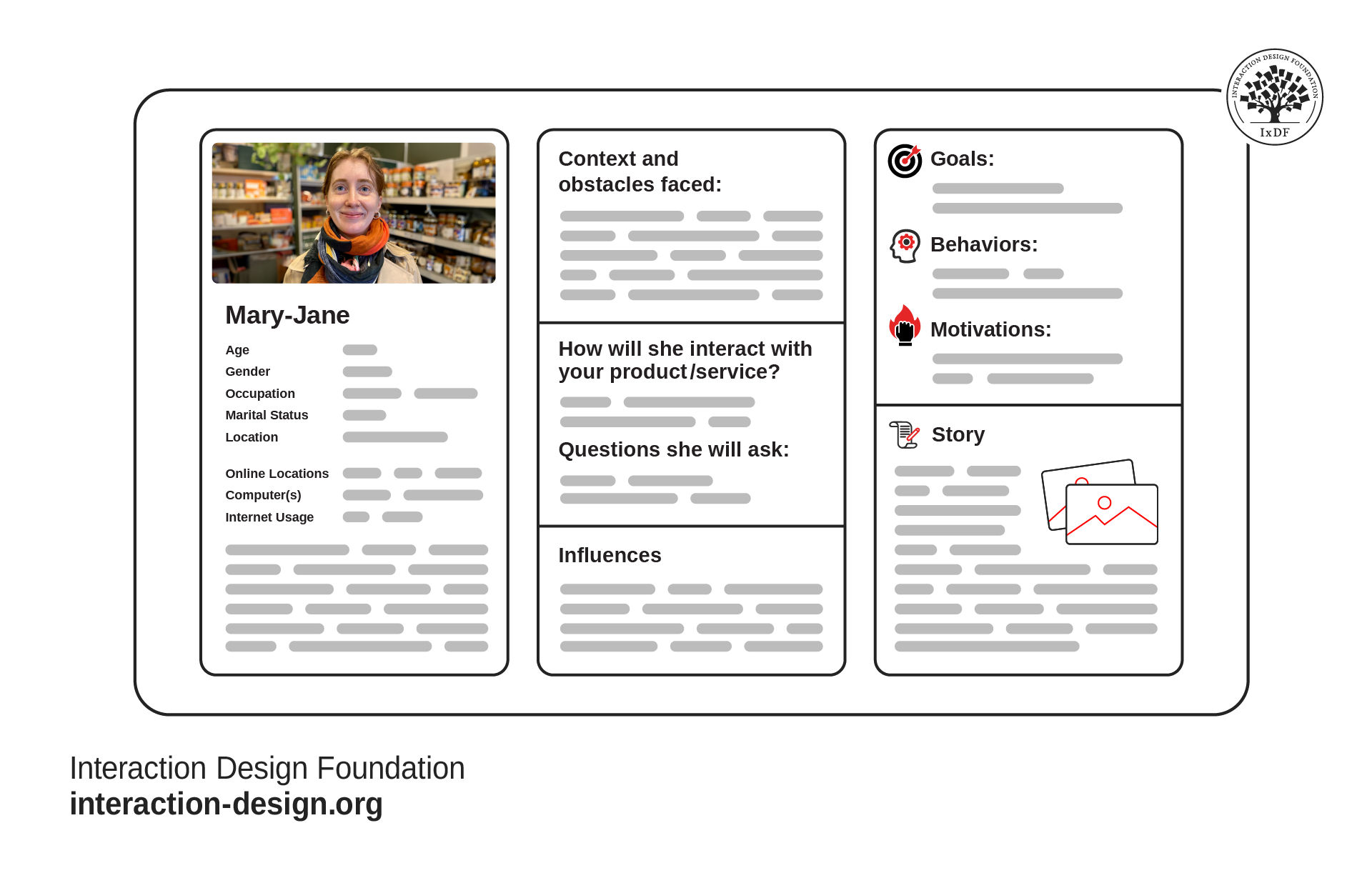
Personas are typically a one-page profile that features an image, basic demographics, and key behavioral information. This makes them shareable and digestible. Imagine giving your colleague a 100-page research report vs a 1-page persona. Which are they more likely to use?
© Interaction Design Foundation, CC BY-SA 4.0
When you make personas part of your process, you’ll get a powerful career edge:
The research behind them reveals the true needs and behaviors of the people you serve. With this knowledge, you can solve the real problems people have.
They are a shareable, memorable, and actionable communication tool that will align your team and keep everyone on track.
They connect you and your team to the people you serve on a human level. No more faceless “patients,” “customers,” or “guests.”
Just imagine your next strategy meeting is centered around Fiona—a jet-lagged executive, who needs the smoothest check-in service after her red eye flight—and not a bunch of dashboards showing hotel guest analytics.
How Do Personas Benefit Your Work?
Personas carry numerous benefits, no matter your job or industry. They focus your efforts, promote empathy, and ensure you create products, services, and experiences that truly solve people’s problems.
They Give Focus to Your Efforts
Personas act as your North Star. Instead of drowning in endless possibilities, you focus on delighting specific groups.
For example, a fitness studio might create three personas—Maria, the morning warrior, Greg, the lunch-break exerciser, and Felicity, the weekend athlete. Now, every schedule change and new offering gets a simple test. "Does this help Maria?" If the answer is no, you move on—no more guessing and no more empty classes.
Sometimes, an out-of-touch stakeholder or an “upcoming trend” might convince you to implement "just one more offering." In these cases, you turn to your personas. When opportunities arise, evaluate them against real needs, not wishful thinking. That’s how you truly help people.
They Promote Real Human Connection
Our brains are wired for stories about individuals, not statistics about groups. Personas tap into this natural tendency—they turn abstract "customers," “patients,” and “guests” into people you relate to and care about.
Think about it. Who do you want to help more? Your 35-50, middle-income market segment, or Marcus, the small business owner struggling with inventory?
This shift makes a huge difference. When you have this empathy, you can design outstanding solutions for humans, instead of mediocre solutions for faceless statistics.
They Unite Teams Around Shared Understanding
Personas create a common language across departments. When everyone knows "Linda the Luxury Traveler," you can be confident you’re all on the same page.
For example, consider that the product, marketing, and customer service teams at a boutique hotel chain all work with Linda in mind. If Linda’s priorities are at the top of everyone’s lists, then there’s no conflict; product curates local experiences, marketing speaks Linda's language, and service prepares personalized touches.
The result? Teams flow in the same direction, and the guests that Linda represents get an experience made just for them.
They Save Time and Resources
Personas are built on a comprehensive understanding of people’s needs and behaviors. To work effectively, they need to be accurate and not built on assumptions.
So, how do you achieve this? With research, which takes time. However, you have to consider the long-term payoff, not just the short-term resources.
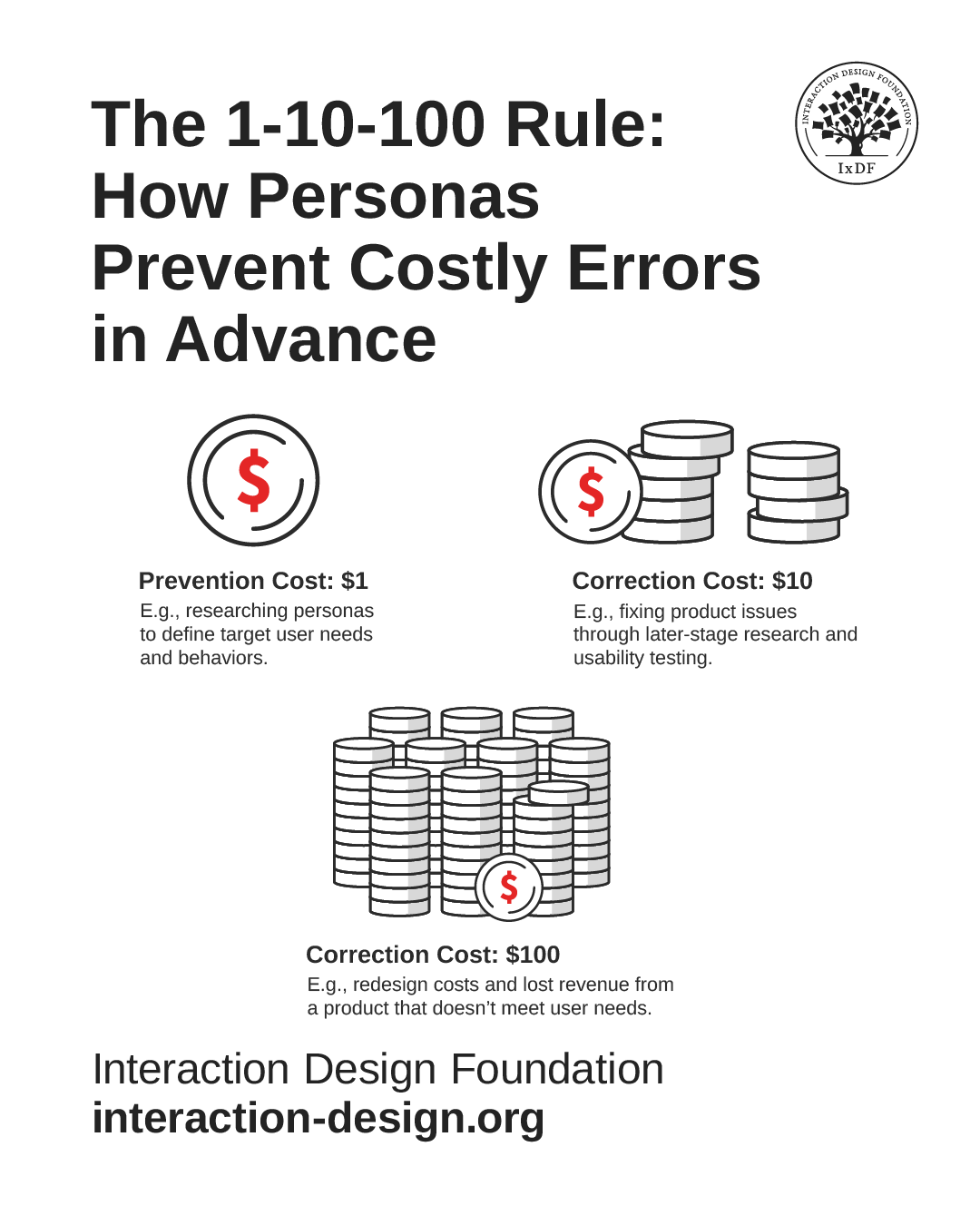
Imagine a hospital system planning to redesign its waiting areas. Their persona research reveals most patients aren't "Informed Isabella," who enjoys educational materials, but "Anxious Andrew," who feels overwhelmed by medical environments and just wants clear, simple guidance about what happens next. Without this information, they’d have built the wrong solution for the wrong person. This insight could save hundreds of thousands in unnecessary redesign costs while improving patient satisfaction.
© Interaction Design Foundation, CC BY-SA 4.0
They Drive Better Outcomes
Personas lead directly to improved results. Whether that's revenue, satisfaction scores, or lives changed.
Consider a persona for a local restaurant chain called "Solo Diner Sam.” Sam doesn’t want bigger portions or more options—he wants a comfortable bar area where eating alone feels natural. When the restaurant refurbishes its dining areas, it references Sam throughout the process and creates a setting where he feels at home.
This leads to satisfied customers, who become repeat visitors, and finally advocates. Many of the customers Sam represents might be on business and recommend the chain to colleagues and peers. This is the power of putting the human at the center of your design process—and the best way to do it is with a persona.
How to Get Started with Personas
Now you know how personas can transform your startup, business strategy, or new product offering, it’s time to get started. Here’s a simple but effective approach to building personas.
Plan and Research
Define what you want to learn. This starts with a lack of understanding. Perhaps there is little uptake for your bakery’s new lunch delivery service. Maybe you have an idea for a new gardening service, but don’t know who your key customers are or what they want.
For the majority of situations, it’s best to keep your approach broad. If you leave yourself open to discovering unexpected insights, you’ll actually get to the bottom of what people want. However, if you lead with assumptions, you’ll likely ignore the nuggets of information that contribute to success-driving personas.
One research method that keeps bias and assumption at bay is grounded theory, as William Hudson, User Experience Strategist and Founder of Syntagm Ltd, explains in this video.
Show
Hide
video transcript
- Transcript loading…
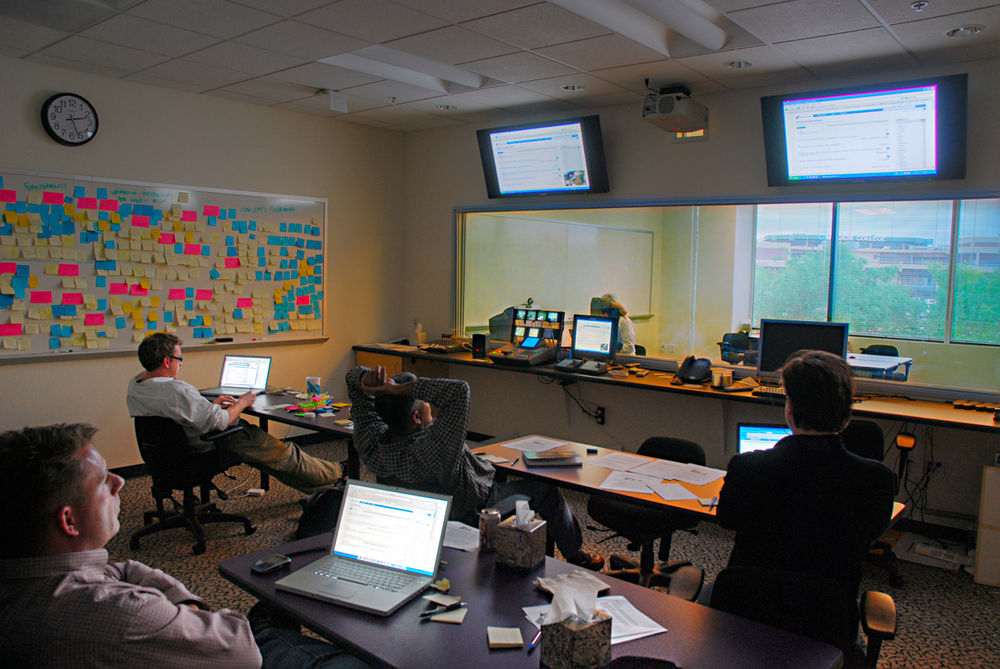
During your research, where possible, observe how people actually behave. Notice what they do, not just what they say. Interviews can tell you a lot, but observations reveal the unsaid truths.
Look out for emotions, frustrations, and workarounds—these reveal unmet needs. Then find patterns across your research participants. What challenges appear repeatedly? What goals do people share? What differences matter? These patterns form your persona foundations.
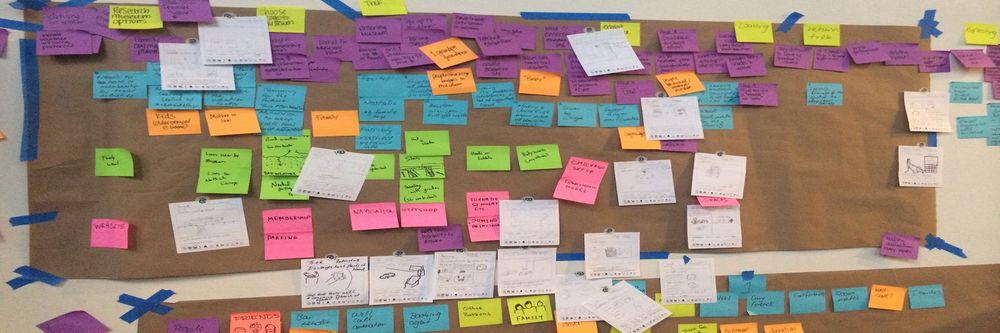
A powerful but straightforward method for spotting patterns in your research is with affinity diagramming, as William Hudson explains in this video.
Show
Hide
video transcript
- Transcript loading…
Build Your Personas
From your research analysis, identify the key groups of people you want to delight with your product, service, or experience. For small businesses and projects, it’s best to start with one group and deliver a truly focused solution.
Give each persona a name and photo—ideally, a real photo of one of your research participants in action. Then write a one-page profile including:
Demographics: A specific age (not a range). Only include other demographics like gender, occupation, marital status, or location if they directly impact how the persona interacts with your product, service, or experience.
Roles: The different hats they wear when engaging with your product (e.g., customer, passenger, hotel guest) to clarify their responsibilities and expectations.
Context and Obstacles Faced: Where, when, and how they'll use your product, including environmental constraints, time pressures, and the key challenges they encounter.
Questions They'll Ask: Primary concerns or uncertainties when engaging with your product—usability-related, feature-specific, or decision-making questions.
Influences: Sources that shape their decisions—social circles, online reviews, brand trust, industry standards, or personal experience.
Goals: What they want to achieve—focus on people’s needs rather than product features, including both short-term and long-term objectives.
Behaviors: How they currently approach tasks in your problem domain, their habits, workflows, and decision-making processes.
Motivations: What drives them to act—personal aspirations, pain points they want to overcome, or external pressures like work requirements.
Stories of Use: Short, specific scenarios based on actual research that illustrate how they interact with your product in real-life situations.
Remember, you don't need to include all of these elements—focus on what delivers the key information your team needs to design a product, service, or experience that delights the people represented by the persona. Keep descriptions specific and realistic. Instead of "values efficiency," write "arrives 15 minutes early to appointments and prefers written instructions over verbal explanations.”
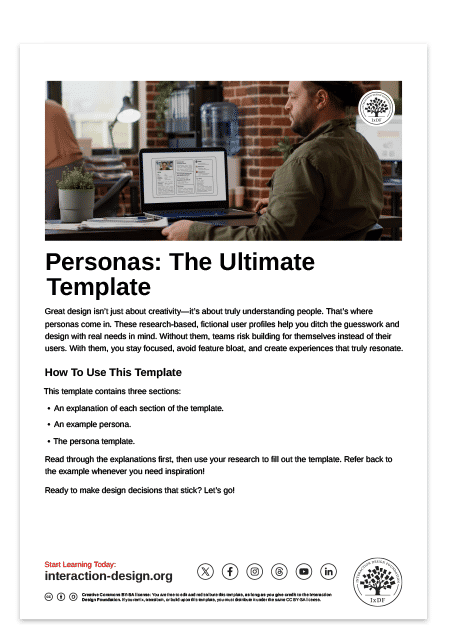
Download our free persona template to get started right away. It contains an explanation of each section plus an example persona to inspire you.
Share Your Personas and Get Them Used
Now that you have your persona or personas in hand, it’s time to put them to work. Share them with your team and make them a part of daily work life, so they stay at the forefront of your team's mind:
Make Them Visible: Display personas prominently where teams see them daily—on meeting room walls, digital dashboards, or as desktop wallpapers.
Reference Them Constantly: In every meeting, ask, "How would this help Marcus?" Filter all decisions through your personas' needs and behaviors rather than internal assumptions.
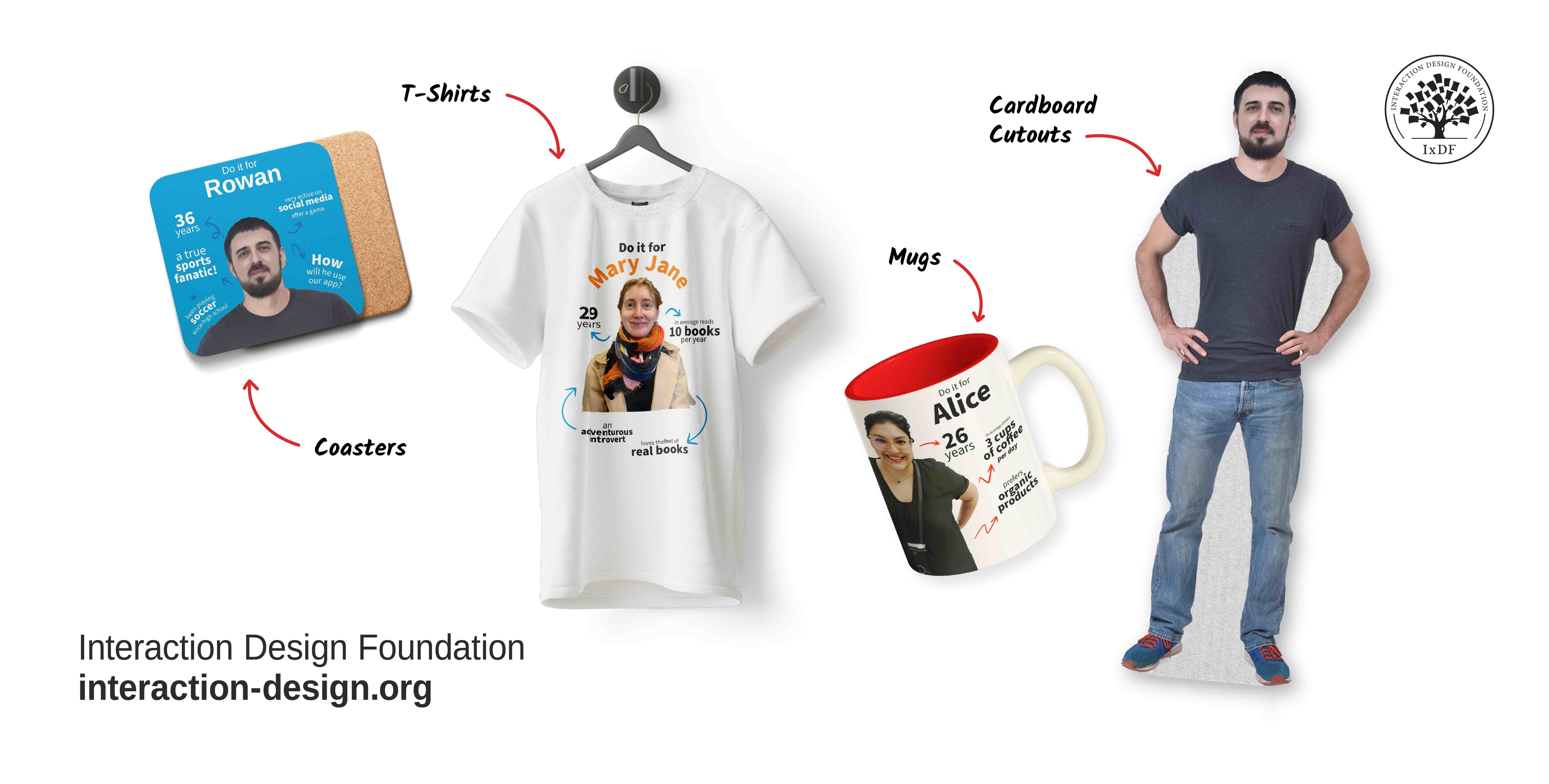
Merchandise Your Personas: Print personas on coffee mugs and coasters, or create life-size cardboard cutouts to "attend" meetings as physical reminders of who you're designing for.
![]()
While merchandise might seem overboard, it’s an excellent way to make your personas unforgettable. The more your team references the people they’re serving, the better they’ll solve their problems.
© Interaction Design Foundation, CC BY-SA 4.0
Use Their Names: Replace generic terms like "guests" or "customers" with persona names. This maintains human connection and prevents abstract thinking.
Train with Personas: Use them to onboard new team members efficiently. Personas transfer complex customer understanding faster than lengthy research reports.
Keep Them Current: Schedule annual reviews and update personas when major changes occur. Living personas that evolve with your understanding will remain valuable and relevant.
The Take Away
Personas aren't just for designers—they're for anyone who serves other humans. Whether you're building a business, managing operations, or delivering services, understanding specific people helps you better serve everyone.
You now have everything you need to transform your approach:
Start with research to understand real behaviors and needs, not assumptions.
Build one-page personas that capture specific people with names, photos, and key insights.
Make them visible in your workspace and reference them in every decision. Use their names instead of generic labels.
Train your team with them and keep them updated as you learn more.
The process is straightforward, but the impact is profound. Instead of designing for everyone and delighting no one, you'll create focused products, services, and experiences that actually work. Your team will align around real human needs rather than internal debates. You'll save resources by avoiding costly mistakes and drive better outcomes through genuine empathy.
Start this week. Pick one group you serve. Have five conversations. Look for patterns. Create your first persona. Then watch this simple tool transform your work from guessing to knowing, from generic to personal, from good to exceptional. You'll get the confidence that comes from truly knowing your audience—and the satisfaction of creating solutions that genuinely improve people's lives.
References and Where to Learn More
Want to know more about personas and how to use them effectively? Personas and User Research: Design Products and Services People Need and Want will show you how to gather meaningful user insights, avoid bias, and build research-backed personas that help you design intuitive, relevant products. You’ll walk away with practical skills and a certificate that demonstrates your expertise in user research and persona creation.
For more details on how to build personas from scratch, follow along with our article, How to Create Research-Backed User Personas: The UX Designer's 2025 Guide.
Discover a series of healthcare personas created by The Commonwealth Fund in collaboration with Healthwise for High-Need, High-Cost Patients.
Explore Nielsen Norman Group’s UX Deliverables Glossary to find other UX tools that can level up your career, no matter your industry.