What are Customer Touchpoints & Why Do They Matter?

• 8 min read

1,201 Shares

There are as many different definitions for the word “touchpoint” in customer experience design and marketing as there are flavors on the average restaurant menu. Why? Because these disciplines have been evolving rapidly over the last decades and terminology has become fluid rather than static. To make matters more complicated – the term “touchpoint” is also often confused with the term “channel”.
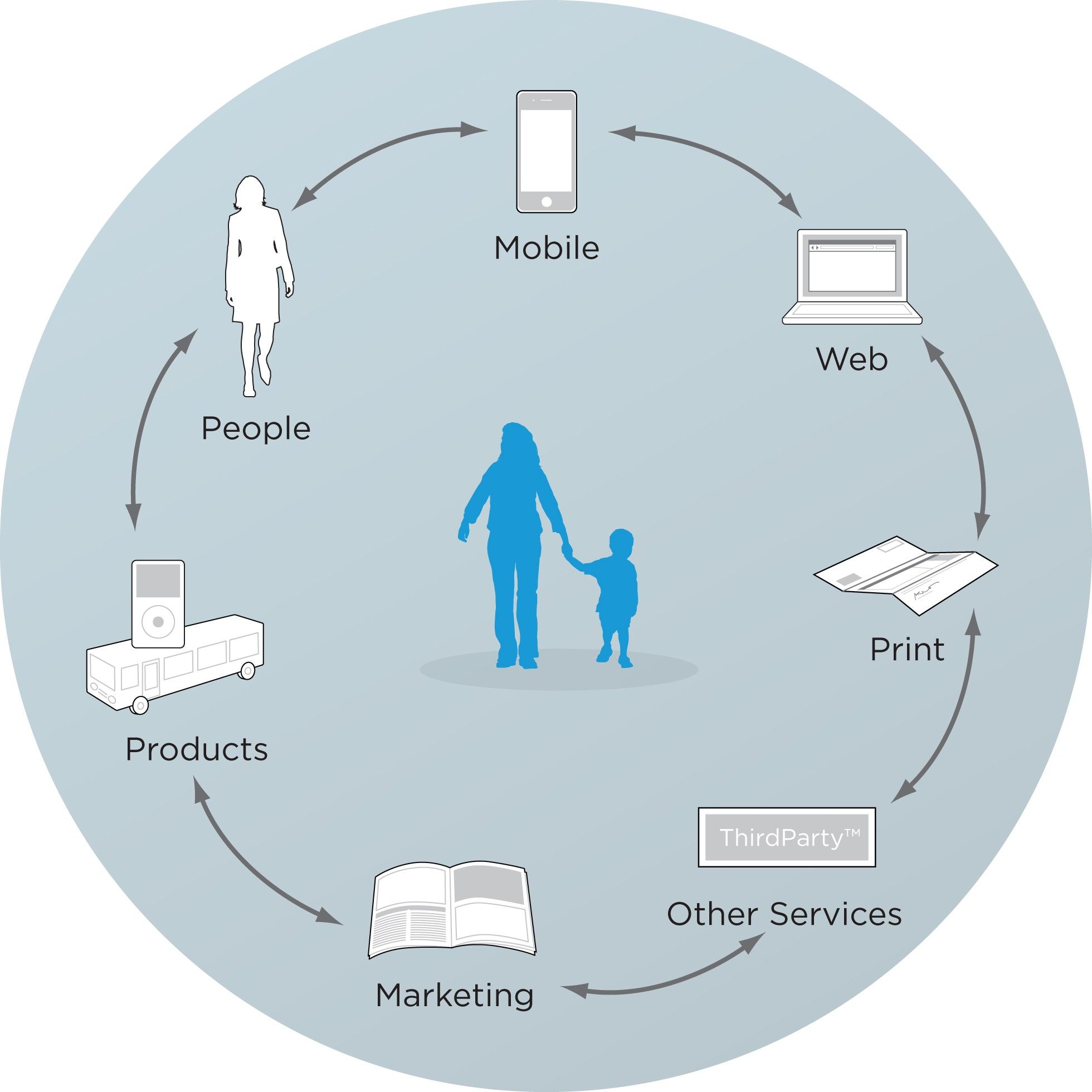


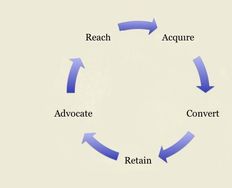
Author/Copyright holder: Rosenfeld Media. Copyright terms and licence: CC BY 2.0

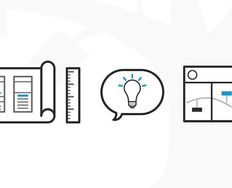
Some simple examples of customer touchpoints. They are places of interaction with your brand rather than “channels” which are planned points of interaction.

What are Customer Touchpoints?

Let’s start by defining “touchpoint” in the widest and most encompassing manner and the word “channel” too:

“A touchpoint is any interaction (including encounters where there is no physical interaction) that might alter the way that your customer feels about your product, brand, business or service.” An example of an encounter with no physical interaction might be discovering an online review of your product. This definition is based on the one proposed by Laura Patterson, the President of VisionEdge Marketing.

A channel is where an interaction takes place. It might be via mail (if you send out a flyer or letter), it might be in the media (advertising), online (on your site or indeed on someone else’s site), physically (at a bricks and mortar location), etc.

Why take these definitions? Well, though there are other definitions of touchpoint (whilst the definition of channel is generally agreed upon now) most of these definitions are narrower in scope. They fail to acknowledge that, as with an online review, some touchpoints with our products, services, etc. are outside of our direct control.

"Your brand is a story unfolding across all customer touchpoints." as Jonah Sachs, the famous entrepreneur and designer said.
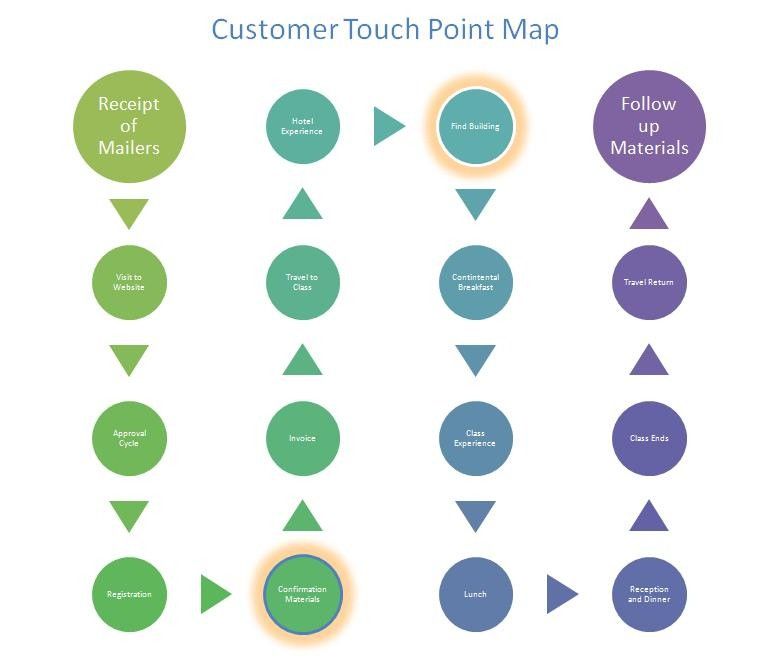

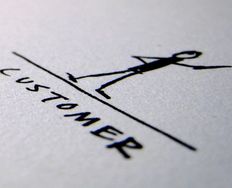
Author/Copyright holder: Jen Beever. Copyright terms and licence: CC BY-NC-ND 2.0

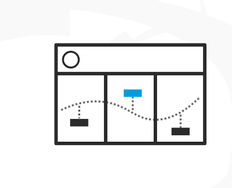
Touchpoints which need specific attention can always be highlighted on your touchpoint mapping (such as the heat spots in this example).

Why Do We Need to Understand Touchpoints?

If we want to improve interactions with our customers the key starting point is to understand what those interactions are and where they take place. Without that understanding it would be impossible to measure any improvements or indeed to see if changes made to those interactions were having a detrimental (rather than positive effect).

Designers can design interactions, at least those within our control, and to be able to do so they will need to understand what need is driving the interaction and where and when the interaction takes place. This is clear in the differences in designing for desktop and mobile applications, for example, we know that there is a higher risk of a mobile user being distracted regularly whilst working on an application than there is for a desktop user. Thus interactions on mobile need to be recoverable (e.g. the user can return and pick up where they left off) more so than desktop interactions need to be.

For smaller products it can be useful simply to list all the possible touchpoints (interactions) for the product. This enables a high-level overview of where the design team needs to focus their efforts to improve user and customer experience. For larger products, where such a list is likely to become unwieldy, the touchpoints can form the basis for customer journey mapping and a full understanding of how a “typical user” or an individual user interacts with the brand, product, etc. over time.
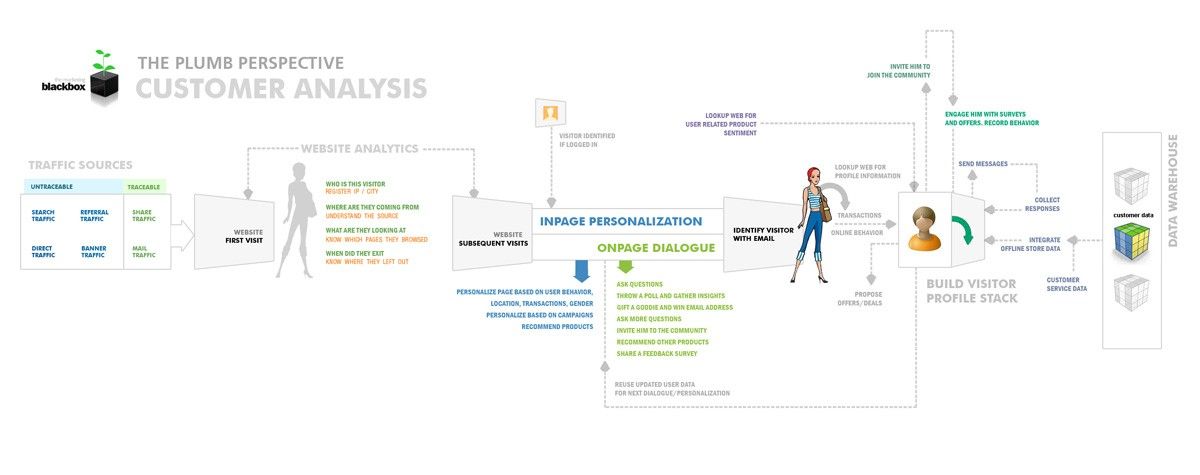

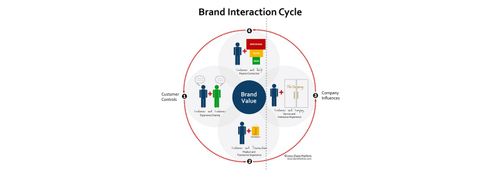
Author/Copyright holder: Pemq. Copyright terms and licence: CC BY-SA 3.0

Touchpoints can also be built into other forms of customer analysis as this excellent diagram shows.

What Do Customers Expect from Touchpoints?

Chris Ridson, the Design Director of Adaptive Path, suggests that touchpoints should provide a customer with the following interaction types:

  • Appropriate (e.g. that both the context of the interaction and the cultural tone of the interaction meet the needs of the customer or user)

  • Relevant (e.g. that the function performed by the interaction meets the utility requirements of the customer or user)

  • Meaningful (e.g. that the interaction was perceived as important or purposeful by the customer or user)

  • Endearing (e.g. that the interaction created some form of bond with the user or customer for example through desirability, creating delight or a playful tone)

It’s important to note that these are all things that can be designed – though it may take some user research to get to the bottom of how that design might take shape.

What About Touchpoints Outside of the Brand’s Control?

It is fair to say that some interactions are outside of your control, such as online reviews but that doesn’t mean that you cannot influence these interactions.

Online reputation management tracking can help you respond to negative reviews and comments effectively. They can also help you build a barometer of success on other actions to improve touchpoints – if your touchpoints worked perfectly each and every time, it would be unlikely that your customers would leave poor reviews online in the first place. Improving the touchpoints you can control will usually improve the ones you cannot too.
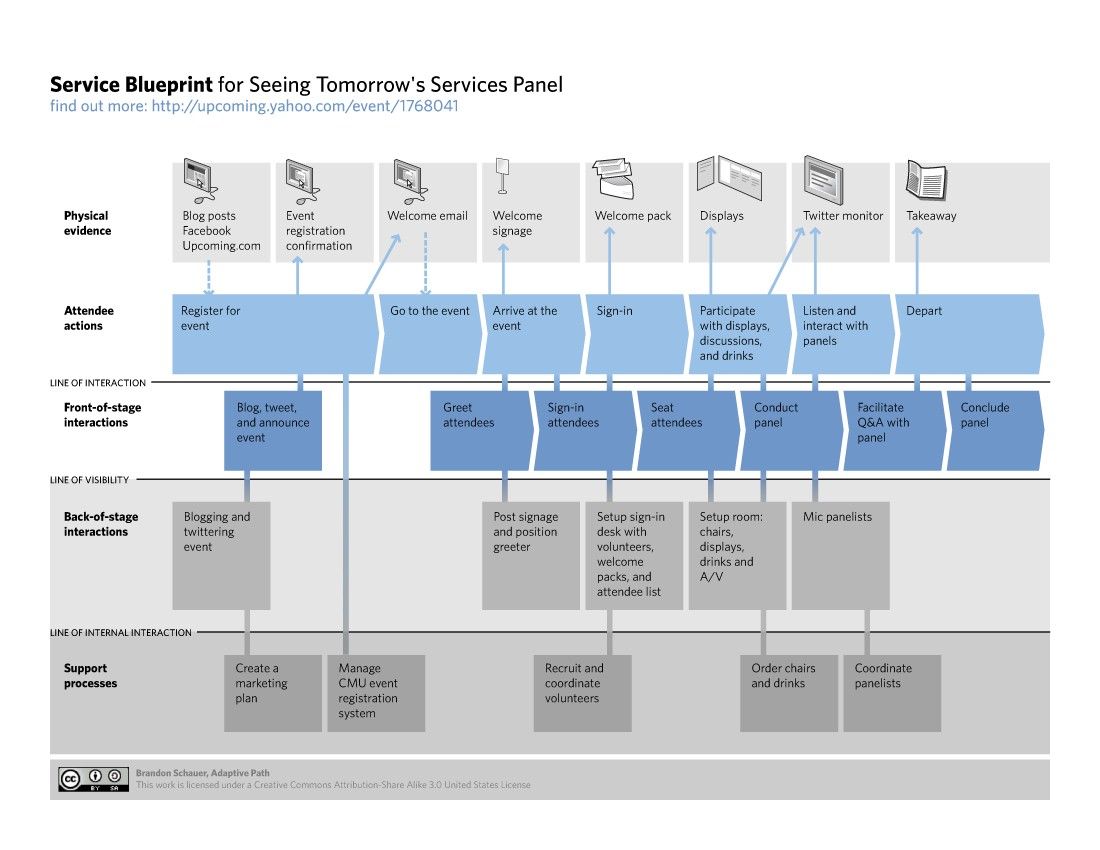

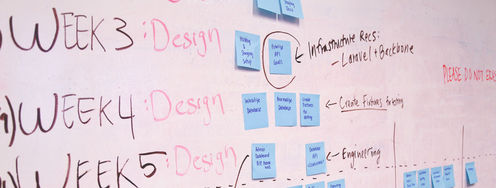
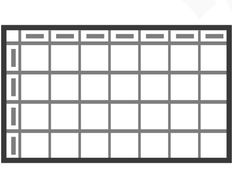
Author/Copyright holder: brandon schauer. Copyright terms and licence: CC BY-SA 2.0

Touchpoint mapping can become quite detailed when you consider all the interactions that go into each touchpoint as this service panel map demonstrates.

The Take Away

Customer touchpoints are where customers interact with your brand, product, service, etc. Developing an understanding of each touchpoint means that you can design better user and better customer experiences. This understanding can also be used to enhance user and customer journey mapping exercises. Improving touchpoints within your control can also help improve those that lay outside of your control too.

Resources

Learn More in This Course:

AI for Designers

1
19
38
14
98 % booked
View Course

What You Should Read Next

  • Read full article
    The Principles of Service Design Thinking - Building Better Services - Article hero image
    Interaction Design Foundation logo

    The Principles of Service Design Thinking - Building Better Services

    Service design is all about taking a service and making it meet the user’s and customer’s needs for that service. It can be used to improve an existing service or to create a new service from scratch. In order to adapt to service design, a UX designer will need to understand the basic principles of

    Social shares
    1.3k
    Published
    Read Article
  • Read full article
    14 UX Deliverables: What will I be making as a UX designer? - Article hero image
    Interaction Design Foundation logo

    14 UX Deliverables: What will I be making as a UX designer?

    What does a UX designer actually produce? Here, we will explore the concept of UX deliverables, a term that describes the outputs of a UX design process during its various stages. The deliverables produced by UX designers vary according to their role in the design team and also depending on the meth

    Social shares
    1.2k
    Published
    Read Article
  • Read full article
    Customer Journey Maps — Walking a Mile in Your Customer’s Shoes - Article hero image
    Interaction Design Foundation logo

    Customer Journey Maps — Walking a Mile in Your Customer’s Shoes

    Perhaps the biggest buzzword in customer relationship management is “engagement.” Engagement is a funny thing, in that it is not measured in likes, clicks, or even purchases. It’s a measure of how much customers feel they are in a relationship with a product, business or brand. It focuses on harmony

    Social shares
    1.1k
    Published
    Read Article
  • Read full article
    The Moment of Truth: Build Desirable Relationships with Users and Customers - Article hero image
    Interaction Design Foundation logo

    The Moment of Truth: Build Desirable Relationships with Users and Customers

    In order to understand “the moment of truth”; it’s important to understand the customer lifecycle with a brand or product. There are many moments at which a customer (or potential customer or former customer) will interact with a brand.A moment of truth is simply any interaction during which a custo

    Social shares
    978
    Published
    Read Article
  • Read full article
    How to Visualize Your Qualitative User Research Results for Maximum Impact - Article hero image
    Interaction Design Foundation logo

    How to Visualize Your Qualitative User Research Results for Maximum Impact

    When thinking about visualization of research results, many people will automatically have an image of a graph in mind. Do you have that image, too? You would be right in thinking that many research results benefit from a graph-like visualization, showing trends and anomalies. But this is mainly tru

    Social shares
    965
    Published
    Read Article
  • Read full article
    Customer Lifecycle Mapping - Getting to Grips with Customers - Article hero image
    Interaction Design Foundation logo

    Customer Lifecycle Mapping - Getting to Grips with Customers

    Customer experience is the key to running a successful business just as user experience is key to developing a successful product. Customer experience encompasses a larger range of interaction than user experience in that it not only takes into account UX but also the needs of those paying for the p

    Social shares
    902
    Published
    Read Article
  • Read full article
    User Experience and Customer Experience - What’s the Difference? - Article hero image
    Interaction Design Foundation logo

    User Experience and Customer Experience - What’s the Difference?

    At first glance the two terms appear to be identical don’t they? Our users are our customers and thus they’re the same thing. Except, of course, they’re not. So what’s the difference?What is User Experience (UX)?Author/Copyright holder: A-dit-ya. Copyright terms and licence: CC BY 2.0The user experi

    Social shares
    855
    Published
    Read Article
  • Read full article
    User Story Mapping in Design - Article hero image
    Interaction Design Foundation logo

    User Story Mapping in Design

    User Story Mapping is a crucial technique for visualizing product development from the user's perspective. Here, we outline essential components and steps for crafting a User Story Map. You’ll learn how  User Story Mapping can help create engaging and effective user experiences through different exa

    Social shares
    680
    Published
    Read Article
  • Read full article
    How to Resolve Conflicts Between Design Thinking and Marketing - Article hero image
    Interaction Design Foundation logo

    How to Resolve Conflicts Between Design Thinking and Marketing

    In the past, designers often reported to marketing managers and were neither expected nor allowed to make business decisions. When traditionally-structured companies transition to a design-driven mindset, there can be friction between the marketing and design teams. Let’s take a closer look at this

    Social shares
    678
    Published
    Read Article
  • Read full article
    How to Create a Perspective Grid - Article hero image
    Interaction Design Foundation logo

    How to Create a Perspective Grid

    When you create a journey map, it can be a challenge to combine research data and the ideas of people in your organization into a map that tells an accurate, simple story. But success in this is critical. An inaccurate map could lead to bad decisions, and one that is too complex may prevent people f

    Social shares
    617
    Published
    Read Article

Top Articles

Top Topic Definitions

Feel Stuck?
Want Better Job Options?

AI is replacing jobs everywhere, yet design jobs are booming with a projected 45% job growth. As a designer, your job is to design products and services people love. More love means more impact and greater salary potential. Do work you're proud of and get paid what you're worth.

At IxDF, we help you from your first course to finding a job you love, all in one place.

See How Design Skills Turn Into Job Options

Be the One Who Inspires

People remember who shares great ideas.

Share on:

Academic Credibility — On Autopilot

Don't waste time googling citation formats. Just copy, paste and look legit in seconds.

New to UX Design? We're Giving You a Free eBook!

The Basics of User Experience Design

Download our free ebook “The Basics of User Experience Design” to learn about core concepts of UX design.

In 9 chapters, we'll cover: conducting user interviews, design thinking, interaction design, mobile UX design, usability, UX research, and many more!

329,190 designers enjoy our newsletter—sure you don't want to receive it?