Your constantly-updated definition of The Secret of Don Norman's Success and
collection of videos and articles. Be a conversation starter: Share this page and inspire others!
98shares
What is The Secret of Don Norman's Success?
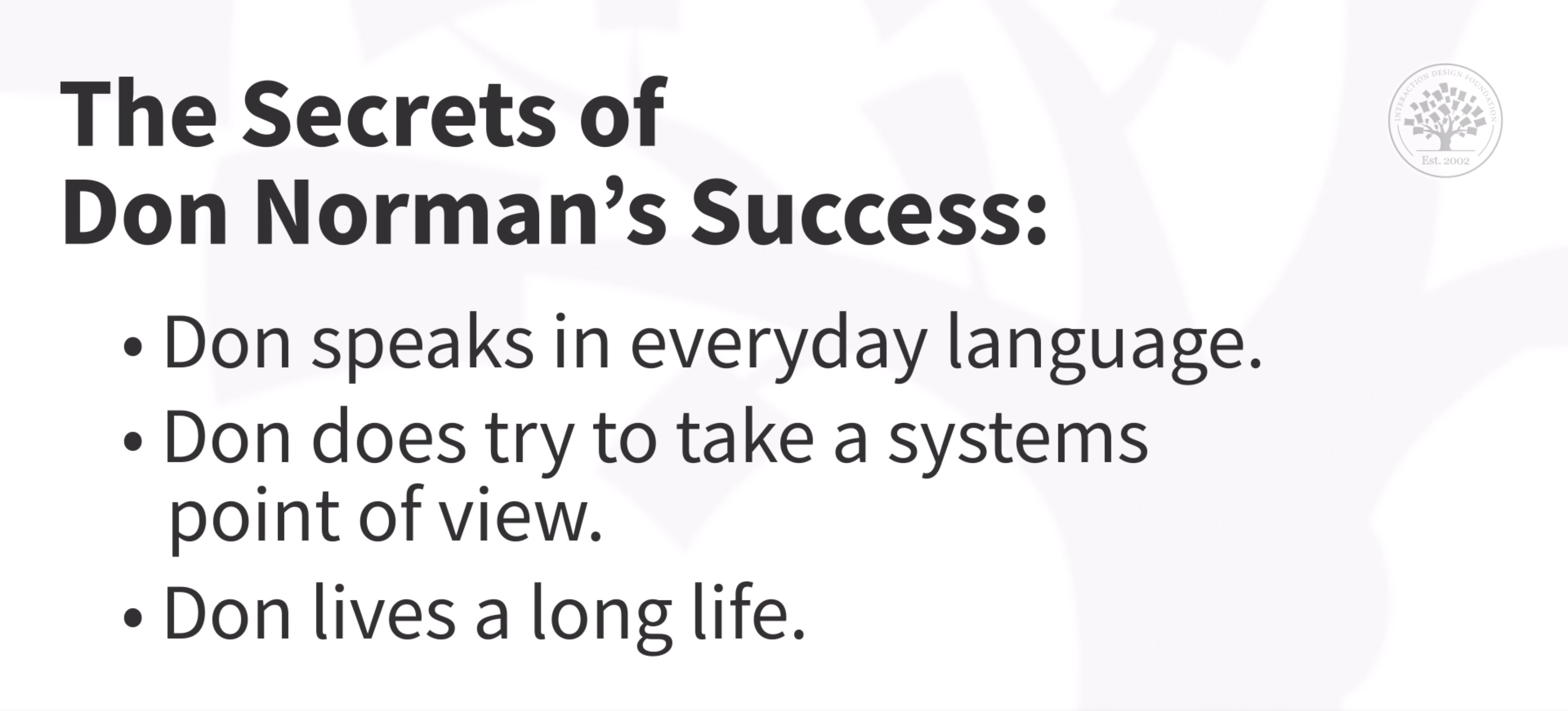
The secret of Don Norman’s success is that this cognitive science and usability engineering expert advocates speaking in everyday language, taking a systems point of view and living a long life. By striving to emulate these and adopting a generalist approach, designers may find they can enjoy and use similar influence.
“Design, to me, I found was a perfect field because I could use all the science I knew, all the engineering I knew, all of the stuff about people and about technology, but I could produce and build things that were used by millions and millions of people.” — Don Norman: Father of User Experience design, author of the legendary book The Design of Everyday Things, co-founder of the Nielsen Norman Group, and former VP of the Advanced Technology Group at Apple.
Don Norman became an influential figure for no small reason. A childhood fascination with electrons and electromagnetic waves led him to study electrical engineering at MIT. Slightly later, the University of Pennsylvania — where Norman attended graduate school — was home to some of the earliest computers. Norman wanted to get involved with computers, but settled on psychology. However, he wanted to study the mechanisms involved in psychology and began working at the Center for Cognitive Studies at Harvard. Here, renowned psychologist B.F. Skinner once denounced Norman’s work. This, Norman found, was a good thing; you need courage to do anything worthwhile — many people who follow established paths will dislike you for exploring beyond their frame of reference.
Norman then studied memory systems at Harvard (memory was a virtually unknown study subject) before relocating to the University of California, San Diego (UCSD). Later, he and co-author Peter Lindsay wrote Human Information Processing: An Introduction to Psychology, a work examining how people process information, investigations that would sow the field of cognitive psychology. Considering psychology too narrow, Norman expanded into artificial intelligence, neural science, philosophy and other disciplines, and the UCSD’s Cognitive Science department was born.
In 1979, the Three Mile Island nuclear power station accident spotlighted the significance of Norman’s work and expansive knowledge base. Asked to investigate, Norman found the problem was the control room’s design. This incident drove him to design technology that improved what people experience. He began working on aviation safety for NASA, and strove to make computers easier to use (notably by working with Apple).
A year’s sabbatical at Cambridge University diverted Norman’s attention in an unexpected direction. Finding he couldn’t open some doors — their designs didn’t indicate to push or pull — Norman realized that principles governing nuclear safety and sophisticated devices also applied to basicartifacts. This inspired him to write The Psychology of Everyday Things. Later, he began the first of several retirements — at Apple, where he discovered some problems. Here, he coined the term “user experience,” became Apple’s user experience architect and began meeting designers in earnest. His influence has since extended to touch countless aspects of design.
Still, Norman pressed on: encouraging designers to tackle the world’s biggest challenges with fundamental approaches such as 21st century design, human-centered design and humanity-centered design. His concern about the state of the world reflects his commitment to help designers realize they can make a difference if they apply human-centered design insights to the complex problems that plague our planet. And his work with the Interaction Design Foundation has resulted in a course — titled Design for the 21st Century — for designers to learn how they can achieve this.
Everyday language makes life easy for the countless users, students and readers Norman has influenced. Academics traditionally write in complex, confusing ways.
The systems thinking viewpoint Norman takes to what he sees will help you decipher many complexities. That can also help you become influential, especially as you seek to rise in the organizations you help.
Old age is a privilege denied to many; it’s naturally difficult to “emulate.” Still, a powerful way to ensure “victory” over those who might stand in your way or attempt to mute your influence is to outlive them. Plus, providing the new areas and answers you explore are worthwhile ones, you can enjoy long-lasting effects of the positive outcomes you’ll have achieved.
How to Be a Generalist
Norman teaches a further key to success. Learn here how to leverage the power of being ageneralist:
ShowHide
video transcript
Transcript loading…
Video copyright info
Apple's headquarters at Infinite Loop in Cupertino, California, USA. by Joe Ravi (CC-BY-SA-3.0)
Cali Mill Plaza, Cupertino City Center, at the intersection of De Anza and Stevens Creek Boulevards in Cupertino. by Coolcaesar (CC-BY-SA-3.0-migrated-with-disclaimers)
Atkinson Hall at the University of California, San Diego, housing the Qualcomm Institute—the UC San Diego division of the California Institute for Telecommunications and Information Technology (Calit2) by TritonsRising (CC-BY-SA-4.0)
Xerox PARC in 1977; an un-busy weekend view from across Coyote Hill Road. Shot on an Olympus Pen-F, half-frame Kodachrome 64 slide; scanned by Pixel 3 phone with Moment 10X macro lens. by Dicklyon (CC-BY-SA-4.0)
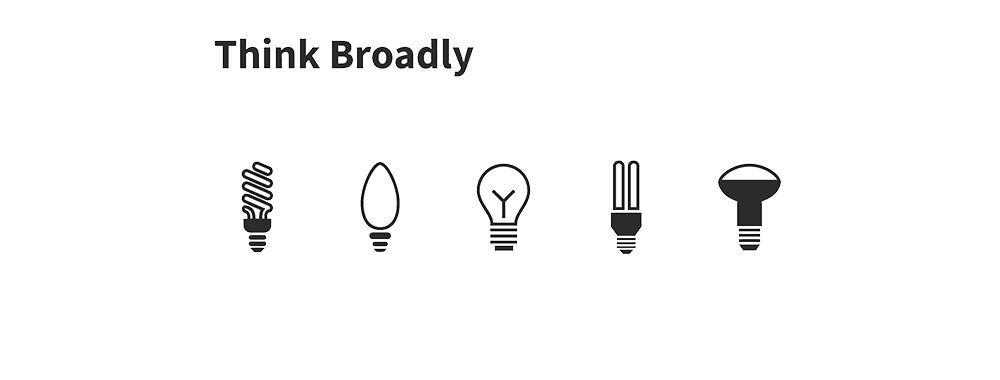
Indeed, Don Norman had moved from one field to another to explore interests geared principally around human cognition, resulting in his ability to consider broader cause-and-effect chains of designers’ decisions. For example, with the nuclear power accident, he leveraged elements from engineering and psychology. Yes, Norman was self-taught; plus, his “timing” was remarkable. Nevertheless, you’ll find a powerful vantage point when you become a generalist:
You must know many different things, without spending time on becoming an expert at them. Instead, you consult many specialists, tap their in-depth expertise and bring them together to create a final product.
You can learn quickly. Everything you learn makes it easier to learn something else, and then the next new thing. You can then apply this snowballed knowledge to each new challenge.
You can decode complex situations more easily by viewing them from a generalist angle: a world of complex socio-technical systems, of interconnected parts of business, supply chains, technology and so much more.
Overall, remember; it takes courage to do things that will improve the world, one piece at a time.
Learn More about Don Norman and Being a Generalist
Ready to shape the future, not just watch it happen? Join the Father of UX Design, Don Norman, in his two courses, Design for the 21st Century and Design for a Better World, and turn your care for people and the planet into design skills that elevate your impact, your confidence, and your career.
Questions related to The Secret of Don Norman's Success
What is the main reason for Don Norman’s success in the design world?
Don Norman’s success stems from his ability to bridge disciplines and humanize technology. Trained in electrical engineering and psychology, he combined cognitive science with design to pioneer user-centered design. His book The Design of Everyday Things introduced concepts like affordances and signifiers, making design principles accessible and emphasizing usability over aesthetics. At Apple, he coined the term “user experience,” highlighting the importance of designing for the user’s entire interaction with a product. Norman’s interdisciplinary approach and focus on human needs have profoundly influenced modern design practices, making him a pivotal figure in the field who deserves the epithet “Father of UX design.”
Why did Don Norman believe traditional design needed to change?
Don Norman believed traditional design needed to change because it focused too much on aesthetics and not enough on usability or human needs. He argued that beautiful products often fail in real-world use because designers overlook how people think and behave.
By contrast, Norman pushed for human-centered design, an approach that starts with understanding users’ goals, context, and limitations. He advanced this towards humanity-centered design. He believed design should make things intuitive, forgiving, and functional. His famous example of confusing doors (“Norman doors”) highlighted how poor design causes everyday friction. Norman’s vision reshaped the field, urging designers to prioritize people over style.
Explore why human-centered design came about and how it progresses towards a better world.
How did Don Norman’s writing contribute to his influence?
Don Norman’s writing made complex design ideas clear, relatable, and actionable—dramatically expanding his influence. His landmark book The Design of Everyday Things showed how everyday failures, like hard-to-use doors or confusing gadgets, stem from poor design—not user error. He applied key concepts like affordances and feedback to interaction design, helping both designers and non-designers understand how good design works.
Norman’s clear, engaging style turned academic ideas into practical tools. His books became go-to resources in design education and inspired a generation of user-focused professionals. By writing for broad audiences—not just experts—Norman spread the principles of human-centered design across industries and disciplines, and popularized what great designs involve, what they need to do, and why they must do good for the people who use them in real-world contexts and the real world they inhabit.
What made Don Norman a good communicator of design ideas?
Don Norman became a powerful communicator of design ideas because ofhis use of plain language, real-world examples, and relatable stories. Instead of academic jargon, he explained design principles through everyday objects—like doors, light switches, or teapots—that everyone interacts with. This made abstract ideas easy to grasp.
He also connected design to psychology, showing how people think, perceive, and make mistakes. By framing design as a way to solve human problems, Norman appealed to both technical and creative audiences. His writing and talks have helped designers see the user’s perspective more clearly. This clarity and empathy have made him one of the most influential voices in the design world.
Explore what empathy looks like in design and why it must be there, in our video.
ShowHide
video transcript
Transcript loading…
How did Don Norman help establish UX as a serious discipline?
Don Norman helped establish UX (user experience) as a serious discipline by giving it both a name and a clear purpose. While working at Apple in the 1990s, he popularized the term “user experience” to describe a person's full journey with a product, not just its interface. He argued that great design must consider emotions, context, usability, and systems—designing for real people in their many real-world contexts.
Through his books, talks, and teaching, Norman built a strong foundation for UX as a field rooted in psychology, engineering, and design. He also pushed for user research, testing, and iterative design to become standard practice. His influence helped move UX from an afterthought to a central focus in product development, so mindful brands can design products that address the true needs of real human beings in their real situations.
Discover how users’ contexts help designers determine how to create well-suited design solutions, in this video with Alan Dix: Author of the bestselling book “Human-Computer Interaction” and Director of the Computational Foundry at Swansea University.
ShowHide
video transcript
Transcript loading…
What does Don Norman see as the future of design?
Don Norman sees the future of design as people-focused—or humanity-focused—socially responsible, and system-oriented. He believes designers must move beyond products and interfaces to tackle complex global challenges, such as healthcare, education, inequality, and climate change. For Norman, good design should serve humanity, not just business goals.
Norman advocates for design that works at the community level, includes diverse perspectives, and addresses long-term impact. In his later work, he calls for “humanity-centered design,” where designers consider ethics, equity, and the environment as core design responsibilities. Norman’s vision positions design as a tool for societal change—not just user satisfaction.
Discover aspects of what the future may bring and what the design profession should consider to meet tomorrow’s challenges, in this video.
ShowHide
video transcript
Transcript loading…
What’s the biggest lesson Don Norman offers to today’s designers?
Arguably, the “biggest” one is this: always design for people, not just for technology or trends. Norman urges designers to deeply understand users—their goals, frustrations, and real-world contexts. Design should solve meaningful problems.
Norman also stresses the importance of empathy, simplicity, and testing. If a product confuses people, it’s not their fault—it’s a design flaw. This mindset shifts blame from users to designers and encourages continuous improvement.
By focusing on human needs and clear communication, Norman teaches designers to create solutions that are not only useful, but kind and respectful too.
How did Don Norman’s work change how companies think about usability?
Don Norman’s work changed how companies think about usability by showing that it’s not optional—it’s essential. Before Norman, many businesses looked at design as just making things look good. He flipped that idea, proving poor usability hurts customers and businesses.
He introduced usability as a science rooted in psychology and user behavior through his research and writing. Companies began to see that intuitive, user-friendly design reduces errors, improves satisfaction, and increases loyalty. At Apple, he showed how usability could drive innovation and brand value.
Today, usability testing, user research, and UX (user experience) teams are standard, largely thanks to Norman’s influence and bringing good design to where it belongs: serving real people and helping to make a better world.
Gain a more solid grounding in usability to understand why it’s a vital part of UX design.
How did Don Norman promote ethical and responsible design?
Don Norman promoted ethical and responsible design by urging designers to think beyond the user—and consider society, equity, and the environment. He argued that designers hold real power and must use it with care. In his later work, he introduced the idea of “humanity-centered design,” where ethics, sustainability, and inclusion guide every decision.
Norman called for designers to include diverse voices, especially from underserved communities, and to challenge systems that cause harm. He pushed back against tech that exploits attention or creates waste, and he encouraged long-term thinking over short-term gains. By placing moral responsibility at the heart of design, Norman redefined what it means to create something truly good.
Discover some essential points about what designers must do to effect changes that matter, in this video with Don Norman.
ShowHide
video transcript
Transcript loading…
What are some influential and respected works by Don Norman?
In Design for a Better World, Don Norman expands his design philosophy to address global challenges, advocating for a shift from human-centered to humanity-centered design. He emphasizes that many of the world's crises—environmental degradation, social inequality, and unsustainable practices—are rooted in design decisions. Norman proposes that designers must consider the broader impact of their work, focusing on sustainability, equity, and systemic change. By integrating insights from science, technology, and human behavior, he offers a roadmap for creating designs that enhance quality of life for all. This book is a call to action for designers to take responsibility for shaping a more equitable and sustainable future.
In The Design of Everyday Things, Don Norman explores the psychology behind effective design, emphasizing that user errors often stem from flawed design rather than user incompetence. This revised and expanded edition delves into concepts like affordances, signifiers, and feedback, providing a framework for creating intuitive and user-friendly products. Norman's insights have profoundly influenced the fields of design and human-computer interaction, making this work a foundational text for designers, engineers, and anyone interested in improving user experience. By highlighting the importance of human-centered design, the book continues to inspire better, more empathetic design practices across various industries.
In Living with Complexity, Don Norman challenges the common pursuit of simplicity in design, asserting that complexity is an inherent aspect of modern life that, when well-managed, can enhance user experience. He differentiates between inherent complexity and perceived complexity, emphasizing that the latter can be mitigated through thoughtful design. Norman introduces concepts like social signifiers and the importance of conceptual models, illustrating how users can navigate complex systems effectively. By advocating for designs that align with human cognition and behavior, this book has become a seminal text in user experience and interaction design, guiding professionals to create intuitive and meaningful user interfaces.
In Emotional Design, Don Norman explores how emotional responses influence how people interact with products. Expanding on his usability framework, Norman introduces three levels of processing—visceral, behavioral, and reflective—that shape how people perceive and evaluate design. He argues that attractive things work better not just aesthetically but also functionally, because positive emotions enhance cognitive flexibility and usability. The book blends psychology, design theory, and case studies to demonstrate that successful products must be emotionally engaging as well as functional. Widely influential in design and UX, Emotional Design helped broaden the focus of design thinking to include user feelings and affective experience.
Earn a Gift, Answer a Short Quiz!
Question 1
Question 2
Question 3
Get Your Gift
Try Again! IxDF Cheers For You!
0 out of 3 questions answered correctly
Remember, the more you learn about design, the more you make yourself valuable.
It's Easy to Fast-Track Your Career with the World's Best Experts
Master complex skills effortlessly with proven best practices and toolkits directly from the world's top design experts. Meet your expert for this course:
Don Norman: Father of User Experience (UX) Design, author of the legendary book “The Design of Everyday Things,” co-founder of the Nielsen Norman Group, and former VP of the Advanced Technology Group of Apple.
All open-source articles on The Secret of Don Norman's Success
Don Norman: How You Can Rapidly Move Up by Thinking in Systems (Not Features)
How can you move up in a company? Learn the fundamentals of business such as statistics, finance, accounting, marketing,
597 shares
4 mths ago
Open Access—Link to us!
We believe in Open Access and the democratization of knowledge. Unfortunately, world-class educational materials such as this page are normally hidden behind paywalls or in expensive textbooks.




.jpg)


