Gestalt principles of form perception

Gestalt psychology attempts to understand psychological phenomena by viewing them as organised and structured wholes rather than the sum of their constituent parts. Thus, Gestalt psychology dissociates itself from the more 'elementistic'/reductionistic/decompositional approaches to psychology like structuralism (with its tendency to analyse mental processes into elementary sensations) and it accentuates concepts like emergent properties, holism, and context.

In the 30s and 40s Gestalt psychology was applied to visual perception, most notably by Max Wertheimer, Wolfgang Köhler, and Kurt Koffka who founded the so-called gestalt approaches to form perception. Their aim was to investigate the global and holistic processes involved in perceiving structure in the environment (e.g. Sternberg 1996). More specifically, they tried to explain human perception of groups of objects and how we perceive parts of objects and form whole objects on the basis of these. The investigations in this subject crystallised into "the gestalt laws of perceptual organization." Some of these laws, which are often cited in the HCI or interaction design community, are as follows.

Law of proximity

Figure 1.A: A real-world example of the law of proximity from MTV Music Awards 2002


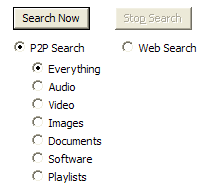
Figure 1.B.: An example of the use of the law of proximity in interface design - Kazaa Media Desktop


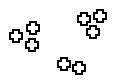
Figure 1.C.: A typical "text-book way" of exemplifying the law of proximity

The law of proximity posits that when we perceive a collection of objects, we will see objects close to each other as forming a group. In figure 1.A., we perceive the MTV logo and the logo for the Europe Music Awards as forming a group in the top left corner and the logos of the sponsors as forming a group in the bottom right corner. The white space separating the two groups of logos is used to indicate 'grouping', and the proximity of the logos of each groups is thus used to this end. Thus, a semantic separation of 'organisers' from 'sponsors' is achieved via structuring the graphical layout in accordance with this simple principle of perceptual organisation.

Figure 1.B is taken from Kazaa Media Desktop, where the law of proximity is used in designing the user interface of the popular peer-to-peer (P2P) software. As shown by the screen dump, the user can choose between P2P and web search. The group of radio buttons underneath are only associated with the P2P search and not the web search. To signal this association to the user, the vertical row of radio buttons are placed comparatively closer to the P2P-search radio button.

Figure 1.C is a typical textbook example, exemplifying how the law of proximity groups the items into 3 groups as opposed to 8 individual items.

Law of similarity

Figure 2.A.: The "preferences window" of the Opera browser


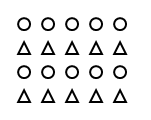
Figure 2.B.: A typical textbook example of the law of similarity

The law of similarity captures the idea that elements will be grouped perceptually if they are similar to each other. In the "preferences window" of the Opera browser (figure 2.A), colour is used to make the user group the menu items on the basis of their background colour. The grey background of the first four menu items thus "tie them together". Figure 2.B. is a typical textbook example of the principle of similarity, whereby we see the circles and triangles as forming four horizontal rows (or at least some configuration where triangles and circles are grouped depending on their shape). Objects similar to each other thus tend to be seen as a unit.

Law of Prägnanz (figure-ground)

Figure 3.A: The logo of visitnorway.com


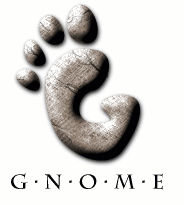
Figure 3.B: The logo of the Gnome Desktop Environment


Figure 3.C: The logo of the Macintosh

Edgar Rubin, a Danish psychologist, was the first to systematically investigate the figure-ground phenomenon. The phenomenon captures the idea that in perceiving a visual field, some objects take a prominent role (the figures) while others recede into the background (the ground). The visual field is thus divided into these two basic parts. This effect is often used by smart logo makers, as figure 3.A, B, and C suggest: The logo of visitnorway.com can be viewed as both three separate elements of blue, green and navy colour. It may, however, also be viewed as a person stretching his/her arms into the air. Similarly, the logo of the Gnome Desktop Environment (figure 3.B.) can be viewed as both a "G" and a footprint. Lastly, the Macintosh logo can be viewed as a regular happy face and a happy face in profile (looking at a computer screen).

Common to these logos is that you can focus on only one "interpretation" at a time; you cannot observe both the figure and ground at the same time, as ground will become figure when shifting the focus.

It should be noted that the figure-ground is most often exemplified using the Rubin Face/Vase Illusion, named after Edgar Rubin.

Law of symmetry

Figure 4.A.: CSC Finland's logo.


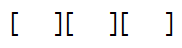
Figure 4.B.: A typical textbook example of the law of symmetry

The law of symmetry captures the idea that when we perceive objects we tend to perceive them as symmetrical shapes that form around their centre. Most objects can be divided in two more or less symmetrical halves and when for example we see two unconnected elements that are symmetrical, we unconsciously integrate them into one coherent object (or percept). The more alike objects are, they more they tend to be grouped.

In the above (figure 4.A), CSC Finland's logo is perceived as an integral whole although the two constituent geometrical shapes seem to be pointing in different directions and have differing colours.

A typical textbook example of the law of symmetry (figure 4.B.), consists of a configuration of a number of brackets. When perceiving the configuration, we see three pairs of symmetrical brackets as opposed to 6 individual brackets, or two pairs and two singles. This happens despite what is suggested by some of the brackets immediate proximity to each other.
Law of closure

Figure 5.A.: IBM's logo.


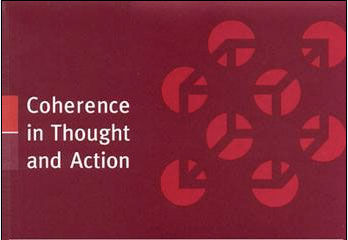
Figure 5.B.: Half of the book cover of Paul Thagard's book, "Coherence in Thought and Action"


Figure 5.C: A typical textbook example of the law of closure

The law of closure posits that we perceptually close up, or complete, objects that are not, in fact, complete. In the above, we perceive the letters 'I', 'B', and 'M' although the shapes we see, in fact, are only lines of white space of differing length hovering above each other. Similarly, we see the figure on Paul Thagard's book (figure 5.B.) as forming a three-dimensional box although all we see, in fact, is 24 dissimilar red shapes (count for yourself!) on a dark red background. Figure 5.C. is the typical textbook example of the law of closure; we perceive a circle and not 8 individual circles.

The Gestalt approach can be said to be a "bottom-up" theory as it starts from the bottom (the aspects of the stimuli that influence perception) and work its way up to higher-order cognitive processes. An example of another bottom-up theory (of perception) that is well-known in the HCI community is James Gibson's theory of "direct perception" (see affordances and perception).

What do YOU think?

Give us your opinion! Do you have any comments/additions that you would like other visitors to see?

Comment Peter Risborg says: Jan 1st, 1970
#1
Content and Layout The author of this article has made clever use of both proximity and similarity. Each law is accompanied by three illustrations grouped together by both closeness and a colloured box. By using this structure he emphasizes his points and shows how the Gestalt principles can be used in everyday web design. Well done!
Comment Praveen Verma says: Jan 1st, 1970
#2
A very good article showing gestalt laws for web. All examples are carefully chosen and annoted carefully.
Comment Uxdesign.com says: Aug 31st, 2007
#3
I love this article. When teaching web interface design I'd used different terms--alignment, grouping, color similarity, shape/scale similarity, style similarity, as well as proximity--for the same purpose.


I didn't have good reference material to back me up, though. I like how you have correlated software UI design patterns to those of "A typical textbook example," however, would have much prefered actual text book source attribution (more work, I know...).


Thanks!


Comment Anonymous says: Dec 18th, 2007
#4
Thanks for your project. I like this site. KEEP IT UP..
Comment Anonymous says: Apr 1st, 2008
#5
I am taking a pychology course and this has really helped me to better understand the principles. I couldn't find a terrible amount of stuff on this topic that helped me but this worked perfectly.


Thanks
Comment Anonymous says: May 1st, 2008
#6
really liked the article, and appreciate the examples focused on UI design patterns.
Comment Anonymous says: Nov 9th, 2008
#7
you explained things really well. thanks!
Comment Anonymous says: Jan 5th, 2009
#8
I appreciate the examples of what I have already seen in my psychology textbooks and being able to relate them to UI design (which I am new at).
Comment Fina Taumuafono Aloese Mazzarella says: Jan 6th, 2009
#9
I love this article.. Am taking Psychology Class for my Criminal Justice, and the articles make me more uderstand. Thanks.
Comment Ro Achterberg says: Mar 22nd, 2009
#10
This article is flawed in a few ways. For one, which is also its primary criticism (although usually left in favor of Structural Information Theory, I still think it's of great value to the user interface design field).


Secondly, the term Prägnanz is _not_ synonymous to the figure-ground principle. Rather, it is used to refer to the basic Gestalt principle of 'conciseness', which the entire theory is based upon. Also, the examples shown under the 'figure-ground' section are examples of 'multistability', _not_ figure-ground.


Please do your homework before attempting to write an article on the subject!
Comment Oby Okonkwo says: May 12th, 2009
#11
Amazing article. Currently studying psychology with computing, and this article gave me closure, as to what gestalt theory is about.
Comment Amaleena Bose says: May 20th, 2009
#12
The article provides good explaination of the gestalt principles in form perception,along with adequete examples.

Thankyou.
Comment Jason Wallry says: Aug 28th, 2009
#13
Ro Achterberg's statement is interesting. I have always been taught to see and understand the example given above as Figure-Ground, and other examples, as Figure-Ground. I had heard nothing of Multistability. Having done some quick research, I'd say Multistability does seem to describe exactly what is happening in the examples here named as Figure-Ground. Although, I don't see any direct, explicit ties between Multistability and Gestalt. If the examples given are not properly describing Figure-Ground, I would like to see an example that IS properly describing Figure-Ground.
Comment Scott O'hara says: Nov 28th, 2009
#14
There are some nice examples of Gestalt form perception here. It seems to me however that example 4B illustrates the principle of closure more than symmetry. If one reverses the brackets e.g.,


Fig1: ] [] [] [


the symmetry relationships of the first and second brackets are the same i.e., both the figures


Fig2: ] [


and


Fig3: [ ]


have reflective symmetry on the horizontal and vertical axes as well as rotational symmetry. Yet in Fig1, the first and second brackets are no longer grouped together.


I think what is really going in example 4B is that the separate brackets form an incomplete rectangular box which are grouped according to the closure principle.


I would like to see example 4B replaced with a clearer "textbook example" of the symmetry principle.
Comment Sapna Menon says: Dec 30th, 2009
#15
pls tell me how a teacher can use this figure & ground principle for effective teaching learning process? pls clarify me
Comment Emily says: Jan 6th, 2010
#16
Very interesting article, I am studying Psychology at University, this has helped me to understand Gestalt Psychology in more detail.
Comment U.l Ranmal says: Feb 4th, 2010
#17
really liked the article, examples are superb
Comment Bob says: Feb 8th, 2010
#18
Great stuff lads
Comment Anonymous says: Feb 18th, 2010
#19
i am taking a psychology class and im getting ready for my midterm and the law of closure we didnt go over in class but it is on the test so this has helped alot. thanks
Comment Jagan says: Mar 1st, 2010
#20
This is really very interesting. More such examples will be greatly appreciated.
Comment Mambwe Mwila says: Mar 3rd, 2010
#21
This is a whole lot of help.. Thank you so much!!
 
comment You say: Mar 10th, 2010
#22
Your text will appear here ! 

  will be spam-protected


How many?
=
e.g. "6"
 

References (bibliography)

 what's this?

Köhler, Wolfgang (1947): Gestalt Psychology. New York, Liveright

Sternberg, Robert J. (1996): Cognitive Psychology. 2nd. Ed.. Harcourt Brace College Publishers
 View info on Amazon.com or .co.uk This link opens in a new window 

Changes to this page

22 Jan 2007: A comment has been submitted by Liam
12 Jan 2007: A comment has been submitted by Billi
11 Jan 2007: A comment has been submitted by Travis
10 Jan 2007: A comment has been submitted by Alice
10 Jan 2007: A comment has been submitted by Ann
10 Jan 2007: A comment has been submitted by Deitel
09 Jan 2007: A comment has been submitted by Michail
09 Jan 2007: A comment has been submitted by Ann
09 Jan 2007: A comment has been submitted by Mark
09 Jan 2007: A comment has been submitted by Vano
09 Jan 2007: A comment has been submitted by Jozef
04 Jan 2007: A comment has been submitted by Hillary
16 Dec 2006: A comment has been submitted by Bill
02 Nov 2006: A comment has been submitted by Soo
21 Jun 2006: A comment has been submitted by Amar Sagoo
05 Mar 2005: Changed the layout and some of the figures on the page.

Get Notified!

Get notified when new entries are added to the encyclopedia!
Your Email
Want to know more?
Mar 10

A picture is worth a thousand words. An interface is worth a thousand pictures.

-- Ben Shneiderman, 2003

  • Share this quote on... Bookmark and Share
  • Get more quotes

Eva Hornecker on Tangible Interaction

Eva Hornecker explains the evolving concept of Tangible Interaction.

Read Eva's insightful entry here..

Licensed through a Creative Commons licence Open Content

We believe in Open Content and use the Creative Commons Copyright Licences, which makes the content of this website in effect the property of our community, not of this specific website. This page/work is copyright of Interaction-Design.org through the Creative Commons Attribution-ShareAlike Licence.
Permission to make digital/hard copy of part or all of this work for personal, classroom, and commercial use is granted without fee provided that appropriate credit is given (i.e. that the author's name, the title of this publication/article/web page, its URL and its date clearly appear) and that derivative works are also made available through the Creative Commons Attribution-ShareAlike Licence. See the copyright page for full details or click the 'how to cite' link above for info on how to cite this publication/article/web page.
 

Page information

Author(s): Mads Soegaard
This encyclopedia entry has undergone double-blinded peer-review by two reviewers based on these criteria, language copy-editing, typesetting, and reference validation.
How to cite/reference this page
URL: http://www.interaction-design.org/encyclopedia/gestalt_principles_of_form_perception.html