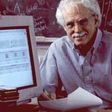
Thomas K. Landauer

No picture of Thomas K. Landauer available - click to provide one
Has also published under the name of:
"T. K. Landauer"


About the author:
No description available of Thomas K. Landauer...
ADD DESCRIPTION
ADD PUBLICATION
SHARE YOUR RESEARCH

Publications by Thomas K. Landauer (bibliography)

 what's this?

» 1997 «

Edit | Del

Helander, Martin G., Prabhu, Prasad and Landauer, Thomas K. (1997): Handbook of Human-Computer Interaction (2nd Ed.). Amsterdam, North-Holland

Edit | Del

Helander, M., Landauer, Thomas K. and Prabhu, P. (eds.) (1997): Handbook of Human-Computer Interaction. Amsterdam, Elsevier Science Publishers
 View info on Amazon.com or .co.uk This link opens in a new window 

Edit | Del

Helander, Martin and Landauer, Thomas K. (1997): Handbook of Human Computer Interaction, 2nd edition. North Holland, Elsevier Science Pub

» 1996 «

Edit | Del

Landauer, Thomas K. (1996): The Trouble With Computers: Usefulness, Usability, and Productivity. MIT Press
 View info on Amazon.com or .co.uk This link opens in a new window 

» 1993 «

Edit | Del

Nielsen, Jakob and Landauer, Thomas K. (1993): A Mathematical Model of the Finding of Usability Problems. In: Ashlund, Stacey, Mullet, Kevin, Henderson, Austin, Hollnagel, Erik and White, Ted (eds.) Proceedings of the ACM CHI 93 Human Factors in Computing Systems Conference April 24-29, 1993, Amsterdam, The Netherlands. pp. 206-213. Available online

For 11 studies, we find that the detection of usability problems as a function of number of users tested or heuristic evaluators employed is well modeled as a Poisson process. The model can be used to plan the amount of evaluation required to achieve desired levels of thoroughness or benefits. Results of early tests can provide estimates of the number of problems left to be found and the number of additional evaluations needed to find a given fraction. With quantitative evaluation costs and detection values, the model can estimate the numbers of evaluations at which optimal cost/benefit ratios are obtained and at which marginal utility vanishes. For a "medium" example, we estimate that 16 evaluations would be worth their cost, with maximum benefit/cost ratio at four.

Copyrights may apply

Edit | Del

Olson, Judith S., Card, Stuart K., Landauer, Thomas K., Olson, Gary M., Malone, Thomas W. and Leggett, John (1993): Computer-Supported Co-Operative Work: Research Issues for the 90s. In Behaviour and Information Technology, 12 (2) pp. 115-129

Edit | Del

Czaja, Sara J., Guerrier, Jose H., Nair, Sankaran N. and Landauer, Thomas K. (1993): Computer Communication as an Aid to Independence for Older Adults. In Behaviour and Information Technology, 12 (4) pp. 197-207

Computer and communication technologies offer the potential of improving the quality of life for older people by providing them with links to information and services outside of the home. This study examined the feasibility of older people using an electronic text message system to perform routine communication tasks. In addition information was gathered to identify design parameters which facilitate the interactions of older people with such computer based systems. A specialized and simplified 'communication computer' was placed in the homes of 36 older women, aged 50-95 years. The system was provided with: a simple text-editor, basic electronic mail functions and access to news/ weather, movie reviews, and health information. Both performance data and user preference data were collected. Results indicated that the participants liked using the system, were able to use it with minimal difficulty, and that it provided a valuable means for social interaction and mental stimulation. The findings suggest that computer-based systems can be a valuable support tool for older adults if they are easy to use, and provide applications that are useful for them.

Copyrights may apply

» 1991 «

Edit | Del

Egan, Dennis E., Lesk, Michael E., Ketchum, R. Daniel, Lochbaum, Carol C., Remde, Joel R., Littman, Michael and Landauer, Thomas K. (1991): Hypertext for the Electronic Library? CORE Sample Results. In: Walker, Jan (ed.) Proceedings of ACM Hypertext 91 Conference December 15-18, 1991, San Antonio, Texas. pp. 299-312. Available online

The Chemistry Online Retrieval Experiment, or CORE project, is studying the possibility of creating a useful, usable electronic library for chemistry researchers. In a preliminary study, chemists were observed performing five different tasks representative of typical uses of the scientific journal literature. The tasks simulated browsing journals, answering specific questions given a citation to an article, answering specific questions given no citation, writing essays to summarize and integrate information, and finding "analogous transformations" for chemical reactions. Chemists carried out these tasks using one of three systems: (a) the printed journals supplemented with a widely used printed index system, (b) a hypertext system (the SuperBook document browser), or (c) a new electronic system (Pixlook) that incorporates traditional document retrieval methods plus full text indexing and delivers bitmap images of journal pages. Both electronic systems had a large advantage over the printed system for search and essay tasks. SuperBook users were faster and more accurate than Pixlook users at finding information relevant to browsing and search topics. Certain SuperBook hypertext features, however, did not work as well as Pixlook for displaying target articles. The patterns of data and log files of subjects suggest how SuperBook, Pixlook and related systems might be improved.

Copyrights may apply

» 1990 «

Edit | Del

Landauer, Thomas K. and Kraut, Robert E. (1990): CHI in the Applied Research Divisions at Bellcore. In: Carrasco, Jane and Whiteside, John (eds.) Proceedings of the ACM CHI 90 Human Factors in Computing Systems Conference 1990, Seattle, Washington,USA. pp. 285-286.

Bellcore has several active research programs relevant to human-computer interaction. This talk describes research conducted in the Cognitive Science and Interpersonal Communications Research Groups. We describe their research on information retrieval and on collaboration and pay particular attention to the styles of research employed in these groups and to the way in which behavioral investigations have guided technical invention.

Copyrights may apply

Edit | Del

Deerwester, Scott C., Dumais, Susan T., Landauer, Thomas K., Furnas, George W. and Harshman, Richard A. (1990): Indexing by Latent Semantic Analysis. In JASIST - Journal of the American Society for Information Science and Technology, 41 (6) pp. 391-407

Edit | Del

Gomez, Louis M., Lochbaum, Carol C. and Landauer, Thomas K. (1990): All the right words: Finding what you want as a function of richness of indexing vocabulary. In JASIST - Journal of the American Society for Information Science and Technology, 41 (8) pp. 547-559

» 1989 «

Edit | Del

Landauer, Thomas K. (1989): Some bad and some good reasons for studying memory and cognition in the wild. In: Poon, L. W., Rubin, D. C. and Wilson, B. A "Everyday cognition in adulthood and late life". Cambridge University Press pp. 116-125

Edit | Del

Egan, Dennis E., Remde, Joel R., Landauer, Thomas K., Lochbaum, Carol C. and Gomez, Louis M. (1989): Behavioral Evaluation and Analysis of a Hypertext Browser. In: Bice, Ken and Lewis, Clayton H. (eds.) Proceedings of the ACM CHI 89 Human Factors in Computing Systems Conference April 30 - June 4, 1989, Austin, Texas. pp. 205-210.

Students performed a variety of tasks using a statistics text presented either in conventional printed form or via the text browser "SuperBook" (Remde, Gomez and Landauer [18]). Students using SuperBook answered more search questions correctly, wrote higher quality "open-book" essays, and recalled certain incidental information better than students using the conventional text. Subjective ratings overwhelmingly favored SuperBook. The advantage of SuperBook appears to be particularly strong for questions that are not anticipated by the author's organization of a text.

Copyrights may apply

Edit | Del

Wolf, Catherine G., Carroll, John M., Landauer, Thomas K., John, Bonnie E. and Whiteside, John (1989): The Role of Laboratory Experiments in HCI: Help, Hindrance, or Ho-Hum?. In: Bice, Ken and Lewis, Clayton H. (eds.) Proceedings of the ACM CHI 89 Human Factors in Computing Systems Conference April 30 - June 4, 1989, Austin, Texas. pp. 265-268.

Edit | Del

Egan, Dennis E., Remde, Joel R., Gomez, Louis M., Landauer, Thomas K., Eberhardt, Jennifer and Lochbaum, Carol C. (1989): Formative Design-Evaluation of SuperBook. In ACM Transactions on Information Systems, 7 (1) pp. 30-57

SuperBook is a hypertext browsing system designed to improve the usability of conventional documents. Successive versions of SuperBook were evaluated in a series of behavioral studies. Students searched for information in a statistics text presented either in conventional printed form or in SuperBook form. The best version of SuperBook enabled students to answer search questions more quickly and accurately than they could with the conventional text. Students wrote higher quality "open-book" essays using SuperBook than they did with the conventional text, and their subjective ratings of the documentation strongly favored SuperBook. This work is a case study of formative design-evaluation. Behavioral evaluation of the first version of SuperBook showed how design factors and user strategies affected search and established baseline performance measures with printed text. The second version of SuperBook was implemented with the goal of improving search accuracy and speed. User strategies that had proved effective in the first study were made very easy and attractive to use. System response time for common operations was greatly improved. Behavioral evaluation of the new SuperBook demonstrated its superiority to printed text and suggested additional improvements that were incorporated into "MiteyBook," a SuperBook implementation for PC-size screens. Search with MiteyBook proved to be approximately 25 percent faster and 25 percent more accurate than that obtained with a conventional printed book.

Copyrights may apply

» 1988 «

Edit | Del

Borgman, Christine L., Belkin, Nicholas J., Croft, W. Bruce, Lesk, Michael E. and Landauer, Thomas K. (1988): Retrieval Systems for the Information Seeker: Can the Role of the Intermediary be Automated?. In: Soloway, Elliot, Frye, Douglas and Sheppard, Sylvia B. (eds.) Proceedings of the ACM CHI 88 Human Factors in Computing Systems Conference June 15-19, 1988, Washington, DC, USA. pp. 51-53.

The introduction of automated information retrieval (IR) systems was met with great enthusiasm and predictions that manual literature searching soon would be replaced. Three decades later, IR systems have not progressed to the stage where any but the dedicated few can operate them without a highly skilled human intermediary acting as interface between user and system. In the interim, we have learned that the retrieval process is extremely complex both in terms of understanding people and their communication and in terms of understanding scientific information and technical vocabulary. Experiments with new techniques suggest to many the possibility of eliminating the human intermediary, either in large part or altogether; others would argue that the retrieval problems are too complex to be resolved for more than highly restricted domains. The possibility of eliminating the human intermediary is of current research interest to the several disciplines that are represented on this panel.

Copyrights may apply

Edit | Del

Dumais, Susan, Furnas, George W., Landauer, Thomas K., Deerwester, Scott and Harshman, Richard (1988): Using Latent Semantic Analysis to Improve Access to Textual Information. In: Soloway, Elliot, Frye, Douglas and Sheppard, Sylvia B. (eds.) Proceedings of the ACM CHI 88 Human Factors in Computing Systems Conference June 15-19, 1988, Washington, DC, USA. pp. 281-285.

This paper describes a new approach for dealing with the vocabulary problem in human-computer interaction. Most approaches to retrieving textual materials depend on a lexical match between words in users' requests and those in or assigned to database objects. Because of the tremendous diversity in the words people use to describe the same object, lexical matching methods are necessarily incomplete and imprecise. The latent semantic indexing approach tries to overcome these problems by automatically organizing text objects into a semantic structure more appropriate for matching user requests. This is done by taking advantage of implicit higher-order structure in the association of terms with text objects. The particular technique used in singular-value decomposition, in which a large term by text-object matrix is decomposed into a set of about 50 to 150 orthogonal factors from which the original matrix can be approximated by linear combination. Terms and objects are represented by 50 to 150 dimensional vectors and matched against user queries in this "semantic" space. Initial tests find this completely automatic method widely applicable and a promising way to improve users' access to many kinds of textual materials, or to objects and services for which textual descriptions are available.

Copyrights may apply

Edit | Del

Furnas, George W., Deerwester, Scott, Dumais, Susan, Landauer, Thomas K., Harshman, Richard A., Streeter, Lynn A. and Lochbaum, Karen E. (1988): Information Retrieval using a Singular Value Decomposition Model of Latent Semantic Structure. In: Proceedings of the Eleventh Annual International ACM SIGIR Conference on Research and Development in Information Retrieval 1988. pp. 465-480.

In a new method for automatic indexing and retrieval, implicit higher-order structure in the association of terms with documents is modeled to improve estimates of term-document association, and therefore the detection of relevant documents on the basis of terms found in queries. Singular-value decomposition is used to decompose a large term by document matrix into 50 to 150 orthogonal factors from which the original matrix can be approximated by linear combination; both documents and terms are represented as vectors in a 50- to 150-dimensional space. Queries are represented as pseudo-documents vectors formed from weighted combinations of terms, and documents are ordered by their similarity to the query. Initial tests find this automatic method very promising.

Copyrights may apply

Edit | Del

Root, Robert W., Grantham, Charles, Landauer, Thomas K., Mackay, Wendy E. and McNinch, Robert (1988): Telecommunications in the 1990s: Human Factors Issues for the Information Age. In: Proceedings of the Human Factors Society 32nd Annual Meeting 1988. pp. 252-253.

Advances in technology are revolutionizing the communications industry. Optical fiber, computer-controlled switches, software-defined services, digital communications, and integrated services networks will soon deliver high-speed broadband communications and information services to individual homes and businesses. The next decade will bring impressive changes in the power, complexity and range of services offered through what we think of as the "telephone system". The technology is inexorably advancing, with or without the blessing and guidance of the human factors community. The main purpose of this panel is to call attention to the human factors implications of the "network of the future". A major aspect of this future network will be a blurring of the distinction between computation and communications due to the integration of voice and data networks (as in ISDN). This integration will have several important consequences. First, the notion of "communications" activities will be broadened to include not only synchronous human-human interaction but also asynchronous (e.g., electronic mail), multiparty, and human-machine interaction (as in information retrieval). Second, personal computers will increasingly be used and viewed as communications devices as well as computational machines. Third, "intelligent" networks will play an increasingly important role as mediators of human-human and human-machine interaction rather than acting simply as passive transport systems. These developments may be important for the practice of human factors. At the very least, they imply a merging of the concerns of telecommunications with human-computer interaction research. For example, designing interfaces for ISDN applications may require understanding how the interaction between users and communications services is affected by the representation of the application in the interface. In addition, they may call into question the role of human factors practitioners and researchers and the goals they should serve. Should we be content to design and evaluate interfaces to advanced services networks, or should we be using our knowledge of human needs and capabilities to drive the development of new applications to support.

Copyrights may apply

Edit | Del

Landauer, Thomas K. (1988): An Estimate of How Much People Remember, Not of Underlying Cognitive Capacities. In Cognitive Science, 12 (2) pp. 293-297

» 1987 «

Edit | Del

Remde, Joel R., Gomez, Louis M. and Landauer, Thomas K. (1987): SuperBook: An Automatic Tool for Information Exploration - Hypertext?. In: Weiss, Stephen and Schwartz, Mayer (eds.) Proceedings of ACM Hypertext 87 Conference November 13-15, 1987, Chapel Hill, North Carolina. pp. 175-188.

The goals and methods of the text browser, SuperBook, are compared with those of hypertext systems in general. SuperBook, intended to provide improved access to text existing in electronic form, employs cognitive tools arising from human computer interaction research, such as full-text indexing, adaptive aliasing, and dynamic views of hierarchical information. Superbook automatically preprocesses on-line text written for paper publication, and produces a multi-window display, including a dynamic table of contents, pages of text, and a history of search words. Although SuperBook and hypertext share common goals of improved search and navigation, SuperBook is designed for accessing existing documents while most hypertext systems are better suited for authoring new information structures. Further studies are needed to evaluate the effectiveness of each of these kinds of systems.

Copyrights may apply

Edit | Del

Landauer, Thomas K. (1987): Psychology as a mother of invention. In: Graphics Interface 87 (CHI+GI 87) April 5-9, 1987, Toronto, Ontario, Canada. pp. 333-335.

Edit | Del

Furnas, George W., Landauer, Thomas K., Gomez, Louis M. and Dumais, Susan T. (1987): The Vocabulary Problem in Human-System Communication. In Communications of the ACM, 30 (11) pp. 964-971

» 1986 «

Edit | Del

Thomas, John C., Brown, John Seely, Buxton, William, Curtis, Bill, Landauer, Thomas K., Malone, Thomas W. and Shneiderman, Ben (1986): Human Computer Interaction in the Year 2000. In: Mantei, Marilyn and Orbeton, Peter (eds.) Proceedings of the ACM CHI 86 Human Factors in Computing Systems Conference April 13-17, 1986, Boston, Massachusetts. pp. 253-255.

Much of the work in the field of computer human interaction consists of finding out what is wrong with existing interfaces or which of several existing alternatives is better. Over the next few decades, the possibilities for computer human interaction will explode. This will be due to: 1) continued decrease in the costs of processing and memory, 2) new technologies being invented and existing technologies (e.g., handwriting recognition, speech synthesis) being extended, 3) new applications and 4) new ideas about how people can interact with computers. While changes along these lines are bound to occur, we need not take the view that investigators in human-computer interaction are to be passive observers of some uncontrolled and uncontrollable evolution. Indeed, we can help steer this process by visions of what the future of human computer interaction could and should be like.

Copyrights may apply

Edit | Del

Landauer, Thomas K. (1986): How Much do People Remember? Some Estimates of the Quantity of Learned Information in Long-Term Memory. In Cognitive Science, 10 (4) pp. 477-493

» 1985 «

Edit | Del

Landauer, Thomas K., Gould, John D., Anderson, John R. and Barnard, Philip J. (1985): Psychological Research Methods in the Human Use of Computers. In: Borman, Lorraine and Curtis, Bill (eds.) Proceedings of the ACM CHI 85 Human Factors in Computing Systems Conference April 14-18, 1985, San Francisco, California. pp. 41-45.

Psychological research methods have been used with increasing frequency in work on computer-human interaction. Judging from the state of the literature and from remarks heard in the halls at conferences such as this, the utility and appropriate roles of such methods are not yet clear. Panel members, who are all research psychologists working on issues related to human use of computers, will present a variety of contrasting views on how to go about such research, and on its proper goals. John Gould will describe two different but complementary approaches, applied research on general design issues, and formative human factors participation in development. John Anderson will discuss the use of formal models of human cognition. Phil Barnard will consider the role of applied research in the discovery of underlying principles to guide design. Tom Landauer will propose that psychological research can be the basis for invention of new "cognitive tools". Short synopses of the positions they will take are given below. Panel members hope that the audience will join them in bringing out important differences between the various approaches and methods and arguing their absolute and relative merits.

Copyrights may apply

Edit | Del

Landauer, Thomas K. and Nachbar, D. W. (1985): Selection from Alphabetic and Numeric Menu Trees Using a Touch Screen: Breadth, Depth, and Width. In: Borman, Lorraine and Curtis, Bill (eds.) Proceedings of the ACM CHI 85 Human Factors in Computing Systems Conference April 14-18, 1985, San Francisco, California. pp. 73-78.

Goal items were selected by a series of touch-menu choices among sequentially subdivided ranges of integers or alphabetically ordered words. The number of alternatives at each step, b, was varied, and, inversely, the size of the target area for the touch. Mean response time for each screen was well described by T= k+clogb, in agreement with the Hick-Hyman and Fitts' laws for decision and movement components in series. It is shown that this function favors breadth over depth in menus, whereas others might not. Speculations are offered as to when various functions could be expected.

Copyrights may apply

Edit | Del

Jones, William P. and Landauer, Thomas K. (1985): Context and Self-Selection Effects in Name Learning. In Behaviour and Information Technology, 4 (1) pp. 3-17

In laboratory learning tasks, people's spontaneously chosen responses to stimuli have been found to be more memorable than equivalent responses chosen by someone else. In a computing situation, this suggests that it might be desirable to let new users select their own names for commands. However, it can also be argued that new users cannot name a command effectively, because they lack sufficient knowledge concerning the overall structure of the command set and its referents. Since existing psychological research has little to say about the relationship between contextual or structural knowledge and selection mode (self versus other), these factors were crossed in an experiment where subjects learned names for different objects (personnel data categories and descriptions of text-edit operations). In subsequent recall tests, beneficial effects were observed both for context knowledge and for the self-selection of names. Several interactions involving these factors were also significant. For personnel data categories, the context manipulation had no effect on performance when subjects were allowed to select their own names, but helped if they had to learn assignments made by others. For the less familiar text-editing descriptions, context information helped performance in general and considerably enhanced the benefits of self-selection.

Copyrights may apply

» 1983 «

Edit | Del

Dumais, Susan and Landauer, Thomas K. (1983): Using Examples to Describe Categories. In: Smith, Raoul N., Pew, Richard W. and Janda, Ann (eds.) Proceedings of the ACM CHI 83 Human Factors in Computing Systems Conferenc December 12-15, 1983, Boston, Massachusetts, United States. pp. 112-115.

The successful use of menu-based information retrieval system depends critically on users understanding the category names and partitions used by system designers. Some of the problems in this endeavor are psychological and have to do with naming large and ill-defined categories so that users can understand their contents, and effectively partitioning large sets of objects. Systems of interest (like home information systems) often consist of new and frequently changing content in large and varied domains, and are particularly prone to these problems. We explored several ways in which one might name categories in one such domain (Yellow Page category headings) - category names, category names plus examples, and examples alone. We found that three examples alone were essentially as good a way to name these categories as either an expertly chosen name or a name plus examples. Examples provide a promising possibility both as a means of flexibly naming menu categories and as a methodological tool to study certain categorization problems.

Copyrights may apply

Edit | Del

Landauer, Thomas K., Galotti, Kathleen M. and Hartwell, S. (1983): Natural Command Names and Initial Learning: A Study of Text-Editing Terms. In Communications of the ACM, 26 (7) pp. 495-503

» 1982 «

Edit | Del

Furnas, George W., Gomez, Louis M., Landauer, Thomas K. and Dumais, Susan (1982): Statistical Semantics: How Can a Computer Use What People Name Things to Guess What Things People Mean When They Name Things?. In: Nichols, Jean A. and Schneider, Michael L. (eds.) Proceedings of the SIGCHI conference on Human factors in computing systems March 15-17, 1982, Gaithersburg, Maryland, United States. pp. 251-253.

ADD PUBLICATION
SHOW THIS LIST ON YOUR HOMEPAGE

What do YOU think?

Give us your opinion! Do you have any comments/additions that you would like other visitors to see?

 
comment You say: Mar 12th, 2010
#1
Be the first to add a thoughtful note to this page ! 

  will be spam-protected


How many?
=
e.g. "6"
 

Changes to this page (author)

15 Feb 2010: Enabled abstracts to be shown on Thomas K. Landauer's author page.
17 Aug 2009: Author was edited
12 Jul 2009: Author was added to the bibliography (approved by an editor)
01 Jul 2009: Author was added to the bibliography (approved by an editor)
01 Jun 2009: Author was edited
31 May 2009: Author was edited
09 Dec 2007: Author was added to the bibliography (approved by an editor)
27 Jun 2007: Author was edited
25 Jun 2007: Author was added to the bibliography
24 Jun 2007: Author was edited
28 Apr 2003: Added the author to the bibliography

Publication statistics

Publication period:1982-1997
Publication count:31
Number of co-authors:55


Productive colleagues

Thomas K. Landauer's 3 most productive colleagues in number of publications:

Ben Shneiderman:206
John M. Carroll:190
W. Bruce Croft:102


Collaboration count

Number of publications with 3 favourite co-authors:

Louis M. Gomez:6
George W. Furnas:5
Susan Dumais:4


Other options

Learn more about Thomas K. Landauer:
- Google Scholar
- ACM
- CSB

Mar 12

People shouldn’t have to read a manual to open a door, even if it is only one word long (push/pull).

-- Don Norman

  • Share this quote on... Bookmark and Share
  • Get more quotes

Eva Hornecker on Tangible Interaction

Eva Hornecker explains the evolving concept of Tangible Interaction.

Read Eva's insightful entry here..

Help us help you!

  • Spread the word: Bookmark and Share
  • Donate
  • Other ways to help
 

Page information

Page maintainer: The Editorial Team
How to cite/reference this page
URL: http://www.interaction-design.org/references/authors/thomas_k__landauer.html