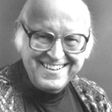
Allen Newell
Allen Newell is winner of the 1975 ACM Turing Award, considered the Nobel Prize of Computing. The reason he was given the award is as follows:
"In joint scientific efforts extending over twenty years, initially in collaboration with J. C. Shaw at the RAND Corporation, and subsequentially with numerous faculty and student collegues at Carnegie-Mellon University, they have made basic contributions to artificial intelligence, the psychology of human cognition, and list processing".
Publications by Allen Newell (bibliography)
» 1999 «
Robertson, G., McCracken, Donald and Newell, Allen (1999): The ZOG Approach to Man-Machine Communication. In International Journal of Human-Computer Studies, 51 (2) pp. 279-306
ZOG is a rapid response, large network, menu selection system used for man-machine communication. The philosophy behind this style of communication was first developed by the PROMIS (Problem Oriented Medical Information System) Laboratory of the University of Vermont. ZOG has been used in a number of task domains to help explore the limits and potential benefits of the communication philosophy. This paper discusses the basic ideas in ZOG, describes the architecture of a system implemented to carry out that exploration, and discusses our initial experience.
Copyrights may apply
» 1994 «
John, Bonnie E., Vera, Alonso H. and Newell, Allen (1994): Towards Real-Time GOMS: A Model of Expert Behaviour in a Highly Interactive Task. In Behaviour and Information Technology, 13 (4) pp. 255-267
We present an analysis of an expert performing a highly interactive computer task. The analysis uses GOMS models, specifying the Goals, Operators, Methods, and Selection rules used by the expert. Two models are presented, one with function-level operators which perform high-level functions in the domain, and one with keystroke-level operators which describe hand movements. For a segment of behaviour in which the expert accomplished about 30 functions in about 30 s, the function-level model predicted the observed behaviour well, while the keystroke-level model predicted only about half of the observed hand movements. These results, including the discrepancy between the models, are discussed.
Copyrights may apply
» 1993 «
Alm, Norman, Todman, John, Elder, Leona and Newell, Allen (1993): Computer Aided Conversation for Severely Physically Impaired Non-Speaking People. In: Ashlund, Stacey, Mullet, Kevin, Henderson, Austin, Hollnagel, Erik and White, Ted (eds.) Proceedings of the ACM CHI 93 Human Factors in Computing Systems Conference April 24-29, 1993, Amsterdam, The Netherlands. pp. 236-241. Available online
This paper reports the development of a computer-aided conversation prosthesis which is designed for severely physically impaired non-speaking people. The research methodology was to model aspects of conversational structure derived from the field of conversation analysis within a prototype conversational prosthesis. The prototype was evaluated in empirical investigations which also suggested successful strategies for carrying out satisfying conversation using such a system. Two versions have been built and tested, one using an able-bodied operator to test the feasibility of creating conversation from prestored material, the second being used by a physically impaired non-speaking operator. The prototype demonstrated the advantages of this interface design in helping the user to carry out natural sounding and satisfying conversations.
Copyrights may apply
Newell, Allen (1993): MicroCentre, Dundee: Ordinary and Extra-Ordinary HCI Research. In: Ashlund, Stacey, Mullet, Kevin, Henderson, Austin, Hollnagel, Erik and White, Ted (eds.) Proceedings of the ACM CHI 93 Human Factors in Computing Systems Conference April 24-29, 1993, Amsterdam, The Netherlands. pp. 242-243. Available online
The main feature of the MicroCentre research group is a concern for users with a very wide range of characteristics. In addition to main-stream HCI research, it contains the largest academic group in the world investigating the application of computer systems for disabled people, and has a particular interest in systems for people with communication impairment.
Copyrights may apply
» 1991 «
Dye, R., Arnott, J. L. and Newell, Allen (1991): The Design of a Memory Efficient Palantype Transcription System. In International Journal of Man-Machine Studies, 34 (5) pp. 615-630
Machine shorthand transcription systems have been used to provide verbatim transcripts of speech in Law Courts and as transcription aids for hearing impaired people for a number of years. All current transcription systems, however, rely heavily on dictionary look-up procedures in order to give a high quality transcription of the shorthand code. These systems require large memories and are usually expensive and non-portable. This paper describes a new transcription technique which results in a very compact and portable transcription system and which is therefore particularly suitable as an aid for the hearing impaired.
Copyrights may apply
Newell, Allen, Arnott, J. L., Dye, R. and Cairns, A. Y. (1991): A Full-Speed Listening Typewriter Simulation. In International Journal of Man-Machine Studies, 35 (2) pp. 119-131
For automatic speech recognition applications such as a listening typewriter, there is a pressing need for the evaluation of speech input to machine. Unfortunately current recognition technology is not adequate for such evaluation, and thus simulation must be used. Some simulations have been performed where the conversion from speech to orthography was performed by a typist, but these simulations were restricted by the speed at which the typist could input data. This paper describes a simulation based on a palantype shorthand machine and a commercially available transcription system. The use of a shorthand machine rather than a QWERTY keyboard means that the speech rates can be much greater and thus the simulation need not impose unrealistic speed limitations on the speaker.
Copyrights may apply
» 1989 «
John, Bonnie E. and Newell, Allen (1989): Cumulating the Science of HCI: From S-R Compatibility to Transcription Typing. In: Bice, Ken and Lewis, Clayton H. (eds.) Proceedings of the ACM CHI 89 Human Factors in Computing Systems Conference April 30 - June 4, 1989, Austin, Texas. pp. 109-114.
In keeping with our claim that an applied psychology of HCI must be based on cumulative work within a unified framework, we present two extensions of the Model Human Processor. A model of immediate response behavior and stimulus-response (S-R) compatibility is presented and extended to a new domain: transcription typing. Parameters are estimated using one S-R compatibility experiment, used to make a priori predictions in four other S-R compatibility tasks, and then carried over into the area of typing. A model of expert transcription typing is described and its prediction of typing phenomena is demonstrated and summarized.
Copyrights may apply
» 1987 «
John, Bonnie E. and Newell, Allen (1987): Predicting the time to recall computer command abbreviations. In: Graphics Interface 87 (CHI+GI 87) April 5-9, 1987, Toronto, Ontario, Canada. pp. 33-40.
» 1986 «
Newell, Allen and Card, Stuart K. (1986): Straightening Out Softening Up: Response to Carroll and Campbell. In Human-Computer Interaction, 2 (3) pp. 251-267
Carroll and Campbell have exercised themselves over a straw man not subscribed to by us. In the process, our position has not been accurately represented. In reply, we restate as clearly as we can the position for which we actually did and do argue. The underlying issue seems to concern the advantages of using technical psychological theories to identify underlying mechanisms in human-computer interaction. We argue that such theories are an important part of a science of human-computer interaction. We argue further that technical theories must be considered in the context of the uses to which they are put. The use of a theory helps to determine what is a good approximation, the degree of formalization that is justified, and the appropriate commingling of qualitative and quantitative techniques. Technical theories encourage cumulative progress by abetting the classical scientific heuristic of divide and conquer.
Copyrights may apply
» 1985 «
Newell, Allen and Card, Stuart K. (1985): The prospects for psychological science in human-computer interaction. In Human-Computer Interaction, 1 (3) pp. 209-242
John, Bonnie E., Rosenbloom, Paul S. and Newell, Allen (1985): A Theory of Stimulus-Response Compatibility Applied to Human-Computer Interaction. In: Borman, Lorraine and Curtis, Bill (eds.) Proceedings of the ACM CHI 85 Human Factors in Computing Systems Conference April 14-18, 1985, San Francisco, California. pp. 213-219.
A GOMS theory of stimulus-response compatibility is presented and applied to remembering computer command abbreviations. Two abbreviation techniques, vowel-deletion and special-character-plus-first-letter, are compared in an encoding task. Significant differences are found in the time to type the first letter of the abbreviation, and in the time to complete the typing of the abbreviation. These differences are analyzed using the theory which produces an excellent quantitative fit to the data (r{squared} = 0.97).
Copyrights may apply
» 1984 «
Leedham, C. G., Downton, A. C., Brooks, C. P. and Newell, Allen (1984): On-Line Acquisition of Pitman's Handwritten Shorthand as a Means of Rapid Data Entry. In: Shackel, Brian (ed.) INTERACT 84 - 1st IFIP International Conference on Human-Computer Interaction September 4-7, 1984, London, UK. pp. 145-150.
In this paper we discuss the use of Pitmans shorthand as a means of converting dictation speed speech (up to 120 wpm) directly into readable text for computer entry or direct output. The Pitman shorthand notation is compared to a machinography or machine compatible script and the recognition problems associated with handwritten shorthand are discussed. The requirements of a writing tablet and instrumented pen for on-line acquisition of Pitman shorthand are described and the preprocessing techniques which have been usefully applied to the raw data are outlined.
Copyrights may apply
Dye, R., Newell, Allen and Arnott, John (1984): An Adaptive Editor for Shorthand Transcription Systems. In: Shackel, Brian (ed.) INTERACT 84 - 1st IFIP International Conference on Human-Computer Interaction September 4-7, 1984, London, UK. pp. 157-161.
An automatic transcription system for machine shorthand takes the output from a shorthand machine, and converts it into a Draft Transcript. This draft transcript needs to be edited to perfection using word processing techniques. A suite of programmes has been written which takes advantage of the particular characteristics of Palantype transcripts to provide a very efficient editing environment. The editor adapts to the user in a way which improves his efficiency without an overhead of the necessity to learn complex control structures. Some of these facilities are also appropriate to a standard word processing environment.
Copyrights may apply
Newell, Allen (1984): Speech -- The Natural Modality for Man-Machine Interaction?. In: Shackel, Brian (ed.) INTERACT 84 - 1st IFIP International Conference on Human-Computer Interaction September 4-7, 1984, London, UK. pp. 231-235.
In recent years the use of speech as a man-machine interface has received considerable prominence. A number of systems have been developed which use speech output from machines, and speech input has been introduced in a small number of cases with rather less effectiveness. In those cases where it is impracticable to look at a display, or the hands are fully occupied, speech has obvious advantages, but often a major justification for the use of speech has been that is the 'natural' method of communication for man, and therefore must be the optimum solution. This contention, however, is a simplification of the situation, and, in general, much greater thought must be given to the choice of modality of input-output means than is implicit in justifications of this nature.
Copyrights may apply
» 1983 «
Card, Stuart K., Moran, Thomas P. and Newell, Allen (1983): The Psychology of Human-Computer Interaction. Hillsdale, NJ, Lawrence Erlbaum Associates
View info on Amazon.com or .co.uk
Used on the following page:
» GOMS (Goals, Operators,
Methods and Selection Rules): [Not yet published]
» 1980 «
Card, Stuart K., Moran, Thomas P. and Newell, Allen (1980): The keystroke-level model for user performance with interactive systems. In Communications of the ACM, 23 pp. 396-410
Card, Stuart K., Moran, Thomas P. and Newell, Allen (1980): The Keystroke-Level Model for User Performance Time with Interactice Systems. In Communications of the ACM, 23 (7) pp. 396-410
» 1976 «
Newell, Allen and Simon, Herbert A. (1976): Computer Science as Empirical Inquiry: Symbols and Search. In Communications of the ACM, 19 (3) pp. 113-126
» 1972 «
Newell, Allen and Simon, Herbert A. (1972): Human problem solving. Englewood Cliffs, NJ, USA, Prentice Hall
View info on Amazon.com or .co.uk
» 1965 «
Tonge, Fred M., Keller, Peter and Newell, Allen (1965): QUICKSCRIPT - a SIMSCRIPT: like language for the G-20. In Communications of the ACM, 8 (6) pp. 350-354
» 1963 «
Newell, Allen (1963): Documentation of IPL-V. In Communications of the ACM, 6 (3) pp. 86-89
» 1960 «
Newell, Allen and Tonge, Fred M. (1960): An Introduction to Information Processing Language V. In Communications of the ACM, 3 (4) pp. 205-211
SHOW THIS LIST ON YOUR HOMEPAGE
What do YOU think?
Give us your opinion! Do you have any comments/additions
that you would like other visitors to see?
You say:
Mar 21st, 2010
Changes to this page (author)
18 Feb 2010: Enabled abstracts to be shown on Allen Newell's author page.18 Aug 2009: Author was edited 17 Aug 2009: Author was edited
17 Aug 2009: Author was edited
27 Jun 2007: Author was edited
28 Apr 2003: Added the author to the bibliography