Your constantly-updated definition of Paper Prototyping and
collection of videos and articles. Be a conversation starter: Share this page and inspire others!
292shares
What is Paper Prototyping?
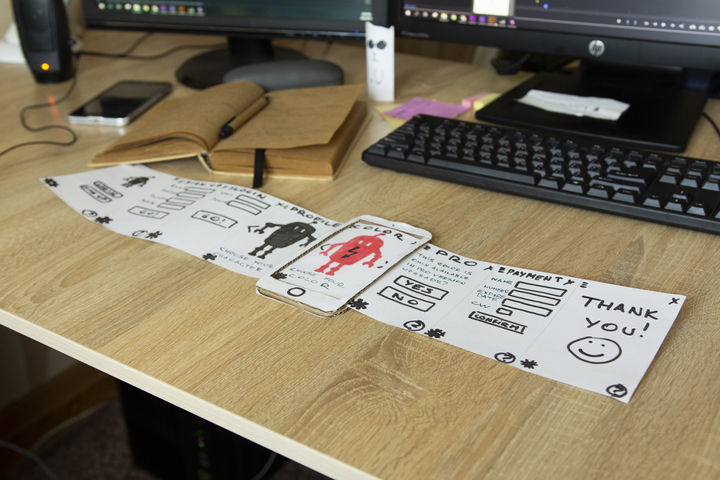
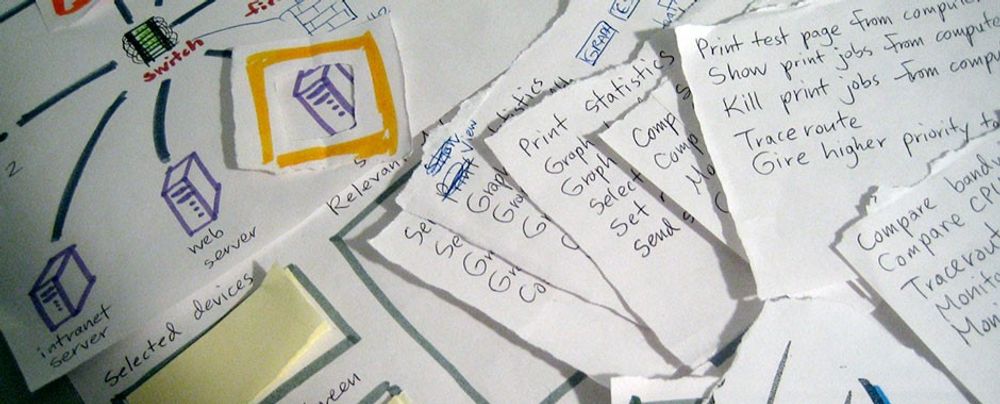
Paper prototyping is a process where design teams create paper representations of digital products to help them realize concepts and test designs. They draw sketches or adapt printed materials and use these low-fidelity screenshot samples to cheaply guide their designs and study users’ reactions from early in projects.
ShowHide
video transcript
Transcript loading…
See why paper prototyping is a small, yet invaluable investment.
“Paper prototyping is great for exploring design possibilities. You can try as many as you want, and if they don’t work for you it’s fine, just throw them in the bin and start over. It opens your eyes on things you haven’t thought of and gives you new design perspectives.”
— Chaymae Lougmani, CEO & Co-founder at www.Snaget.io
Paper Prototyping saves Money—and Designs
Paper prototyping is a core activity indesign processes. You depict screenshots (in what you can call “paper-shots”) to help determine how your design/product should appear. Like other forms of low-fidelity prototyping—e.g., card sorting—paper prototyping is a cheap-and-easy way to help shape concepts. If you use it early on, you can prevent unwanted development costs.It’s useful in brainstorming, where your team searches how to address users’ problems best. As you proceed, you can do “down-and-dirty” or guerrilla testing to informally test ideas with users and course-correct as needed.
Pros and Cons of Paper Prototyping
Consider the strengths and limitations of paper prototyping:
Without an interactive design, users must give blow-by-blow accounts of their actions and thoughts. Also, you can’t moderate from a distance. You must give directions about next steps, without leading users.
More work
You’ll make digital prototypes, anyway. These may suit your concept without the need for primitive prototypes.
Interpret results carefully
Users can’t get a real feel of the product. Positive feedback is a good indicator of how to proceed, not a guarantee.
How to use Paper Prototyping Best
You should enter with the right tools and mindset. So,
Gather stationery – pens, pencils, markers, paper, card, Post-its, scissors, tape, glue, rulers and suitable stencils. About $10/£10/€10 is typically enough to cover this. You can use graph paper to help guide ideas. Colored paper is great for representing buttons.
Get building – Just go ahead and see where you go. As you get your ideas down on paper, you can think about them more concretely. Later, you can get insights about improving them.
Move quickly – If you spend too long making your prototype, you’ll get attached to it. Don’t waste time erasing: You want to get ideas down rather than revise them and potentially miss insights from the raw version.
Remember what to test – Build with that purpose in mind, but stay aware of other factors.
Prototype for small screens first –When you go mobile-first, you can prioritize your content better.
Remember the users – As you’ll test your prototype against users’ behaviors and needs, consider their expectations as you build.
Remember, the earlier you use paper prototyping, the better.
How does paper prototyping fit into the UX design process?
Paper prototyping helps UX designers quickly explore ideas and test concepts early in the design process. It fits into the ideation and validation stages and lets teams refine layouts and interactions before they invest in digital prototypes.
Designers start by sketching rough screens, user flows, or interface elements. This helps visualize different solutions and test usability without coding. Example: A team designing a new checkout process might sketch multiple layouts and test them with users to see which flow feels most intuitive.
Paper prototypes improve collaboration,too. Designers, stakeholders, and users can review and adjust ideas in real time—reducing the risk of costly revisions later. Once a concept is validated, designers move to digital wireframes and interactive prototypes for deeper testing.
Because paper prototyping is fast, flexible, and low-cost, it’s an essential step in creating user-friendly, well-tested designs before development begins.
Watch as UX Strategist and Consultant, William Hudson explains important points about paper prototyping:
What are common mistakes to avoid in paper prototyping?
Common mistakes in paper prototyping can slow down the process and reduce its effectiveness. One major mistake is adding too much detail too soon—paper prototypes should focus on layout and user flow, not fine-tuned visuals. Example: Spending time perfecting colors or fonts on paper wastes effort when early testing should focus on usability.
Another mistake is skipping user testing. A prototype is only useful if it gets tested with real users. Example: A team designing a new checkout flow might assume their layout works, but testing could reveal confusion about button placement or terminology.
Some teams also fail to make changes, treating the prototype as final instead of a flexible tool. Paper prototypes should evolve based on feedback.
Finally, not simulating real interactions—just showing static sketches—misses key usability insights. Designers should mimic real navigation by swapping paper screens as users interact. Just because paper prototypes look “crude” doesn’t mean they can’t suggest details about interactivity early in design.
Watch as UX Strategist and Consultant, William Hudson explains important points about paper prototyping:
How many screens should I include in a paper prototype?
Include only as many screens as needed to test key user flows and interactions. A paper prototype should be simple and flexible, so don’t create unnecessary screens.
Five to seven screens for a basic usability test are often enough to cover a single task—like signing up for an account or completing a purchase. Example: If you’re testing a checkout process, include screens for the cart, shipping details, payment, and confirmation.
If testing multiple user journeys, you may need 10 to 15 screens, but keep it lightweight. The goal is to validate core interactions, not to recreate an entire app on paper.
Instead of adding too many screens, focus on key decision points where users might get confused. If users need more context, you can sketch new screens on the spot. When you keep it flexible, it helps you and your design team—as well as other stakeholders—iterate quickly and refine things without overcomplicating the process.
Watch as UX Strategist and Consultant, William Hudson explains important points about paper prototyping:
How do I ensure my paper prototype reflects real user interactions?
To ensure your paper prototype reflects real user interactions, make it as interactive and realistic as possible—while keeping things simple, in the spirit of paper prototyping. Instead of just showing static sketches, simulate real navigation by letting users tap, flip, or move paper screens as they would in a digital product.
Use a “human computer” approach, where one team member acts as the system, changing screens based on user actions. Example: If you’re testing a login flow, when the user “enters” their password by pointing to a field, swap the screen to show the user the next step.
Include key interactions like buttons, menus, and pop-ups to mimic real experiences. Also, for best results, test with real users—not just team members—to catch usability issues you might overlook. If you’re stuck and need insights quickly, you can do “down the hallway” or “quick and dirty” paper prototype testing with colleagues or friends. Still, try to test with real users early on to get fresh eyes to try out your prototype. It’ll give you precious actionable insights you may not get from “test users” down the hall who are used to design.
Encourage users to think aloud while they’re interacting. Their feedback will help refine the prototype before it moves to digital design. A good paper prototype feels dynamic and helps uncover real usability insights early in the design process.
Watch as UX Strategist and Consultant, William Hudson explains important points about paper prototyping:
How do I present a paper prototype to clients or stakeholders?
Do it correctly by focusing on clarity, interactivity, and user value. To start, explain the prototype’s goal—what problem it solves and what user flows it represents. Keep it simple and avoid overwhelming them with too much detail. Remember, they may not have design backgrounds—so communicate everything in terms they can understand. They’re like test users who are completely “fresh” to what you’re showing them—so note their responses to the prototype as well.
Next, walk them through key interactions by simulating real user actions. Example: If you’re presenting a mobile checkout process, physically swap paper screens as the user “taps” buttons to show how the flow works. This makes the experience engaging and easy to follow.
Encourage questions and feedback, but remind them that paper prototypes are for testing structure early—not hinting at final visuals. If stakeholders or clients focus too much on aesthetics, gently steer them back to functionality and usability. They need to remember why you’re showing them such low-fidelity prototypes and not get put off by “raw” looks.
Last but not least, highlight how user testing will refine the design before proceeding to digital development. A strong presentation keeps stakeholders engaged and aligned while reinforcing that user needs drive the design process.
Watch asAuthor, Speaker and Leadership Coach, Todd Zaki Warfel explains important points about how to present to clients:
Paper prototyping is a fast and low-cost way to test design ideas before investing in digital development. It helps teams explore layouts, user flows, and interactions without needing code or complex tools.
One major benefit is speed—designers can sketch multiple ideas quickly and modify them right there on the spot. Example: A UX team designing a new mobile app can test different navigation structures in minutes by drawing screens on paper and rearranging them.
Paper prototypes encouragecollaboration as well. Team members and stakeholders can give feedback early, reducing the chances of costly revisions later. Users can interact with paper screens, simulating a real experience and revealing usability issues before any digital design begins.
Furthermore, paper lowers creative barriers. Because sketches feel informal, people are more willing to suggest changes and won’t feel bad about criticizing someone’s hard work in a digital design. That leads to better design decisions.
Ultimately, paper prototyping saves time and resources—a great way to help designers refine ideas before moving to high-fidelity digital prototypes.
Watch as UX Strategist and Consultant, William Hudson explains important points about paper prototyping:
ShowHide
video transcript
Transcript loading…
What are some highly cited scientific articles about paper prototyping?
This study compares the effectiveness of paper-based and computer-based low-fidelity prototyping methods in the context of user interface design. The authors conducted experiments to evaluate how each prototyping approach influences user feedback and the identification of usability issues. Findings suggest that paper prototyping is particularly advantageous during the early stages of design due to its simplicity and cost-effectiveness. The research underscores the value of paper prototyping in facilitating rapid iterations and engaging stakeholders in the design process.
What are some popular and respected books about paper prototyping?
Carolyn Snyder, a seasoned usability engineer, offers a comprehensive guide to paper prototyping in this book. She provides practical advice on creating and testing paper prototypes for various user interfaces, including websites and software applications. The book includes numerous case studies and illustrations, demonstrating how paper prototyping can identify usability issues early in the design process—saving time and resources.
How detailed should a paper prototype be?
A paper prototype should be detailed enough to test key interactions and layouts but not so refined that it slows down the creative process.
Early sketches should focus on basic structure and user flow rather than fine details. Example: If you’re designing a mobile app, start with rough screens showing navigation, buttons, and content placement without worrying about colors or fonts.
As testing progresses, add more details like labels, icons, or annotations to clarify functionality. However, don’t overcomplicate things—paper prototypes should stay flexible, allowing quick changes based on feedback.
The goal is to validate ideas quickly and cheaply before moving on to digital prototypes. Too little detail makes testing unclear, while too much can make revisions harder. Keep it simple but effective!
Watch as UX Strategist and Consultant, William Hudson explains important points about paper prototyping:
It's Easy to Fast-Track Your Career with the World's Best Experts
Master complex skills effortlessly with proven best practices and toolkits directly from the world's top design experts. Meet your experts for this course:
Don Norman: Father of User Experience (UX) Design, author of the legendary book “The Design of Everyday Things,” and co-founder of the Nielsen Norman Group.
Alan Dix: Author of the bestselling book “Human-Computer Interaction” and Director of the Computational Foundry at Swansea University.
Mike Rohde: Experience and Interface Designer, author of the bestselling “The Sketchnote Handbook.”
Imagine a new mobile app or an e-commerce site gets launched; it looks great, sure, and it should be a hit because it at
758 shares
3 mths ago
Open Access—Link to us!
We believe in Open Access and the democratization of knowledge. Unfortunately, world-class educational materials such as this page are normally hidden behind paywalls or in expensive textbooks.